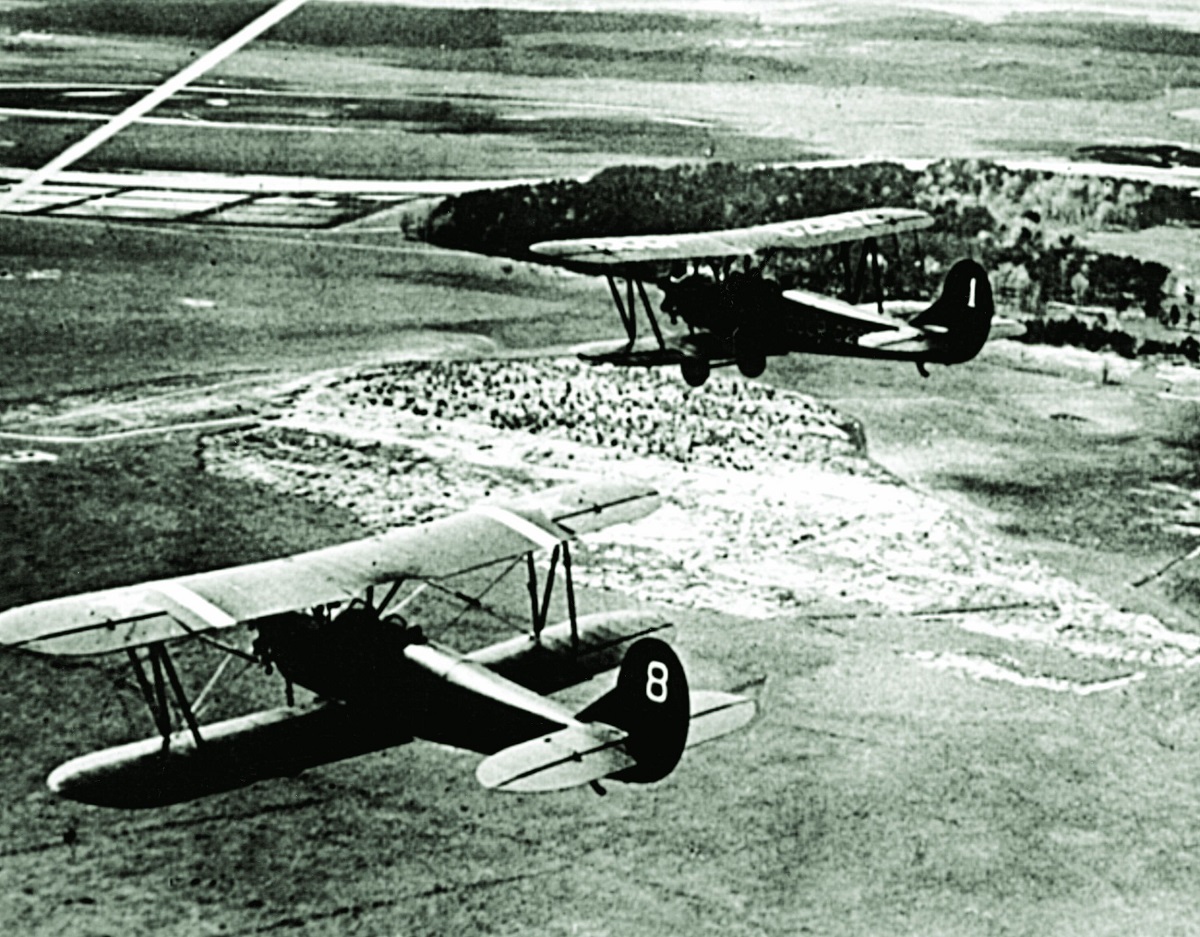
The Polikarpov Po-2 was one of the twentieth century’s most remarkable airplanes. Not because of its speed or firepower, but for its sheer simplicity, durability, and the extraordinary roles it fulfilled. It was affectionately nicknamed the Kukuruznik (“corn crop-duster”) in the USSR, and feared by Axis troops as the mount of the “Night Witches” – female flyers who specialized in bombing Nazis from Po-2s. Designed by Nikolai Polikarpov in 1927 as a basic trainer and utility aircraft, it first flew in early 1928. Over the next decades, though, it evolved to fulfill a variety of roles. It became a frontline combat machine, an agricultural plane, a courier, an ambulance, a partisan lifeline, and, for some pilots, a symbol of ingenious flying under impossible conditions.
A Humble Biplane

The Polikarpov Po-2 was a straightforward aircraft. It was a fabric-covered wood-and-steel biplane powered by a modest Shvetsov M-11 radial engine that delivered around 100 horsepower. Its top speed was barely 94 mph/ 150 km/h, but slowness turned out to be one of its greatest assets. Because it could fly so low, slow, and quietly, the Po-2 was difficult for enemy fighters to intercept. It stalled at an extremely low speed, which made it exceptionally forgiving for student pilots. Maintenance was simple, construction inexpensive, and the plane could operate from makeshift fields, roads, or clearings hacked out by partisans. Over the course of production from 1928 until 1953, 30,000 to 40,000 were built. That made it one of the most produced aircraft in history.
The Po-2 found wide civilian use in the 1930s. As a trainer, it taught tens of thousands of pilots in Soviet flying clubs. As a utility aircraft, it hauled mail, transported medical personnel, sprayed crops, and performed aerial photography. Its docile handling and low cost made it a staple across the USSR’s vastness, where rugged simplicity mattered a lot. Then came World War II, and the discovery that the Po-2 had surprising military potential. When the Germans invaded in 1941, the Soviet Air Force pressed every available aircraft into service – including the humble Po-2. As seen below, one of its earliest wartime uses was as a night harassment bomber.
The Polikarpov Po-2 and the Night Witches

Luftwaffe air superiority made daylight operations too dangerous for an airplane as slow as the Polikarpov Po-2. Under cover of darkness, however, the Po-2 proved its utility. It could fly low over enemy lines, and drop small bomb loads on German supply depots, bivouacs, and airfields. Such raids were not designed to cause major destruction, but rather to wear down the enemy’s morale. They deprived frontline units of sleep, and forced the Germans to expend disproportionate resources to defend against them. The sound of Po-2s approaching, their engines often throttled back so low that only the whistling of wind through struts could be heard, was unsettling. German troops dubbed them “Nähmaschinen” (sewing machines). No group made more legendary use of the Po-2 than the 588th Night Bomber Regiment, composed entirely of women.
Formed in 1942, the regiment flew the Po-2 on thousands of night missions against German positions. Axis troops feared and grudgingly respected them. The Germans called them Nachthexen – the “Night Witches”. They displayed extraordinary bravery as they flew multiple sorties per night in open cockpits, often without parachutes to save weight. The sewing-machine-like sound of their engines at night was terrifying. Not as terrifying though as when the sound suddenly stopped. It meant that the Night Witches had cut their engines in order to glide silently to their targets. The sudden silence was followed soon thereafter by the unwelcome din of explosions, after which the Night Witches restarted their engines and returned to base. Thirty of the regiment’s members were eventually named Heroes of the Soviet Union. Po-2s also served in a wide array of wartime roles beyond harassment bombing.
An Unexpected Legend

Po-2s acted as artillery spotters, guiding Soviet guns with remarkable precision thanks to their ability to loiter over the battlefield. As liaison aircraft, they delivered orders, maps, and officers across front line sectors. Medics used them as air ambulances to evacuate wounded soldiers from remote or swampy areas inaccessible to bigger planes. Partisans behind German lines relied on Po-2s to deliver weapons and supplies, or to extract key personnel from forest hideouts. Po-2s sometimes landed on patches of land barely longer than a village street – testament to the aircraft’s feather-light handling characteristics.
After the war, many Po-2s continued to serve in civilian aviation, particularly in agricultural and forestry roles. They even saw combat in the Korean War. North Korean pilots used them in the same fashion as Soviet pilots had: as night harassment bomber against UN forces. Slow and wooden, the Po-2 sometimes baffled radar systems, and was again difficult for high-speed jets to intercept. In one famous incident, a US Navy F4U Corsair shot one down only by flying at dangerously low speed.
By the time production ended in the early 1950s, the Polikarpov Po-2 had secured its place in aviation history. Not by cutting-edge performance, but by perseverance and versatility. It was the plane that trained generations of pilots, served as the backbone of Soviet rural aviation, and became an unlikely instrument of psychological warfare. In an era dominated by metal monoplanes and high-performance engines, the Po-2 proved that a simple, sturdy, slow biplane could still impact the course of events and even become a legend.

_________________
Some Sources & Further Reading
History Halls – The Night Witches: The Female Soviet Pilots that Gave the Nazis Nightmares
Myles, Bruce – Night Witches: The Untold Story of Soviet Women in Combat (1981)
Latest Articles
- Alexander the Great and Sisygambis, Mother of Persia’s King Darius III
- Unholy Holy Fathers: Pope Leo X’s Corruption Was So Brazen, it Triggered the Protestant Reformation
- Edward England, the Humane Pirate Captain Deposed by His Men for Being Too Nice
- American Presidents: Abraham Lincoln, Hall of Fame Wrestler
- Henry Jennings: The Privateer-Turned-Pirate Who Set the Stage for the Caribbean’s Golden Age of Piracy

