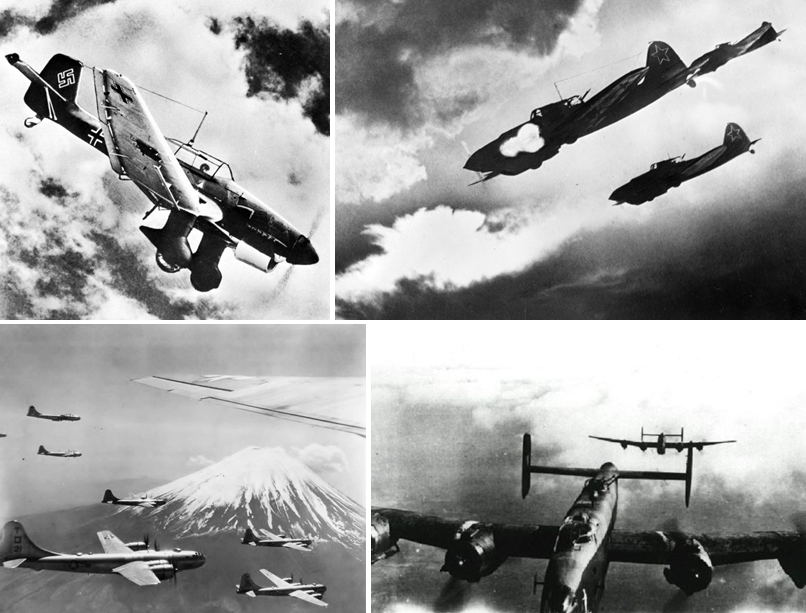
World War II bombers were instruments of national strategy, indicators of industrial capacity, and symbols of human endurance. From the frail Polikarpov Po-2 to the mighty B-29 Superfortress, each represented a unique intersection of necessity, innovation, and ideology. The Soviet focus on rugged simplicity, the British emphasis on heavy night bombing, the German mastery of precision and versatility, the Japanese quest for range, and the American belief in high-altitude daylight precision, all found expression in these aircraft. They reshaped warfare, and demonstrated that air power could reach anywhere and affect everything. The courage of their crews, who faced flak, fighters, and death in unpressurized cabins, remains one of the most profound stories of the twentieth century. Below are WWII’s twenty three greatest land-based bombers.
23. Polikarpov Po-2: The Humble Night Raider

The Polikarpov Po-2 was originally designed as a 1928 training and utility biplane. It became one of the most unlikely, yet effective, bombers of WWII. Constructed primarily of wood and fabric, it was slow – 94 mph maximum speed – and could carry only small bomb loads. However, its simplicity and maneuverability made it an invaluable tool for harassment and night bombing missions. Soviet pilots, including the all-female “Night Witches” of the 588th Night Bomber Regiment, used the Po-2 to devastating psychological effect. Flying low in the dark of night, they cut their engines before they reached their destinations and silently glided until they reached the targeted German positions and dropped their bombs. The sudden explosions shattering the still of night disrupted the enemy’s sleep and sapped his morale.
The Po-2’s open cockpit and lack of armor made it vulnerable. However, the plane’s low speed often thwarted enemy fighters, which stalled when attempting to maneuver for a killshot. The Po-2’s operational costs were minimal, and its rugged design allowed operations from rough fields close to the front lines. Though technologically obsolete, it perfectly embodied the Soviet strategy of adaptability and resilience. By war’s end, over 30,000 Po-2s had been built, and its service continued well into the 1950s. It left behind a remarkable legacy for one of the simplest bombers in aviation history.
22. Tupolev SB: The Speedy Pioneer

Introduced in the mid-1930s, the Soviet Tupolev Skorostnoi Bombardirovshchik (“High Speed Bomber”) or SB, was a leap in bomber design. With its all-metal monoplane structure, retractable landing gear, and top speed exceeding many contemporary fighters, it was a symbol of Soviet industrial modernization. Initially, it provided the USSR with a fast and capable light bomber. SBs were used extensively during the Spanish Civil War by Soviet and Republican forces. There, they proved their worth against older biplane fighters, but the conflict also foreshadowed their eventual obsolescence. Aerial combat in Spain demonstrated that newer monoplane fighters like the Bf 109 had outclassed the SB.
At the outbreak of Operation Barbarossa in 1941, the SB formed the backbone of Soviet bomber aviation. Unfortunately, it suffered catastrophic losses against the Luftwaffe, which had superior aircraft and tactics. Nevertheless, the SB was versatile, and continued to serve as a bomber, reconnaissance aircraft, and even dive bomber at times. Though replaced later by the Pe-2 and Il-4, the SB’s influence persisted. It trained an entire generation of Soviet bomber crews, and marked the USSR’s transition from 1930s aviation experiments to a mature, large-scale air industry capable of sustained wartime production.
21. Heinkel He 111: Luftwaffe Pioneer

Few bombers symbolize the Luftwaffe’s early triumphs like the Heinkel He 111. Initially disguised as a civilian airliner to evade the Treaty of Versailles restrictions, it evolved into Germany’s primary medium bomber during the Spanish Civil War and early WWII. It combined sleek, elliptical wings and a glazed “greenhouse” nose with a modest bomb load of up to 2,000 kg. During the blitzkrieg campaigns of 1939–1941, it played a central role in the bombing of Poland, France, and Britain.
Although fast and durable by the standards of 1936, when it first flew, He 111s lacked defensive armament and armor. Those weaknesses were exposed during the Battle of Britain, when RAF Spitfires and Hurricanes inflicted heavy losses upon them. Nonetheless, the He 111 continued to serve throughout the war in various roles as a torpedo bomber, transport, and even as a glider tug. Its reliability and ease of maintenance made it invaluable for sustained operations. More than 6,500 were produced, reflecting its utility despite obsolescence. Though overshadowed by the Ju 88 and Do 217 in later years, the He 111 remains iconic. It was a symbol of both the Luftwaffe’s early dominance, and its eventual struggle to adapt to modern air combat realities.
20. Bristol Blenheim: Britain’s Early Workhorse

The Bristol Blenheim, first flown in 1935, was Britain’s initial modern, all-metal light bomber. Derived from a civil airliner commissioned by Lord Rothermere, it was advanced for its time. It could outrun many fighters when first introduced, and had a retractable landing gear and sleek monoplane design. By the outbreak of WWII in 1939, however, rapid technological progress had left it outdated. Despite that, the Blenheim formed the backbone of RAF Bomber Command in the war’s early years. It saw action in Norway, France, and the Battle of Britain, and flew dangerous daylight raids – often with devastating losses.
Later, Blenheim’s were adapted for night-fighting and reconnaissance, and proved versatile in secondary roles. Their cramped cockpits and limited bomb load made them ill-suited for sustained bombing campaigns such as that in Europe. However, they served with distinction in the Mediterranean and Far East until replaced by more advanced types. The Blenheim’s greatest legacy was that it bridged the gap between interwar and modern bomber design. It helped the RAF transition toward aircraft like the Wellington and Mosquito. Though overshadowed by later bombers, the Blenheim’s contribution during Britain’s darkest early days remains an important part of aviation history.
19. Junkers Ju 87 Stuka: The Blitzkkrieg’s Shrieking Banshee

The Junkers Ju 87 Stuka was one of the most infamous aircraft of the war. A single-engine dive-bomber equipped with fixed landing gear and wailing sirens, the “Jericho Trumpets”, its banshee shriek became the background sound of the blitzkrieg. Designed for precision ground attack, it could dive at steep angles and release bombs with remarkable accuracy. The Stuka first proved its effectiveness in the Spanish Civil War. It was especially effective during the invasions of Poland, Norway, and France, where its psychological and physical impact was immense. However, its slow speed and poor maneuverability made it vulnerable to enemy fighters. That was made clear in the Battle of Britain, where Stukas suffered catastrophic losses.
On the Eastern Front and in North Africa, where it faced a lower concentration of enemy fighters, the Stuka adapted. There, it was equipped with anti-tank cannons, and carried larger bomb loads for close air support. Pilots like Hans-Ulrich Rudel achieved extraordinary successes in Stukas against Soviet armor. Despite its limitations, the Stuka remained in production until 1944, a testament to its niche effectiveness as a tactical bomber. It represented a bygone era of precision dive bombing, ultimately replaced by faster, multi-role aircraft. The Stuka’s terrifying dive scream and psychological impact left an indelible mark on the collective memories of WWII.
18. Focke-Wulf Fw 200 Condor: The Long Range Menace

The Focke-Wulf Fw 200 Condor, originally a civilian airliner, became a potent long-range maritime bomber for the Luftwaffe. Modified for military use, it patrolled the Atlantic, where it hunted Allied shipping in coordination with U-boats. With a range exceeding 2,175 miles or 3,500 km, Condors could locate and shadow Allied convoys across vast distances. They relayed coordinates to vector in U-boats, and also conducted bomb attacks against enemy ships. Condor attacks – and more importantly their reconnaissance information – contributed to severe shipping losses, before Allied countermeasures improved.
The Condor’s civilian airframe, not designed for the rigors of combat, lacked durability. Heavy bomb loads and rough airfields often caused structural failures, and some Condors simply broke apart in flight. Later versions featured reinforced wings and better defensive armament. By 1943, however, improved Allied radar and long-range fighters had curtailed its threat. Fw 200s also served in transport and reconnaissance roles, and transported officials and supplies to distant theaters. Although produced in limited numbers – only around 275 built – the Condor’s early success underscored Germany’s temporary mastery of maritime reconnaissance. It highlighted the importance of long-range aircraft in controlling sea lanes, and foreshadowed postwar developments in patrol and anti-submarine aviation.
17. Boeing B-17 Flying Fortress: The Icon of WWII American Air Power

The Boeing B-17 Flying Fortress remains one of the most legendary bombers of all time. Developed in the 1930s as long-range strategic bombers, B-17s were renowned for ruggedness, heavy defensive armament, and precision bombing capabilities. With up to thirteen .50-caliber machineguns and a reputation for surviving severe damage, the B-17 earned the nickname “Flying Fortress”. The B-17 formed the backbone of the US Eighth Air Force during the daylight bombing campaign over Nazi-occupied Europe. B-17 crews faced formidable Luftwaffe defenses and suffered staggering losses, before long-range escort fighters like the P-51 Mustang became available.
Despite heavy casualties, the Flying Fortress’ role in crippling Germany’s industrial and military infrastructure was crucial. Each plane carried 4,000–8,000 pounds of bombs, dropped on targets such as ball-bearing plants, oil refineries, and aircraft factories. Over 12,700 were built, and they saw action in every theater. The B-17’s combination of durability, accuracy, and symbolism made it an icon of American resilience and industrial might. The Flying Fortress helped turn the tide of strategic warfare by taking the fight deep into the enemy’s heartland.
16. Junker’s Ju 88: Germany’s Multirole Marvel

The Junkers Ju 88 was arguably Germany’s most versatile aircraft of the war. It was initially designed as a fast medium bomber, but evolved into to perform a variety of roles that included dive bomber, night fighter, reconnaissance plane, and even torpedo bomber. Introduced in 1939, it featured advanced aerodynamics and a bomb load of up to 6,600 pounds or 3,000 kg. During the Blitz, it bombed British cities, while later models hunted Allied bombers at night. Its adaptability made it a mainstay of the Luftwaffe from start to finish.
Unlike the specialized Stuka or He 111, the Ju 88 could perform nearly any mission effectively. That allowed the hard pressed Luftwaffe to stretch its resources. Later variants were equipped with radar and advanced navigation systems. However, the plane’s rapid development led to initial production difficulties and over-complexity. Despite that, the Ju 88 was one of WWII’s most produced bombers, with more than 15,000 buil. Its balanced performance, speed, and modular design inspired later aircraft worldwide. The Ju 88 exemplified German engineering brilliance and strategic flexibility. However, even its excellence was not enough to compensate for Germany’s declining air superiority after 1943.
15. Mitsubishi Ki-21: The Japanese Army’s Workhorse

The Mitsubishi Ki-21, known to the Allies as “Sally,” was the Imperial Japanese Army Air Force’s primary medium bomber during the early war years. Introduced in 1938, it was a sleek, twin-engine monoplane capable of long-range missions over China and the Pacific. Initially, its performance and reliability were impressive. By 1942, though, it was clearly outclassed by newer Allied fighters. The Ki-21 served extensively in China, Burma, and the Philippines, where it supported Japan’s early offensives. Its 4,400 pound/ 2,000-kg bomb capacity and endurance allowed deep-penetration strikes across Asia.
Weak defensive armament and lack of armor led to heavy losses, however, as the Allies gained air superiority. Crews compensated with bravery and skill, and often pressed attacks despite overwhelming odds. The Ki-21 also performed transport and paratroop missions later in the war. Though overshadowed by Navy aircraft like the G4M Betty, it remained in production until 1944. The Ki-21’s long service life reflected Japan’s inability to field sufficient replacements. It symbolized both the early power and eventual decline of Japan’s army air arm. A capable and competent aircraft when first introduced, it was eventually outmatched in a rapidly changing aerial battlefield.
14. Ilyushin Il-4: Soviet Long Range Striker

The Ilyushin Il-4, originally designated DB-3F, was the Soviet Union’s primary long-range bomber in WWII. Introduced in 1939, it was robust and reliable. It could carry up to 5,500 pounds/ 2,500 kg of bombs, and had a range of 2,400 miles/ 3,800 km. That made it ideal for deep strikes behind German lines. Early in the war, Il-4s conducted daring raids on Berlin, in demonstrations of Soviet strategic reach even in dark times. They also performed anti-shipping operations in the Baltic and Arctic, often cooperating with the Soviet Navy.
While not fast or heavily armed, the Il-4’s sturdy construction and long range ensured steady service throughout the conflict. As Soviet industry increasingly focused on simpler tactical aircraft like the Il-2, Il-4s became increasingly rare. What few the Red Air Force had, nonetheless remained indispensable for strategic missions. Il-4s could carry torpedoes or mines, extending their utility. More than 5,000 were built, and they served until the late 1940s. Il-4s never achieved the fame of Western bombers, but they represented the Soviet capacity to project power at long range.
13. Consolidated B-24 Liberator: The Versatile Giant

The Consolidated B-24 Liberator was the most produced American bomber of WWII, with over 18,400 built. Faster and with a greater range than the B-17, the B-24 was used in every major theater. Its high-aspect-ratio Davis wing gave it excellent range and fuel efficiency, ideal for long missions over the Atlantic and Pacific. It carried up to 8,000 pounds of bombs and featured powered turrets for defense. However, its complex design and high wing loading made it less maneuverable and more difficult to fly than the B-17.
Despite that, the B-24’s versatility was unmatched: it served as bomber, transport (C-87), anti-submarine patrol plane, and maritime reconnaissance platform. Famous B-24s like the “Liberty Belle” and “Lady Be Good” became legendary for their endurance and tragic missions. The B-24 played a crucial role in cutting Axis supply lines and in the strategic bombing of Germany and Japan. It also spearheaded the anti-U-boat patrols that helped secure the Allies’ Atlantic convoys. The B-24 was overshadowed in popular memory by the B-17. Nonetheless, the Liberator’s massive production and operational reach made it a decisive instrument of Allied victory.
12. The Handley Page Halifax: Britain’s Heavy Backbone

The Handley Page Halifax was one of Britain’s principal heavy bombers, and shared the night skies with the Avro Lancaster. When it entered service in 1940, the Halifax was initially plagued by performance issues. It gradually improved, however, through successive variants. With four Rolls-Royce Merlin or Bristol Hercules engines, the Halifax could carry up to 13,000 pounds of bombs, and featured a robust defensive armament. It flew more than 82,000 sorties during the war, second only to the Lancaster in operational output. Beyond bombing, it served as a glider tug, maritime patrol aircraft, and paratroop transport.
Halifax crews endured enormous losses, but displayed remarkable bravery in the RAF’s nighttime bombing campaign. The aircraft’s rugged design allowed it to absorb heavy damage and return home, which earned the affection of its crews. The Halifax was less capable than the Lancaster due to its lower bomb load and altitude performance. It was nonetheless vital in sustaining the RAF’s strategic offensive. It symbolized Britain’s determination to strike at Germany night after night, and contributed substantially to the Third Reich’s eventual collapse.
11. Martin B-26 Marauder: The High Speed Precision Bomber

The Martin B-26 Marauder earned both fear and respect from its crews. Introduced in 1941, the twin-engine bomber was fast, at 287 mph, and heavily armed. Early versions had high takeoff and landing speeds, however, which led to accidents that earned it the grim nickname “Widowmaker”. Another nickname was the “Flying Prostitute” or “Baltimore (site of its manufacture) Whore”, because aircrews looking at its slender wings thought the B-26 “had no visible means of support”. With improved training and design tweaks, the B-26 evolved into one of the war’s safest and most accurate medium bombers. It excelled in low-level and tactical missions, and struck bridges, rail lines, and airfields across Europe and the Mediterranean.
The B-26’s precision and survivability improved dramatically in skilled units like those of the US Ninth Air Force. By D-Day, its combat loss rate was one of the lowest among American bombers. Its robust airframe and speed made it difficult for enemy fighters to intercept, and powerful defensive armament gave it teeth. Over 5,000 were built, serving from North Africa to the Pacific. Though overshadowed by the more famous B-25, the B-26 became a workhorse of tactical bombing. It was a testament to how design refinement and pilot adaptation could transform a controversial aircraft into a battlefield success.
10. Ilyushin Il-2 Sturmovik: The Flying Tank

The Ilyushin Il-2 Sturmovik was the most produced combat aircraft of WWII, and the most feared by German ground troops. Designed for close air support, it combined heavy armor, powerful armament, and rugged construction. Initially vulnerable to fighters due to lack of rear gunners, later versions added defensive turrets, which improved survivability. Its armored shell protected both engine and pilot – although the rear gunner was left unprotected, to trust in his luck. That earned it the nickname the “Flying Tank”.
Armed with cannons, rockets, and bombs, the Il-2 excelled at destroying tanks, convoys, and fortifications. Its low-level attacks during major offensives, especially at Kursk and Stalingrad, played a decisive role in Soviet victories. The Il-2’s simple design enabled mass production despite harsh wartime conditions: over 36,000 were built. Though not fast or agile, its sheer presence demoralized Axis forces, who dubbed it the “Black Death”. The Il-2 exemplified Soviet doctrine: a rugged airplane, delivering overwhelming firepower in direct support of ground troops. It embodied the Red Army’s methodical, combined-arms strategy that ultimately crushed the Wehrmacht on the Eastern Front.
9. De Havilland Mosquito: The Wooden Wonder

The de Havilland Mosquito was one of WWII’s most extraordinary aircraft. Built largely from wood to save strategic materials, it achieved astonishing speeds of 415 mph/ 668 km/h. That made it faster than many fighters. Originally designed as an unarmed bomber, its philosophy was simple: speed as protection. It did not try to fight off interceptors: it outran them. The Mosquito proved incredibly versatile, and served as a bomber, night fighter, pathfinder, reconnaissance plane, and even intruder. Its precision raids, such as attacking Gestapo headquarters in Oslo and a prison in Amiens, demonstrated pinpoint accuracy.
Crews loved the Mosquito’s agility and reliability, while enemies respected its elusiveness. It could carry 4,000 pounds of bombs, and later variants mounted cannons and rockets. Operating across Europe and Asia, it excelled in low-altitude strikes and high-speed photo reconnaissance. Over 7,700 were built, and its wooden construction allowed production in smaller factories across Britain and Canada. The Mosquito’s success defied skeptics and redefined bomber design. It demonstrated that a fast, multi-role aircraft could achieve what brute force sometimes could not. Sleek, elegant, and deadly, the “Mossie” remains one of history’s most beloved warplanes.
8. North American B-25 Mitchell: The Reliable Medium Bomber

The North American B-25 Mitchell was one of WWII’s most widely used and versatile bombers. It gained fame with the April, 1942, Doolittle Raid, when sixteen B-25s launched from the carrier USS Hornet bombed Tokyo. It was an audacious, morale-boosting attack. The B-25’s design balanced range, bomb capacity, and defensive firepower. That made it adaptable for roles ranging from medium bombing to ground attack and anti-shipping strikes. Variants like the B-25H mounted a 75 mm cannon, one of the largest ever fitted to an aircraft.
The B-25 served in every theater, from the jungles of Burma to the deserts of North Africa and Pacific islands. Crews praised its ruggedness and handling. It became a staple of Allied air forces, not just the US, but also the RAF and Soviet Air Force. Around 10,000 were produced, ensuring its presence in countless operations. The B-25’s blend of reliability, flexibility, and firepower made it indispensable – a dependable airplane that could do almost anything required. Its postwar career continued globally, proving the design’s enduring value long after 1945.
7. Petlyakov Pe-2: The Soviet Light Bomber

The Petlyakov Pe-2, nicknamed “Peshka,” was the Soviet Union’s main light bomber from 1941 onward. Originally conceived as a high-altitude fighter, its designer, Vladimir Petlyakov, reengineered it into a fast dive bomber while imprisoned in a gulag, where he had ended up as a result of one of Stalin’s purges. The result was a durable, twin-engine aircraft that combined speed, maneuverability, and striking power. The Pe-2 could carry up to 1,000 kg of bombs, dive-bomb with precision, and outrun many enemy fighters. It served in virtually every major Eastern Front operation, and provided both tactical support and interdiction.
Crews admired the Pe-2’s agility, even as they complained of cramped space and difficult handling. Its versatility extended to reconnaissance and night attack versions. The Pe-2 was the Soviet counterpart to Germany’s Ju 88 or Britain’s Mosquito, with over 11,000 built. Its combination of speed, survivability, and adaptability, made it one of the Red Air Force’s most effective WWII aircraft. The Pe-2 exemplified Soviet ingenuity under pressure. They successfully transformed a canceled fighter into a bomber that terrorized German ground forces for the rest of the conflict.
6. Mitsubishi G4M Betty: The One Shot Lighter

The Mitsubishi G4M, code-named “Betty” by the Allies, was the Imperial Japanese Navy’s main twin-engine bomber. Designed for long range to support Japan’s vast Pacific ambitions, it could fly over 3,100 miles/ 5,000 km. That range came at a high cost, though: no armor, and unprotected fuel tanks. Those sacrifices gave it exceptional reach, and G4Ms conducted devastating strikes early in the war, including the sinking of HMS Prince of Wales and Repulse in December, 1941. However, as Allied air defenses strengthened, the G4M’s vulnerabilities became fatal. It burned easily when hit, an unfortunate trait that earned it the nickname “the one-shot lighter”, after a contemporary ad for a reliable lighter that always lit up on the first attempt.
Despite its vulnerability, Betty crews displayed extraordinary courage, and pressed home attacks even under suicidal conditions. Later variants improved protection, but losses remained severe. The G4M also carried Japan’s first air-launched torpedoes and, near war’s end, the Ohka suicide rocket bomb. Over 2,400 were built, and the Betty continued in service until Japan’s surrender. The G4M epitomized Japan’s early-war offensive power and late-war desperation. It was a superbly ranged aircraft, that was fatally undermined by the nation’s prioritization of reach over protection.
5. Douglas A-20 Havoc: The Fast Attack Bomber

The Douglas A-20 Havoc, also known as the Boston in British service, was a fast, twin-engine light bomber and attack aircraft used by the Allies worldwide. Entering service in 1941, it combined high speed, agility, and respectable firepower. The A-20 excelled in low-level bombing, strafing, and night intruder missions. In North Africa and Europe, RAF and USAAF units used it for precision strikes on airfields, supply depots, and trains. A-20s hold the distinction of being the aircraft selected for America’s first bomber raid in Europe, the “Independence Day Raid”.
The Soviets received thousands of Havocs via Lend-Lease, and praised its reliability and performance in harsh conditions. Its multiple configurations included bomber, gunship, and night fighter variants, demonstrating its flexibility. With four to six forward-firing .50-caliber guns, and up to 2,000 pounds of bombs, the A-20 could devastate ground targets. Over 7,000 were built, and the Havoc served in every major theater. Although overshadowed by larger bombers, the A-20’s impact was immense. It bridged the gap between tactical strike aircraft and medium bombers. Its speed and versatility made it one of the best low-altitude attack planes of the war. It paved for the A-26 Invader, introduced later in the conflict, which continued in service through the Vietnam War.
4. Avro Lancaster: Night Hammer of the RAF

Britain’s Avro Lancaster heavy bomber was the chief instrument through which the RAF struck at the heart of Nazi Germany. Entering service in 1942, it could carry up to 14,000 pounds of bombs, and later, even the 22,000-pound “Grand Slam”. Powered by four Rolls-Royce Merlin engines, it combined reliability, range, and payload in a superb design. The Lancaster led the devastating night raids on Hamburg, Berlin, and the Ruhr, and participated in legendary missions such as Operation Chastise, the Dambusters Raid, which used special bouncing bombs.
Crews admired the Lancaster’s handling and resilience, even under intense flak and night fighter attacks. More than 7,300 were built, and they dropped over 600,000 tons of bombs during the war. The Lancaster also undertook maritime patrols, mine-laying, and special operations. Though criticized for the civilian toll of area bombing, its strategic contribution was undeniable. The bomber campaign spearheaded by Lancasters helped cripple Germany’s war industry and morale. It became a symbol of determination and ingenuity, and stands alongside the Spitfire as one of Britain’s most iconic warplanes.
3. Douglas A-26 Invader: The Late War Marvel

The Douglas A-26 Invader was a fast, heavily armed light bomber designed to replace the A-20 and B-26. Introduced late in the war, its sleek airframe and powerful engines made it one of the fastest bombers ever built, with maximum speeds exceeding 340 mph. Configurable for bombing, ground attack, or reconnaissance, it could carry 6,000 pounds of ordnance and mount 14 forward-firing .50-caliber guns. The A-26 entered combat in Europe in 1944, where it struck bridges, rail lines, and supply columns with precision. It also saw action in the Pacific. There, its speed and 1,600 mile range – which could be extended to 3,000 miles with a ferry tank – proved invaluable.
Pilots loved the A-26’s power and durability, though early cockpit visibility issues delayed adoption. The Invader’s postwar career extended through Korea and even Vietnam, a testament to its exceptional design. Only about 2,500 were built during the war – a low figure by US WWII production standards. However, it represented the peak of piston-engine attack bomber evolution. Combining speed, firepower, and adaptability, the Invader was a bridge to the jet age. It was a final masterpiece of conventional bomber engineering before the dawn of modern jet engine tactical aircraft.
2. Ilyushin Il-10: The Sturmovik’s Successor

The Ilyushin Il-10, which entered service in 1944, was developed as a refined successor to the Il-2 Sturmovik. It addressed many of its predecessor’s shortcomings: a more powerful engine, better armor layout, improved rear defense, and enhanced maneuverability. Designed for close air support, it maintained the Il-2’s rugged, armored “flying tank” concept, but with greater speed and reliability. Il-10s played a key role in late-war offensives across Eastern Europe, hammering retreating German forces with rockets, cannons, and bombs. They also saw action in Manchuria against Japan in 1945.
Pilots praised the Il-10’s improved visibility and performance, though it retained the Il-2’s unforgiving low-level mission profile. Production continued after the war, and Il-10s served as the standard Soviet and Warsaw Pact attack aircraft into the 1950s. They symbolized the culmination of Soviet piston-engined ground-attack design: an evolution from crude wartime necessity to sophisticated battlefield dominance. In essence, the Il-10 closed the chapter on propeller-driven assault aircraft, and paved the way for jet-powered successors that would continue its formidable legacy.
1. Boeing B-29 Superfortress: WWII’s Ultimate Prop Bomber

The Boeing B-29 Superfortress was WWII’s most advanced bomber, and one of the most consequential. With pressurized cabins, remote-controlled gun turrets, and a massive 20,000-pound bomb load, it represented a quantum leap in aviation technology. Despite early technical issues, the Superfortress’ combination of range, payload, and defensive capability was unmatched. Designed for long-range strategic bombing, it operated primarily in the Pacific, where its range allowed it to strike Japan from distant bases. B-29s spearheaded the campaign that devastated Japanese cities through incendiary bombing.
Their most infamous missions were the atomic bombings of Hiroshima and Nagasaki by Enola Gay and Bockscar in August, 1945. Those twin strikes ended the war and ushered in the nuclear age. Over 3,900 B-29s were built, and they continued in service into the Korean War. The Superfortress marked the peak of piston-engine bomber design, and set the stage for postwar strategic bombers like the B-47 and B-52. The B-29 was not just a bomber. It was a technological triumph that forever changed the nature of warfare and the projection of global power.
_________________
Some Sources & Further Reading
Boyne, Walter J. – Clash of Wings: Air Power in World War II (1994)
Donald, David, Ed. – American Warplanes of World War II (2000)
Donald, David – Warplanes of the Luftwaffe (1994)
Dressel, Joachim – Bombers of the Luftwaffe (1994)
History Halls – America’s Rugged B-17 Flying Fortress
Lake, Jon – The Great Book of Bombers (2002)
Mason, Francis K. – The British Bomber Since 1914 (1994)

