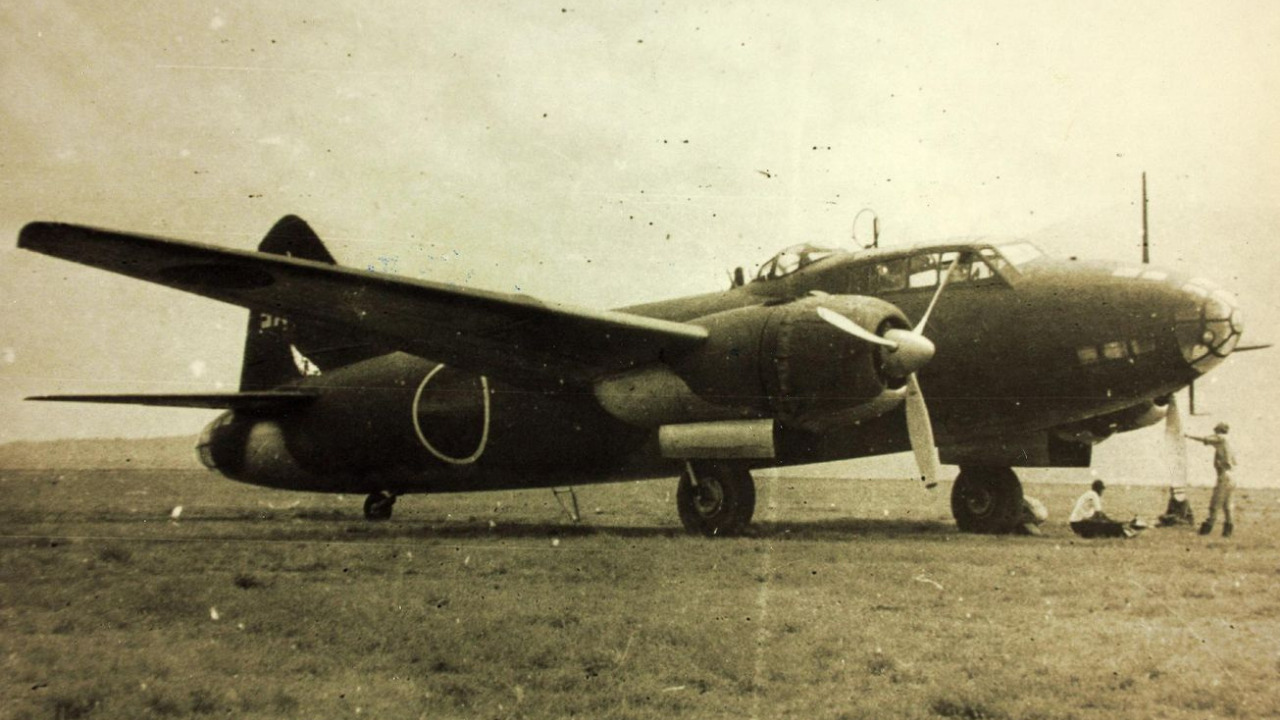
Japan’s most successful bomber of World War II was nicknamed “the cigar” by its crews because of its cylindrical shape. It was nicknamed the “Betty” by the Allies, who came to detest its drone. Below are some fascinating facts about that lesser known but important WWII aircraft.

The Betty Bomber
The twin engine Mitsubishi G4M Betty, official name Mitsubishi Navy Type 1 Attack Bomber, was the Japanese Navy’s main land based bomber of WWII. It was also Japan’s most produced bomber of the conflict. It was test flown in 1939, and entered service in 1941. The Betty’s main assets were speed and exceptional long range. It was designed to fly 2300 miles with a bomb load, and could do 3500 miles without. That made it difficult to intercept when used as a medium or high altitude bomber. However, as with Japan’s Zero fighter, the Betty’s speed and range were bought by making the plane as light as possible. That came at the expense of basic protections such as armor plate and self-sealing fuel tanks.
As a result, Bettys readily caught on fire when their fuel tanks were hit. That earned them nicknames such as the “Flying Zippo” or “Type One Lighter” by both friend and foe. But if a Betty did not flame up, which was a big if, it was otherwise quite resilient and able to survive serious damage. In addition to level bombing, Bettys were used as torpedo bombers, and it was in that role that they sank the British battleships Repulse and Prince of Wales in the war’s early days. However, the low, slow, and steady approach required for torpedo launch took away the Betty’s speed advantage and made it and its readily flammable fuel tanks vulnerable to defensive fire.
The G4M Betty’s Effectiveness

G4M Bettys wreaked considerable havoc during the war’s first year. They inaugurated the Japanese conquest of the Philippines by devastating Clark Field, America’s main airbase in the islands, on December 8th, 1941; sank the Prince of Wales and Repulse off the Malayan coast two days later; and ranged the breadth and width of the Pacific, utilizing their long range to bomb far flung targets from Australia to the Aleutians. Once American fighters and trained pilots began to flood into the Pacific, the Betty’s vulnerability if flown without fighter protection was exposed.
While speed and range made interception difficult, when Bettys were intercepted they suffered heavily. Redesigns reduced the vulnerabilities by introducing plate armor and self-sealing fuel tanks, at the cost of reduced speed and range. By then, however, Japan was well on the way to losing the war, and the improved Bettys were flown with inadequate fighter cover against swarms of American fighters. By war’s end, Bettys had been reduced to suicide bombers, or as launch platforms for missiles piloted by suicide flyers.
Some Sources and Further Reading
Francillon, Rene J. – Japanese Navy Bombers of World War II (1971)
Green, William – Famous Bombers of the Second World War (1959)
History Halls – World War II Fighters: The Soviet Yakovlev Yak-9

