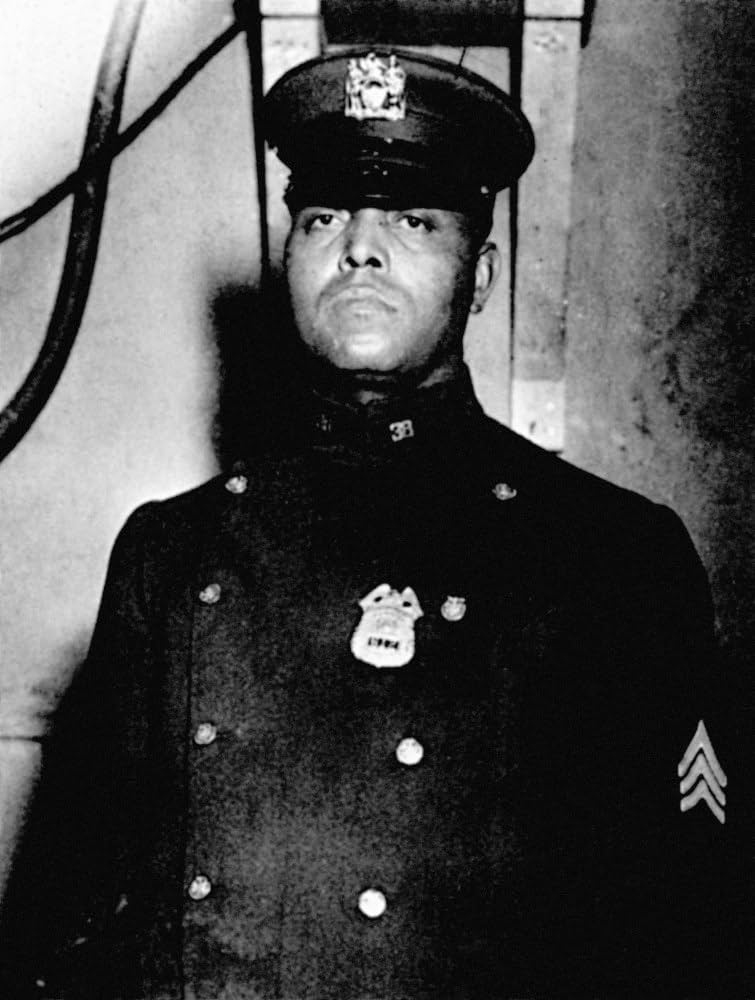
Samuel J. Battle was foundational in American law enforcement history: the New York City Police Department’s first Black officer. His career began in 1911 and ended in 1941, but the NYPD did not welcome him with open arms. It was an era when both New York City and the nation were deeply segregated. Battle spent nearly four decades navigating hostility, exclusion, and institutional racism while helping reshape the department from within.
The NYPD’s First Black Officer

Samuel Jesse Battle was born in 1883 in New Bern, North Carolina, in the post-Reconstruction South. Like many African Americans of his generation, he moved north as part of the early waves of the Great Migration. Like millions of Southern Blacks, he sought better economic opportunities and an escape from Jim Crow laws. After settling in New York City, Battle worked as a chauffeur and elevator operator. Those were respectable jobs, but he aspired to something more stable and prestigious. In 1911, after passing the civil service exam, he became the first Black appointed as a patrolman in the NYPD.
From the moment he put on the uniform, Battle faced open hostility. Many white officers refused to partner with or speak to him, and he was often isolated within the department. He was assigned almost exclusively to foot patrols, and denied the camaraderie and informal mentorship that helped many officers advance. Despite that, Battle developed a reputation among civilians for professionalism, restraint, and fairness Such qualities were far from universal in early twentieth century policing. In Black communities, he was often viewed with a mixture of pride and caution. He was both a symbol of progress, and a representative of an institution that was often harsh and discriminatory.
Quiet Persistence in the Face of Racism

Samuel J. Battle’s career coincided with some of the most turbulent years in New York City’s history. He served through World War I, Prohibition, the Harlem Renaissance, and the Great Depression. During the 1917 Harlem riot, sparked by racial tensions and police violence, Battle worked to calm crowds and protect residents. It highlighted the difficult position he occupied as both a Black man and a police officer. His presence in Harlem precincts was limited by department policy. Still, he was a rare example of representation when Black New Yorkers had little reason to trust law enforcement. Promotion within the NYPD was slow and hard-won. It took Battle over a decade to rise to the rank of sergeant. Even then, he remained the department’s only Black sergeant for many years.
Advancement did not shield Battle from discrimination. He continued to face exclusion from social networks within the force, and was often passed over for desirable assignments. Still, he persevered: he saw his service as a long-term investment in change, rather than a personal crusade for recognition. One of Battle’s most significant contributions came later in his career, when he was assigned to work with the NYPD’s efforts to improve relationships with Black communities. He became a trusted intermediary, helped department leadership understand conditions in Harlem, and advised on ways to reduce tensions.
The Significance and Legacy of Samuel J. Battle

Samuel J. Battle’s efforts to improve relations between the NYPD and Black communities were limited by the era’s racial attitudes. Nonetheless, they laid early groundwork for concepts that would later be called community policing. Samuel J. Battle achieved another milestone in 1935 when he was promoted to lieutenant. He was the first African American to hold that rank in the NYPD. By then, he had served for nearly a quarter-century. His promotion was symbolically important, even if it did not immediately transform departmental culture.

Younger Black officers, still extremely few in number, saw in Battle a living example that advancement, however slow, was possible. Battle retired in 1941 after thirty years of service. His departure marked the end of a pioneering career, but not the end of the struggle he embodied. When he retired, the NYPD only had a handful of Black officers, and meaningful integration remained decades away. Nonetheless, Battle’s legacy endured. He had broken barriers simply by remaining. He insisted and demonstrated through quiet endurance that Black Americans belonged in positions of authority and public trust.
After his retirement from the NYPD, Battle was appointed a parole commissioner – the first Black to hold such a position. He served until 1951. Battle died in 1966, just as the civil rights movement was reshaping American institutions in ways he had long anticipated. Today, Samuel J. Battle is remembered as more than just a “first”. A patient reformer, he absorbed personal injustice in the hope that those who followed him would face a little less. In the long, uneven history of American policing, Battle’s career represents an early, difficult step toward inclusion.

_________________
Some Sources & Further Reading
Columbia 250 – The First Black Policeman Remembers
History Halls – Barbara Rose Johns: The Teenager Who Set in Motion the End of Segregation
Jones, Mark – Criminal Justice Pioneers in US History (2025)
History Hall’s Newest Articles
- Alexander the Great and Sisygambis, Mother of Persia’s King Darius III
- Unholy Holy Fathers: Pope Leo X’s Corruption Was So Brazen, it Triggered the Protestant Reformation
- Edward England, the Humane Pirate Captain Deposed by His Men for Being Too Nice
- American Presidents: Abraham Lincoln, Hall of Fame Wrestler
- Henry Jennings: The Privateer-Turned-Pirate Who Set the Stage for the Caribbean’s Golden Age of Piracy

