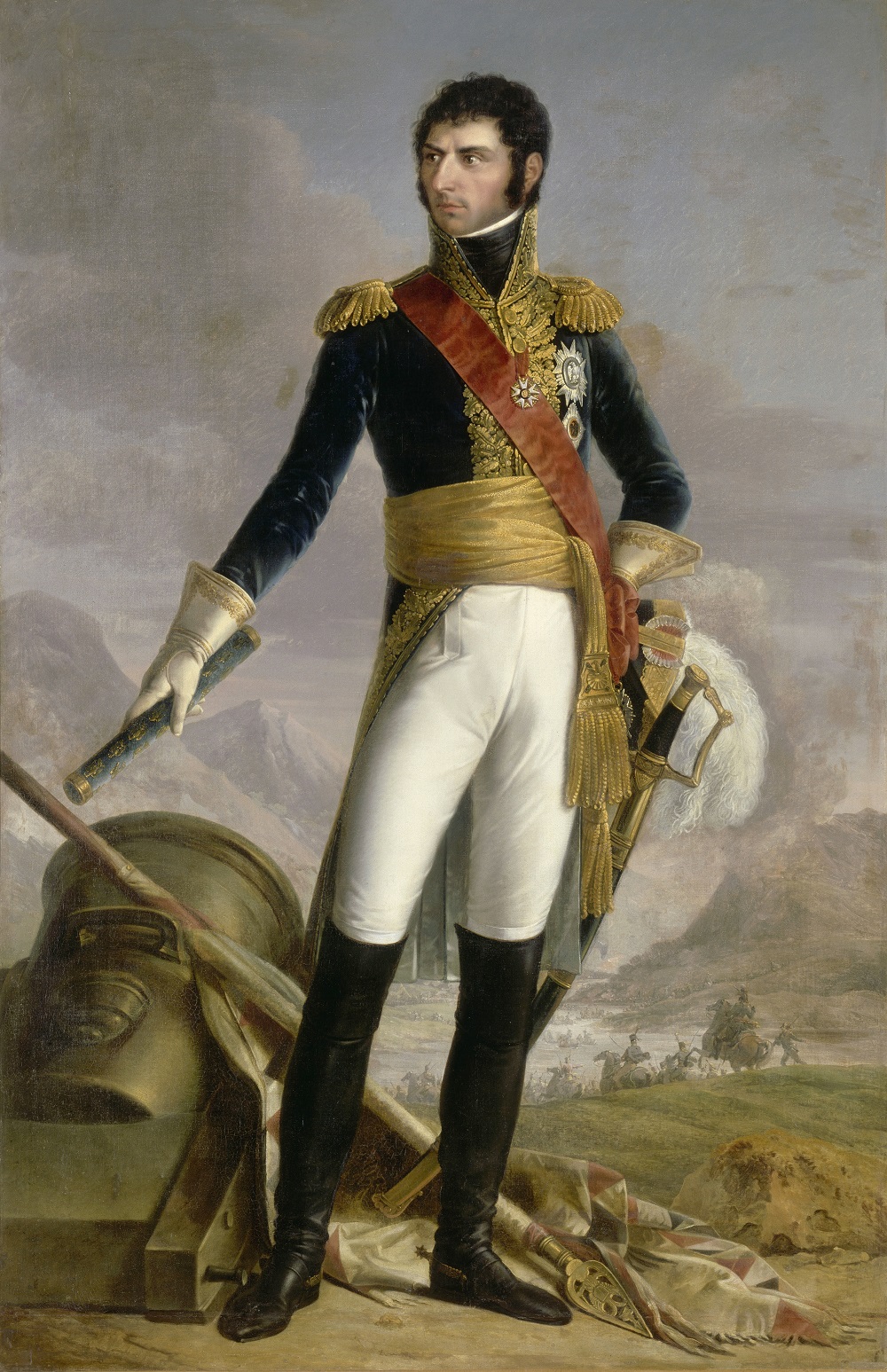
Jean-Baptiste Bernadotte went from French revolutionary soldier and Napoleonic marshal to King Charles XIV John of Sweden. That was one of the modern era’s most improbable political transformations. It was a story shaped by revolution, war, dynastic crisis, and personal adaptability. Chance and calculation combined to elevate a Gascon lawyer’s son to a Scandinavian throne. Bernadotte’s rise illustrates how the French Revolution’s upheavals shattered traditional ideas of legitimacy, and opened unexpected paths to power.
From Ancien Regime Private to French Revolution General

Jean-Baptiste Bernadotte was born into a modest family in 1763 in Pau, southwest France. His father was a public prosecutor, and nothing in Bernadotte’s early life suggested royal destiny. Like many ambitious young men of limited means, he joined the army, and enlisted as a private soldier in 1780. Under the ancien regime, advancement for commoners was limited. Then came the French Revolution, which transformed France’s military into a far more meritocratic institution. Bernadotte embraced the revolutionary cause enthusiastically, and rose rapidly through the ranks during the wars that followed. In a two year span from 1792 to 1794, he went from sub-lieutenant to brigadier general in the revolutionary armies.
Bernadotte distinguished himself as a capable and energetic officer, known for his organizational skill and personal bravery. He became a general in 1794, during the height of revolutionary fervor, and aligned himself politically with the Jacobins. He was never an ideologue, though. His loyalty was less to doctrine than to France and his own advancement. That pragmatic streak defined his career. It was in those years that Bernadotte came into contact with Napoleon Bonaparte. They developed a complex and often strained relationship. The two men were contemporaries who rose through the revolutionary army at roughly the same time. They were very different in temperament, however. Napoleon was intensely centralized and suspicious of rivals, while Bernadotte was independent-minded and politically astute. They occasionally clashed, particularly during campaigns in Italy and Germany.
Jean-Baptiste Bernadotte and Napoleon Bonaparte

Despite the tensions between them, Napoleon recognized Bernadotte’s talents. In 1804, when Napoleon crowned himself emperor, Bernadotte was among the generals whom he made a Marshal of the Empire. That was both an honor and a way to bind powerful commanders to the regime. Bernadotte also strengthened his position through marriage to Desiree Clary, Napoleon’s former fiancé and sister-in-law of his brother, Joseph Bonaparte. That marital connection placed Bernadotte within the extended Bonaparte family circle, though he was never fully inside it.
As a marshal, Bernadotte held important commands in the early stages of the wars of the Third and Fourth Coalitions. However, his military record under Napoleon was uneven. At the battles of Jena and Auerstedt in 1806, he was accused of failure to support fellow commanders decisively. Napoleon’s trust in him eroded, though he stopped short of disgrace. At the 1809 Battle of Wagram, Napoleon relieved Bernadotte of command for his poor handling of his troops. He sent him back to Paris under the face-saving guise of “health reasons”.
Sweden Seeks a Crown Prince

The opportunity that would transform Bernadotte’s life emerged not in France, but in Sweden. At the turn of the nineteenth century, Sweden was a declining great power struggling with internal instability and external pressure. A disastrous war with Russia in 1808–1809 resulted in the loss of Finland. That blow triggered a coup against King Gustav IV Adolf. He was deposed, and his uncle ascended the throne as Charles XIII. That left Sweden with a different problem. It now had an old, sick, and heirless monarch, expected to pass away at any moment.
The king’s heirless demise could lead to a succession crisis that would plunge the country into civil war between contenders. It was a particularly vulnerable moment for Sweden. A once powerful kingdom, Sweden was now a second rate power that needed to play off Europe’s major powers against each other in order to survive. In 1810, there were only three major powers in Europe far as Sweden was concerned: Russia, France, and Britain. Russia coveted Sweden. Napoleon’s France was allied with Russia. Britain was too committed to its war against France to help the Swedes with more than moral support.
Good Karma Blesses Bernadotte

With Charles XIII elderly, childless, and ailing, Sweden urgently needed an heir to ensure dynastic continuity and political stability. Initially, the Swedes chose a Danish prince, Christian August, but his sudden death in 1810 reopened the succession question. Factional rivalries in Stockholm and fear of foreign domination made the choice of a successor extraordinarily sensitive. It was in that context that Bernadotte’s name surfaced. Several factors made him attractive. As a French marshal, Bernadotte also represented a powerful connection to Napoleon’s empire, which dominated Europe. However, he was not a Bonaparte by blood, which made him seem less likely to reduce Sweden to a French satellite.
While Bernadotte had not been a great general under Napoleon, he had been a humane one. He had cultivated a reputation for decent treatment of Swedish prisoners during earlier campaigns in northern Germany. That good karma came back to bless Bernadotte years later. Swedish officers who had encountered him spoke favorably of his character and leadership. In August 1810, the Swedish Riksdag or parliament made the extraordinary decision to elect Bernadotte as crown prince. It was not hereditary succession, but a deliberate political choice. Bernadotte accepted, and converted from Catholicism to Lutheranism, as required by Swedish law. He was adopted by Charles XIII as his son, and took the name Charles John (Karl Johan).
Transfer of Loyalty From France to Sweden

Napoleon approved of Bernadotte as heir to the Swedish throne. He assumed that as a former marshal and family connection, Bernadotte would remain loyal to French interests. That assumption proved mistaken. Napoleon asked Bernadotte to agree to never go to war against France. Bernadotte refused, and told Napoleon that he had no way of knowing what the future might bring. As king of Sweden his loyalty would be to his kingdom, and war against France might become in Sweden’s interest someday. Despite that, Napoleon absolved Bernadotte of his oath of loyalty, to free him to take a Swedish oath of loyalty. Once in Sweden, Bernadotte began to think as a Scandinavian statesman responsible for his adopted country’s survival.
Bernadotte assumed the regency and governance of Sweden, and sought an accomplishment to solidify his authority and future dynasty. He quickly recognized that Sweden’s interests did not align with Napoleon’s continental ambitions. Sweden had suffered economically under the Continental System, Napoleon’s blockade against Britain. Moreover, Sweden feared further territorial losses, particularly to Russia. Bernadotte concluded that Sweden’s future lay not with France, but with powers that could secure compensation for its losses. Specifically, he sought to acquire Norway from Denmark to make up for Sweden’s earlier loss of Finland to Russia.
Turning on Napoleon

As Napoleon’s wars turned increasingly disastrous after 1812, Jean-Baptiste Bernadotte began to maneuver Sweden into the anti-French coalition. It was a remarkable reversal: a former French marshal now prepared to fight against his old comrades. In 1813, Bernadotte signed a treaty with Britain, declared war on France, and landed a Swedish army in northern Germany. He assumed command of the Army of the North, comprised of Swedish, Prussian, and Russian forces. Bernadotte played a key role in the decisive Battle of Leipzig, also known the “Battle of Nations”. The Napoleonic Wars’ largest and bloodiest single engagement, it was a decisive defeat for Napoleon, and effectively sealed his fate.
Bernadotte was careful, however, to limit Swedish casualties and avoid reckless engagements. His primary goal was not the destruction of France, but the advancement of Swedish interests. That cautious strategy frustrated some allies, but ultimately succeeded. In 1814, Denmark, defeated and isolated, was forced to cede Norway to Sweden. Although Norway resisted the transfer and briefly declared independence, Bernadotte combined military pressure with negotiation to achieve a compromise. Norway entered into a union with Sweden, in which it retained its constitution and considerable autonomy. That settlement laid the foundation for a relatively peaceful Scandinavian order that lasted for much of the nineteenth century.
The Legacy of Jean-Baptiste Bernadotte

When Charles XIII died in 1818, Jean-Baptiste Bernadotte ascended the throne as King Charles XIV John of Sweden. He also became King Charles III John of Norway. His reign marked a decisive break from Sweden’s earlier era of aggressive expansion. Instead, he pursued a policy of peace, neutrality, and internal development. Despite his foreign origins and heavy French accent, he gradually won acceptance, though he was never universally popular. Bernadotte ruled until his death in 1844, and founded a dynasty that still reigns in Sweden today. His transformation from revolutionary soldier to Scandinavian monarch encapsulates the fluidity of the Napoleonic age. It was an era in which old hierarchies collapsed, and new forms of legitimacy emerged.
Bernadotte was neither a mere adventurer nor a puppet of greater powers. Rather, he was a skilled political survivor who understood how to adapt to changing circumstances. He never fully abandoned his French identity, but he subordinated it to his role as king of Sweden. In doing so, he demonstrated that kingship in the nineteenth century need not be based solely on bloodline. It could also be based on political utility, consent, and competence. Jean-Baptiste Bernadotte’s improbable ascent remains one of history’s most striking examples of how revolution could unexpectedly give birth to monarchy.

_________________
Some Sources & Further Reading
Barton, Sir Dubar Plunket – The Amazing Career of Bernadotte, 1763-1844 (1929)
Chandler, David – Napoleon’s Marshals (2000)
History Halls – 10 of History’s Worst Examples of Bad Generalship
Palmer, Alan – Bernadotte: Napoleon’s Marshal, Sweden’s King (1990)
Newest Articles
- American Presidents: Abraham Lincoln, Hall of Fame Wrestler
- Henry Jennings: The Privateer-Turned-Pirate Who Set the Stage for the Caribbean’s Golden Age of Piracy
- Fighting Women: Tomoe Gozen, the Fearsome Female Samurai
- From the NFL to the Sands of Iwo Jima: Medal of Honor Recipient Jack Lummus
- The Zanj Rebellion: The African Slave Revolt That Rocked Medieval Mesopotamia

