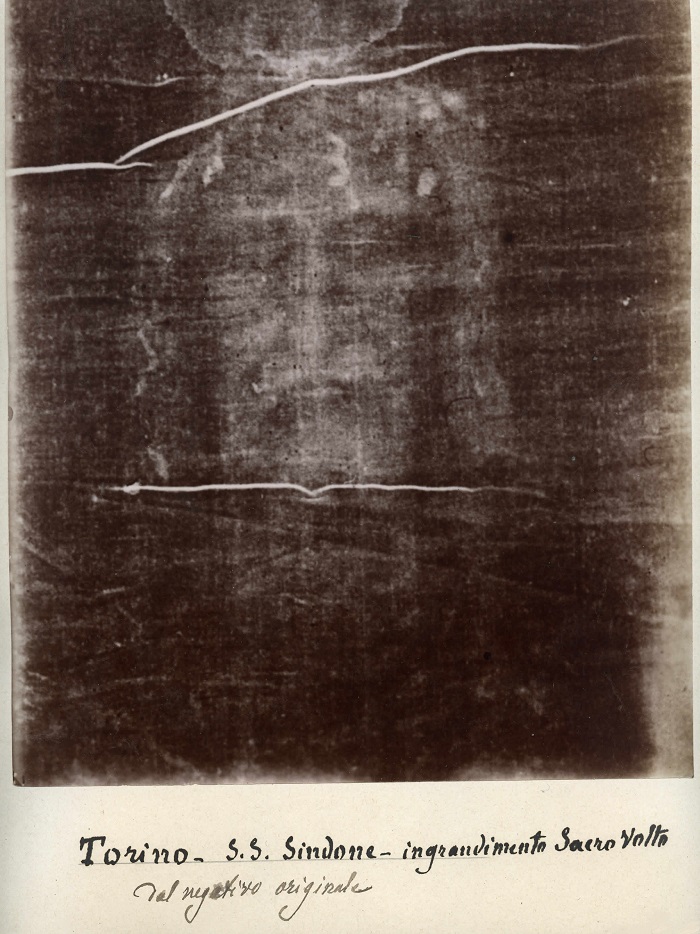
Few religious artifacts have captivated public imagination as powerfully as the Shroud of Turin, claimed to be Jesus’ burial cloth. For centuries, it has inspired pilgrims, provoked theological devotion, and generated significant debate. From the standpoint of historical scholarship, documentary evidence, and scientific investigation, however, the Shroud is widely regarded as a medieval creation, most likely fabricated in the fourteenth century. It is a profound example of how relics emerge, accumulate legitimacy, and persist through centuries, even when exposed as inauthentic.
The Emergence of the Shroud of Turin in the Fourteenth Century

The Shroud of Turin has no traceable history before the 1350s. No early Christian text, no medieval inventory, no pilgrim diary, no Byzantine source, and no church document mentions It. Then it suddenly appears in the small French town of Lirey, around 1355 or 1356. Its first recorded owner was the knight Geoffroi de Charny. A nobleman of impeccable military reputation, de Charny was also one of uncertain financial means. The shroud was displayed in his newly built church, and quickly drew crowds – and with them, donations.
The exhibition proved a commercial success, but almost immediately, church authorities expressed doubts. In 1389, Bishop Pierre d’Arcis of Troyes wrote the pope asserting that the shroud was a clever forgery. Crucially, he informed the Holy Father that the artist who had created it had confessed. Though the confession record itself is lost, d’Arcis’ letter is a solid contemporary source. He was not a skeptical modern scientist. He was a bishop defending ecclesiastical jurisdiction, and was alarmed by a rival church attracting devotees with a fake relic.
Contemporary Challenges to the Shroud’s Authenticity

The papacy did not endorse d’Arcis’ position, nor did it declare the Shroud of Turin genuine. Instead, Pope Clement VII allowed its display, but presented as a “representation” rather than as an authentic burial cloth. That official ambiguity helped preserve the relic, and sidestepped outright condemnation. To understand the shroud’s acceptance, one must see it in the context of medieval Europe. Back then, there was a massive circulation of religious relics – bones, cloths, weapons, and saints’ body parts. Monasteries and churches competed for relics to attract pilgrims, whose donations brought desperately needed revenue.
Thousands of “authenticated” items like Jesus’ baby teeth, the Virgin Mary’s milk, and pieces of the Truce Cross circulated widely. Many were fabricated, some were acquired from dubious sources, and others were misidentified natural objects. In such an environment, a shroud with a haunting image of Christ was not just plausible – it was marketable. The shroud fit into a broader pattern of pious fraud, whereby forgers justified their creations as tools to inspire faith. Even if they were fake, the self-serving reasoning went, they brought people closer to God, which is a good thing.
Radiocarbon Dating

The most powerful scientific evidence against the authenticity of the Shroud of Turin came in 1988. That year, three laboratories in Oxford, Zurich, and Arizona, radiocarbon dated small samples. Their independent results aligned with remarkable consistency, and placed the linen’s creation between 1260 and 1390. That was precisely the period when the shroud first appears in historical documents. The tests yielded a near-consensus among scientists: the shroud is a medieval textile, not a first century Judaean burial cloth. Some groups, particularly among Shroud devotees, attempted to undermine the results by proposing various explanations.
They include fire damage contamination, bacterial growth on the fibers, or that the tested sample came from a repaired patch. The objections have been tested thoroughly, and have been found wanting. The weave, chemical composition, and fiber characteristics of the tested area match the cloth as a whole. Contamination sufficient to shift the date by over a thousand years is statistically implausible. Though debate among enthusiasts continues, the radiocarbon evidence remains one of the strongest pillars supporting the hoax interpretation.
How Could the Shroud’s Image Have Been Produced in the Middle Ages?

One of the most intriguing features of the Shroud of Turin is its faint, apparently three-dimensional image. To believers, that seems miraculous. To historians and forensic analysts, however, it signals artistic cleverness, not resurrection energy. Several explanations for how the image was produced have been proposed. Early critics, including the fourteenth century bishop who denounced the shroud as a forgery, believed it was painted. Modern analysis found traces of pigment in some areas. Advocates of the shroud’s authenticity argue that these are incidental, but the pigment distribution aligns with image areas. Some researchers suggest that the cloth was laid over a carved bas-relief (a sculpted figure) and rubbed with pigment or another agent to transfer an image. That would account for the shroud’s proportional distortions and surface-only coloration.
The first photographs of the Shroud, taken in 1898 by Secondo Pia, produced a negative image that seemed startlingly “lifelike”. That discovery transformed the relic’s status. However, medieval artisans experimented with early forms of light-sensitive materials long before modern photography. A fourteenth century artisan could have used a form of proto-photography with a camera obscura and silver salts. That could produce such an image, without a supernatural explanation. A heated metal statue pressed against cloth could also imprint a scorch-like image with superficial penetration, like the shroud’s image. No single method has unanimous acceptance, but all are technologically plausible for the medieval period.
Stylized Medieval Iconographic Conventions

Another line of evidence of forgery is the Shroud’s herringbone twill weave. While not unknown in antiquity, it was more characteristic of medieval European textiles than of Jewish burial cloths. No archaeological examples from first century Judaea resemble it. Additionally, pollen grains and dust once claimed to prove Middle Eastern origins have been discredited by later analysis. It shows contamination from centuries of public handling and display, rather than ancient provenance. Medieval artisans often used expensive fabrics to increase relics’ prestige, and the shroud’s weave fits comfortably within that tradition.
Numerous other indicia argue against the shroud’s authenticity. Forensic pathologists noted that the image on the shroud does not reflect an actual human body wrapped in linen. Also, the blood flows appear artistically stylized, rather than naturally produced. Bloodstains sit on top of the image rather than beneath, which contradicts how a body imprint would form. The wounds correspond to medieval iconographic conventions, such as the placement of nails through the palms rather than the wrists. A real corpse wrapped tightly in linen would produce a distorted image, not the clean depictions seen on the shroud. Those features show the hand of a designer trying to replicate the way medieval Europeans imagined Christ’s Passion, not the physical realities of Roman crucifixion.
Faith vs Evidence

Though the shroud’s medieval origins were recognized by church authorities in the 1300s, it steadily gained prestige over time. That happened for several reasons. Believers treated the Shroud of Turin not only as a physical artifact, but as an object of spiritual emotion. Once devotion crystallizes around a relic, contradictory evidence can almost never undo it. Christianity’s sacred history attracted countless forged relics, but few were as visually compelling as the Shroud. Its haunting image made it unique, and uniqueness breeds authenticity in the public imagination.
The shroud’s owners – first de Charny’s family, later the House of Savoy – used it to enhance prestige and religious authority. The Savoy court displayed it periodically with great ceremony from the sixteenth century onward, which reinforced its reputation. Then the 1898 photographic negative gave the shroud new life in a new era. The eerie reversal looked more realistic than the original cloth, convincing many that the image must be supernatural. That revitalized the relic in an age increasingly enthralled with science and technology. All scientific tests, even those that conclusively demonstrated forgery, simply generated further waves of public fascination. Mystery can be more captivating than certainty.
Significance and Legacy of the Shroud of Turin

Despite the strong evidence that the Shroud of Turin is a medieval fabrication, a dedicated community of researchers, often called “sindonlogists”, continue to argue for its authenticity. Some propose radiation bursts caused by resurrection, complex chemical processes unknown to modern science, or contamination that invalidates carbon dating. Such explanations generally fail peer review, but survive in popular literature and documentaries. The Catholic Church itself maintains a position of pastoral agnosticism. It neither declares the shroud genuine nor a forgery. Instead, it treats it as a devotional image. That diplomatic stance allows believers to venerate it, while avoiding direct contradiction of scientific evidence.
The Shroud of Turin endures not because it is historically authentic, but because it occupies the intersection of faith, art, mystery, and the human desire for physical contact with the sacred. The evidence overwhelmingly supports its origin as a fourteenth century creation. It was likely produced by a talented artisan for devotional or financial purposes. Radiocarbon dating, forensic analysis, textile studies, and medieval documentation all support that conclusion. Nonetheless, belief in the shroud’s authenticity endures. It powerfully demonstrates how a hoax, whether born of piety, profit, or both, can survive repeated debunkings. Its story is a window into the medieval world, the psychology of belief, and the enduring human appetite for objects that bridge the earthly and the divine.

_________________
Some Sources & Further Reading
Phys Org, June 21, 2005 – Turin Shroud Confirmed as a Fake
Vikan, Gary – The Holy Shroud: A Brilliant Hoax in the Time of the Black Death (2020)
Latest Posts
- The Johnstown Flood – Thousands Perished When A Dam Collapsed After Gilded Age Tycoons Modified it for their Private Resort
- The Jacquerie: The Medieval Peasant Uprising That Terrified France’s Aristocrats
- Things That Weren’t Thought Through: WWII’s Sticky Bomb Stuck to Users’ Hands Once Activated
- German Tanks of World War II – The Panzer 38(t), a Czech Tank in German Service
- Nicholas Alkemade: The WWII Airman Who Survived an 18,000 Foot Fall From a Bomber Without a Parachute

