[This is the second in a series of articles about the Neolithic Revolution, also known as the First Agricultural Revolution, that saw most of humanity switch from hunter gatherers to settled farmers and agriculturalists. For Part I, click here]
Hunter gatherer communities got better over the millennia at collecting information about, and understanding, their environments. As that knowledge was passed down the generations, it accumulated and steadily grew. So humans steadily became more skillful at both hunting and gathering, and their impact on their environments steadily grew. That ended the (relatively) good times that had allowed our distant ancestors to thrive as hunter gatherers for untold generations.
Humans Got Too Good at the Hunting Part of Hunter-Gatherer

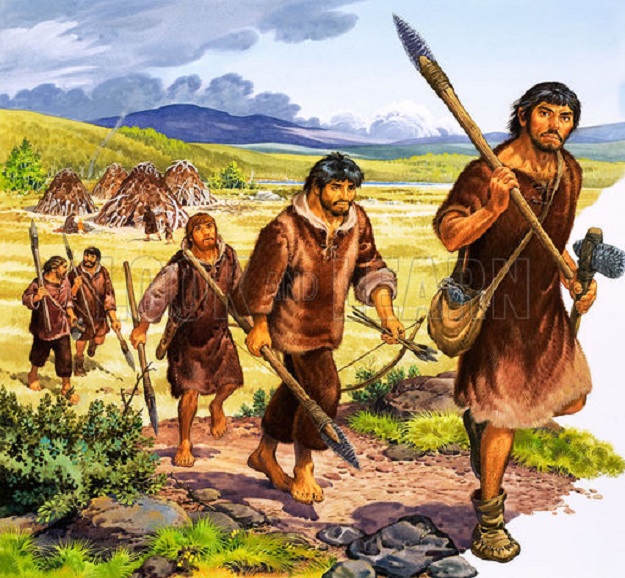
Increasingly more efficient human hunters steadily placed many animal species, especially the mega fauna – large animals that weighed more than one hundred pounds – under ever greater pressure. It is probably just a feel good myth that our hunter gatherer ancestors were particularly respectful of their environments, who killed only what they needed and consumed all that they killed. When they arrived in new territories outside Africa, where the mega fauna had evolved alongside humans for hundreds of thousands years – long enough to learn to fear us – our ancestors entered lands that teemed with game that was not particularly wary of humans. In such bonanza conditions, they were as wasteful of food as we are today.
The first arrivals in virgin hunting territory where animals had not yet evolved to fear humans would have frequently killed only to consume the choicest bits, letting the rest of the carcass go to waste. Why bother eating any but the tastiest parts, when there was seemingly limitless game around? Similarly, our ancestors often adopted wantonly wasteful hunting techniques, such as stampeding entire herds to their death off cliffs, where most of the killed animals’ meat would have spoiled. By the end of the last ice age, roughly 11,500 years ago, most mega fauna around the world, except the big animals in Africa that had coexisted with humans long enough to evolve to fear and stay away from us, had gone extinct.
The Extinction of Big Game and a Changing Climate Ended the Good Times for Hunter Gatherers

Conventional wisdom in years past absolved our hunter gatherer ancestors of responsibility for the mega fauna extinctions that had taken place by the end of the last ice age. It was fueled in no small part by “noble savage” mindsets that wanted to believe that our primitive ancestors were gentle environmentalists who respected nature and could do no wrong. Unfortunately, our ancestors were often inclined to be just as selfish, destructive, and shortsighted as we are today. They simply lacked the technology and numbers to inflict as damage on their environment, and do so as quickly, as we can today.
However, within the parameters of their capabilities, our hunter gatherer ancestors wreaked enough havoc to drive many species into extinction. That coincided with a changing climate at the tail end of the last ice age. There were floods from melting glaciers, and warmer weather that blighted the plant life in many biospheres that had developed during a cooler era. For many humans around the world, the combination of mega fauna extinctions and a changed climate spelled the end of the idyllic conditions that had enabled earlier generations to feast upon seemingly limitless and easily hunted game. Life was about to get a lot tougher for humanity.

[This is the second in a series of articles about the Neolithic Revolution, also known as the First Agricultural Revolution. It saw most of humanity switch from hunter gatherers to settled farmers and agriculturalists
I: Why Did Humans Switch From Wandering Hunter Gatherers to Settled Farmers?
II: When Humans Got Too Good at Hunting
III: When Prehistoric Hunter Gatherers Depleted the Available Resources
IV: The Domestication of Sheep and Goats
V: Newly Emergent Farmers Had to Work a Lot Harder than Hunter Gatherers
VI: Did the Discovery of Bread Cause the Shift From Hunter Gathering to Farming?
VII: Was it Actually Beer, Not Bread, that Motivated Hunter Gatherers to Become Farmers?
VIII: Was it Wheat That Domesticated Humans, Instead of the Other Way Around?
IX: Early Farmers Enjoyed a Bonanza, But it Became a Borderline Bust for Their Descendants
X: Humanity Benefited Greatly From the Switch to Farming, But it Came at a High Cost
XI: Humankind’s Greatest Revolution]
_________________
Some Sources & Further Reading
Barker, Graeme – The Agricultural Revolution in Prehistory: Why Did Foragers Become Farmers? (2006)
Diamond, Jared – Guns, Germs, and Steel (1997)
Encyclopedia Britannica – Neolithic Revolution
Gonick, Larry – The Cartoon History of the Universe (1990)
Harari, Yuval Noah – Sapiens: A Brief History of Humankind (2014)

