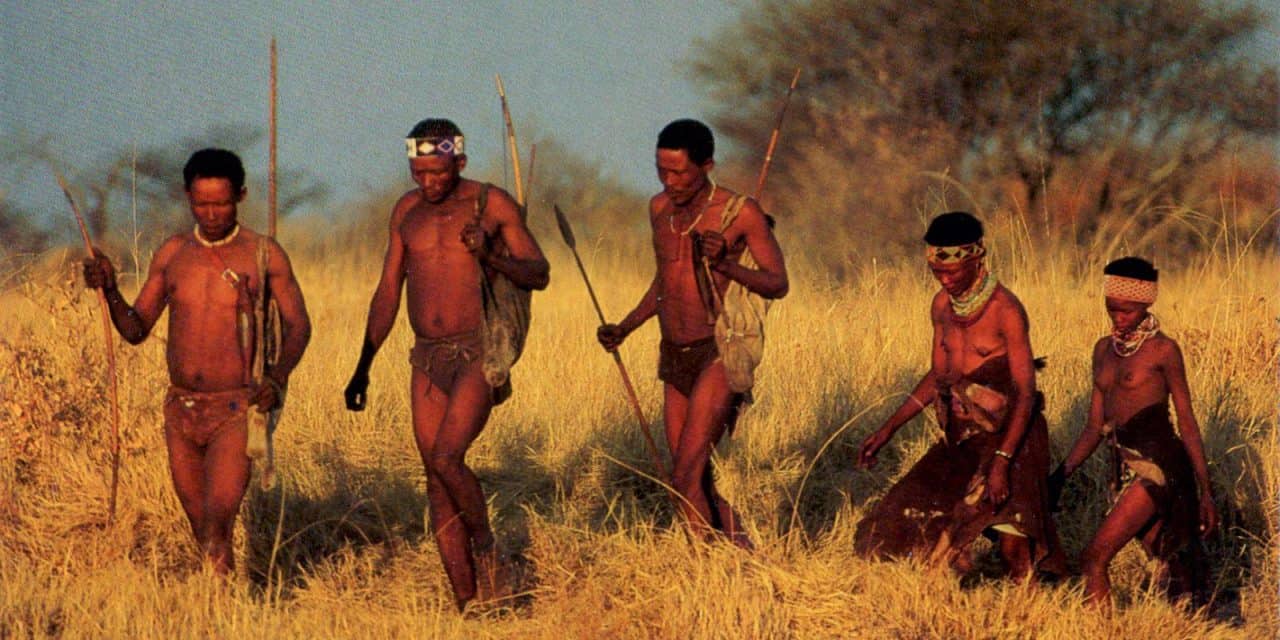
For millions of years, our distant human and proto-human ancestors kept body and soul together by hunting animals, scavenging their carcasses, or eating plants and fruits. Unlike our mostly domesticated sources of nourishment today, the plants and animals that sustained our ancestors were wild. From the earliest hominids and throughout most of the history of Homo sapiens, our ancestors neither controlled nor attempted to influence the planting or birth of their food sources. All things considered, it was a relatively easy lifestyle. So why did humanity switch from something that easy, to the hard labor and toil of farming and agriculture?
Hunter Gatherers Used to Have it Relatively Easy

Homo population densities used to be pretty low compared to the food resources available to feed them. That state of affairs lasted for millions of years. Other than during periods of crisis caused by draughts or other natural disasters, our hunter gatherer ancestors seldom needed to put in more than an hour or two of work each day to gather enough calories to keep themselves and their dependents fed. When anthropologists did the math, they found out that on average, hunter gatherers like the Kalahari Desert Bushmen today spend only about fifteen hours each week to get food.
Kalahari hunter gatherers accomplish that despite living in dreary and inhospitable terrain – a literal desert. By contrast, hunter gatherers throughout most of history had free run of Earth’s most lush, most hospitable, and resource-rich terrain. Sufficient sustenance was practically there just for the taking, from a wide variety of plants and animals. And unlike our modern carbohydrate-rich diet, such as from wheat, corn, rice, and potatoes, our hunter gatherer ancestors had a better balanced and richer variety diet, with plenty of protein, as well as fruits.
The Switch From an Easy Lifestyle to the Labor and Toil of Farming

For hunter gatherers before humanity switched to agriculture, only a relatively brief period was spent gathering or hunting. The rest of their waking hours were free time to spend as they saw fit. They socialized, explored their surroundings, got it on with each other, or just lazed the day away. When anthropologists asked one Bushman why his hunter gatherer band had not settled down and adopted farming like the tribes surrounding the Kalahari Desert, he replied: “Why should we, when there are so many free mongongo nuts in the world?”
That relatively carefree idyll started to come to an end around ten thousand years ago. Our ancestors switched to backbreaking work from sunup to sundown, to take care of a few plant and animal species. That was the start of the Neolithic Revolution, also known as the First Agricultural Revolution. It eventually ended with most of humanity replacing wild plants and animals as the main source of sustenance with the produce of farming and animal husbandry to feed itself. It also got us to give up the wandering existence hunter gatherers. Instead, we settled down in fixed abodes in order to take care of our farms and agriculture. Why and how did that come about?

[This is the first in a series of articles about the Neolithic Revolution, also known as the First Agricultural Revolution. It saw most of humanity switch from hunter gatherers to settled farmers and agriculturalists
I: Why Did Humans Switch From Wandering Hunter Gatherers to Settled Farmers?
II: When Humans Got Too Good at Hunting
III: When Prehistoric Hunter Gatherers Depleted the Available Resources
IV: The Domestication of Sheep and Goats
V: Newly Emergent Farmers Had to Work a Lot Harder than Hunter Gatherers
VI: Did the Discovery of Bread Cause the Shift From Hunter Gathering to Farming?
VII: Was it Actually Beer, Not Bread, that Motivated Hunter Gatherers to Become Farmers?
VIII: Was it Wheat That Domesticated Humans, Instead of the Other Way Around?
IX: Early Farmers Enjoyed a Bonanza, But it Became a Borderline Bust for Their Descendants
X: Humanity Benefited Greatly From the Switch to Farming, But it Came at a High Cost
XI: Humankind’s Greatest Revolution]
_________________
Some Sources & Further Reading
Diamond, Jared M. – Guns, Germs, and Steel: The Fates of Human Societies (1997)
Harari, Yuval Noah – Sapiens: A Brief History of Humankind (2014)
History Halls – Pig Domestication: From Wild Boars to Humanity’s Most Dependable Meat Source

