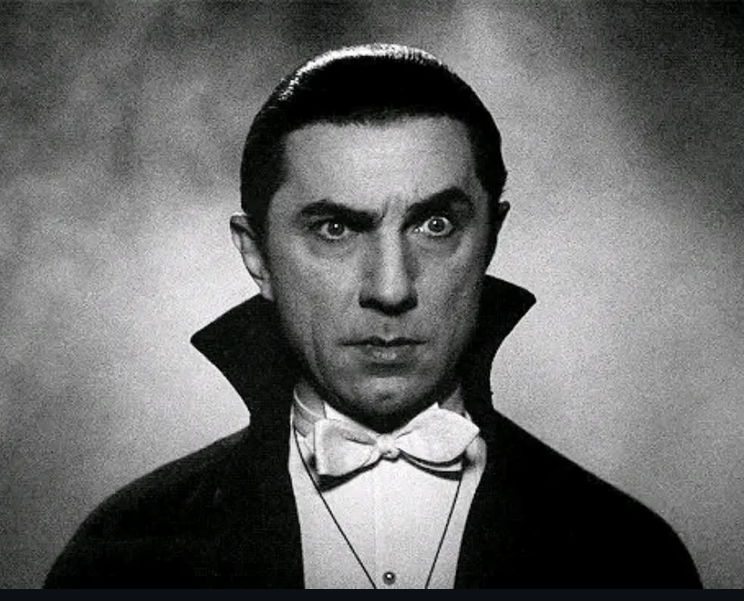
Hungarian émigré actor Bela Lugosi is remembered primarily as the iconic face of Dracula. His heavy accent and aristocratic bearing helped define cinematic horror. Behind the cape and widow’s peak was an activist with strong political convictions. His views were shaped by revolution, exile, labor struggles, and the rise of fascism in Europe. Lugosi’s politics were neither casual nor fashionable. They were forged in crisis and remained a meaningful, if often overlooked, part of his life. Lugosi was dubbed “Hollywood’s Prince of Darkness” for his work on film. Few know that he was a union leader and antifascist who fought monsters in real life.
Before He Became Dracula, Bela Lugosi Was a Union Leader

Lugosi was born Bela Ferenc Dezso Blasko in 1882 in Lugos, then part of the Austro-Hungarian Empire. He came of age in a society marked by rigid class hierarchies, ethnic tensions, and political unrest. As a young man, he worked various jobs before he became an actor. He was drawn early to left-leaning ideas about social justice and workers’ rights. Hungary in the 1910s was a hotbed of political radicalism, and Lugosi did not remain on the sidelines. During World War I, he served as an infantry officer in the Austro-Hungarian army and was wounded multiple times. That experience deepened his disillusionment with imperial authority and militarism.
After the war, Hungary briefly became the Hungarian Soviet Republic under Bela Kun in 1919. A communist government seized power and promised sweeping social reforms, and Lugosi supported the revolution. He became active in the actors’ union, and advocated for better pay, working conditions, and protections for performers. He was elected president of the Actors’ Union of Hungary. It was a significant role that reflected both his popularity and his commitment to organized labor. His activism aligned him with the new regime, which emphasized workers’ rights and cultural democratization.
A Life in Exile

When the Hungarian Soviet Republic collapsed after only a few months, the backlash was swift and brutal. A counterrevolutionary government launched the “White Terror”, which targeted communists, socialists, trade unionists, and anyone associated with the left. Bela Lugosi’s union leadership and support for the Kun government placed him in serious danger. Facing arrest or worse, he fled Hungary, first to Vienna and then to Germany. That forced exile was a defining moment: Lugosi’s politics were no longer theoretical but a matter of survival. In Germany, Lugosi worked in theater and film during the Weimar era, another period marked by political polarization. While he did not play a public political role there, he remained deeply hostile to reactionary nationalism and authoritarianism.

By the time he emigrated to the United States in 1920, Lugosi had already experienced firsthand the collapse of democracy and the persecution of leftists. Those experiences shaped his worldview far more than any Hollywood trend ever could. In America, Lugosi’s activism became more cautious but did not disappear. The United States of the 1920s and 1930s was suspicious of radicals, especially foreign-born ones. Lugosi’s heavy accent and outsider status made him vulnerable. Nevertheless, he retained strong sympathies for labor causes and progressive politics.
An Original Antifascist

Bela Lugosi supported Franklin D. Roosevelt and the New Deal, which he saw as a humane response to economic crisis. He also saw it as a safeguard against the kind of social collapse he had witnessed in Europe. Lugosi was also a vocal anti-fascist. As Nazism rose in Germany and fascist movements spread across Europe, he spoke out against them. Especially after Hungary aligned itself with Nazi Germany during World War II. He publicly condemned Hungarian fascist groups, and expressed shame at his homeland’s collaboration with Hitler. During the war, he participated in bond drives and lent his celebrity to anti-Nazi efforts. He framed the conflict not just as a geopolitical struggle, but as a moral one.
Lugosi’s antifascism was deeply personal, as many of his friends and colleagues in Europe were Jewish or politically left-wing. From personal experience, he was acutely aware of the persecution they faced. Though not Jewish himself, Lugosi was outspoken in condemning antisemitism. As one writer noted: “He may have portrayed savage villains on the silver screen, but in real life Bela Lugosi raised his voice in protest against the savage persecution of the Jews in his native Hungary.” At a time when many Hollywood figures avoided political statements to protect their careers, Lugosi’s stance was unusually direct. Especially for an immigrant actor whose employment was already precarious.
Bela Lugosi Paid for His Political Convictions

As the Cold War intensified in the late 1940s and early 1950s, Bela Lugosi’s earlier associations with communism and labor activism became liabilities. He was never a member of the American Communist Party. However, his past support for the Hungarian Soviet Republic and his union activism made him politically suspect. He was not blacklisted to the extent of some writers and directors. However, the climate of fear further narrowed his opportunities and reinforced his status as an outsider in Hollywood.
Lugosi’s politics never translated into sustained power or influence in the film industry. Unlike stars who successfully reinvented themselves as political figures or cultural brokers, he remained marginal. He struggled financially and professionally in his later years. However, his activism was sincere and consistent. He believed in the dignity of workers, the necessity of unions, and the moral imperative to oppose fascism wherever it appeared. Bela Lugosi’s political life complicates the popular image of him as a tragic, eccentric horror star. He was a survivor of revolution, a refugee from political terror, a union leader, and an immigrant who carried the scars of Europe’s upheavals into Hollywood. His activism did not bring him wealth or security. It did reveal a man whose convictions were shaped by history’s darkest moments, who in his own imperfect way, tried to stand on the side of justice.

_________________
Some Sources & Further Reading
Cremer, Robert – Lugosi: The Man Behind the Cape (1976)
Lennig, Arthur – The Immortal Count: The Life and Times of Bela Lugosi (2003)
Newest Articles
- Edward England, the Humane Pirate Captain Deposed by His Men for Being Too Nice
- American Presidents: Abraham Lincoln, Hall of Fame Wrestler
- Henry Jennings: The Privateer-Turned-Pirate Who Set the Stage for the Caribbean’s Golden Age of Piracy
- Fighting Women: Tomoe Gozen, the Fearsome Female Samurai
- From the NFL to the Sands of Iwo Jima: Medal of Honor Recipient Jack Lummus

