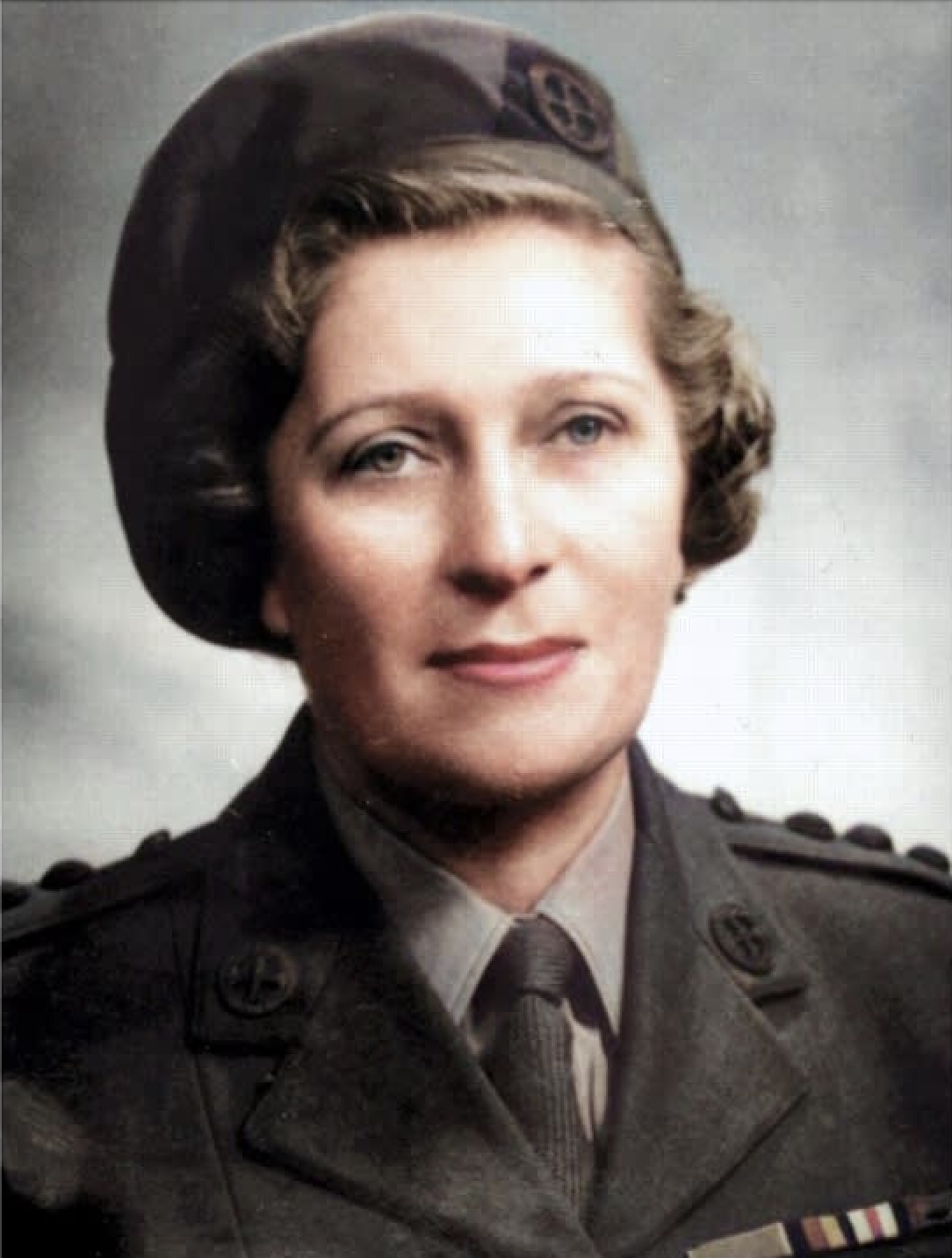
Special Operations Executive (SOE) agent Lise de Baissac was one of World War II’s most quietly remarkable figures. She was a pioneer female clandestine agent, and key organizer of resistance networks in occupied France. Her courage and adaptability allowed her to survive where many of her contemporaries were captured and killed. Her wartime career illustrates the extraordinary demands of secret warfare. It also highlights the essential role played by women in the Allied struggle against Nazi Germany.
A Dual Cultural Background

Lise Marie Jeanette de Boucherville de Baissac was born on May 11th, 1905, in Curepipe, Mauritius, then a British colony. Her family was of French origin, but held British nationality – a dual cultural background that shaped her life. French was spoken at home, while English was part of her education and environment. That gave her native fluency in both languages. Such bilingual upbringing would later prove invaluable in intelligence work. In 1919, following World War I’s upheavals, the family relocated to Paris. There, Lise grew into adulthood immersed in French society, culture, and everyday life. She acquired an instinctive understanding of social customs and regional attitudes that no amount of formal training could have provided.

When France fell to German forces in 1940, Lise and her brother Claude were trapped in a rapidly collapsing state. Like many who refused to accept defeat, they fled south through the confusion and chaos of defeat. They eventually reached neutral Spain and Portugal after months of hardship and uncertainty. From there, they managed to reach Gibraltar, and then Britain. Lise had experienced firsthand the dangers of wartime displacement and the moral shock of occupation. Rather than demoralize and discourage her, those experiences strengthened her resolve to continue the fight.
The SOE Siblings, Claude and Lise de Baissac

Initially, Lise de Baissac worked for a British newspaper. She lived an outwardly ordinary life as a refugee from occupied Europe. Her brother Claude, however, was recruited into the Special Operations Executive. That organization was created by the British government to conduct espionage, sabotage, and resistance support in Nazi-occupied territories. When SOE began to recruit women, Lise volunteered. SOE sought individuals who could blend into occupied societies, move without drawing attention, and endure prolonged isolation under constant threat. Lise’s language skills, knowledge of France, and calm temperament made her an ideal candidate. Her training began in 1942, and was as demanding as that given to male agents. She learned unarmed combat, weapons handling, sabotage techniques, codes and ciphers, and the use of clandestine radios.
Lise was also trained to withstand interrogation and to live under false identities for extended periods. She was officially attached to the First Aid Nursing Yeomanry – a convenient cover for women working with SOE. Reports from her instructors described her as level-headed, resourceful, and unusually steady under pressure. In September, 1942, Lise de Baissac was sent on her first mission to occupied France. She and fellow agent Andree Borrel became the first women parachuted into the country. The drop was dangerous: parachuting at night into unfamiliar countryside, burdened with equipment. Discovery then or afterwards could mean execution. Indeed, such was the fate of the other woman who parachuted with Lise. Andree Borrel was captured by the Gestapo in 1943, and executed in a concentration camp the following year.
Setting Up Shop Next to the Gestapo Headquarters

Lise de Baissac landed in the Loire Valley. She began to operate under the cover identity of a displaced widow seeking a modest living away from Paris. Her task was to establish and run a new resistance circuit, codenamed “Artiste”, centered on the city of Poitiers. Unlike many female agents who served primarily as couriers, Lise held a leadership and organizational role. She was responsible for setting up safe houses, coordinating communications between different SOE networks, identifying suitable locations for arms drops, and maintaining contact between resistance groups scattered across central and western France.
Lise often traveled long distances by bicycle, carrying messages, money, and forged papers. She often rode for hours through countryside patrolled by German troops and gendarmes. One of the most striking aspects of her work was her choice of living arrangements. She deliberately rented accommodations close to Gestapo headquarters in Poitiers, and often exchanged greetings with the local Gestapo chief. She reasoned that the enemy would be less likely to suspect resistance activity so near their own headquarters. That calculated audacity typified her approach to clandestine life. She cultivated the image of an inconspicuous, somewhat dowdy woman struggling to survive wartime shortages. That disguise allowed her to observe and move without attracting attention.
Escaping Nazi-Occupied France in the Nick of Time

Lise de Baissac’s network expanded throughout late 1942 and early 1943. Weapons and explosives were airdropped by parachute, and distributed to resistance fighters. Information was gathered and passed on to London. New contacts were recruited and tested. However, it was also a period of growing danger, as German counterintelligence grew increasingly effective. The Nazis infiltrated many resistance groups, and dismantled various SOE networks across France. By mid-1943, several major circuits had been compromised, leading to mass arrests and executions. Recognizing the danger, SOE ordered Lise de Baissac and her brother Claude to return to Britain. Extracted by a Lysander airplane that landed at night in a remote field in August, 1943, they were flown home.
Lise’s escape was narrowly timed; soon after her departure, many associated networks collapsed under German pressure. Her survival when so many colleagues perished was partially due to her caution, discipline, and instinct for when to withdraw. Back in Britain, Lise was briefly employed as an instructor and helped train new agents bound for France. Her practical experience made her insights particularly valuable. During this period, she broke her leg during a parachute drop, which temporarily prevented her from returning to the field. Once recovered, however, she insisted on being sent back to occupied territory.
Back to Occupied Territory

Lise de Baissac’s second mission began in April, 1944, just weeks before the Allied invasion of Normandy. Inserted once again into France, she operated under a new alias and joined a different network, codenamed Scientist, in Normandy. This one was headed by her brother and fellow SOE agent Claude de Baissac. The context of this mission was critical, as Resistance activity was now closely tied to preparations for D-Day. SOE agents were tasked with gathering intelligence on German troop movements, coordinating sabotage to disrupt communications and transport, and ensuring that resistance forces were ready to support the invasion.
In Normandy, Lise demonstrated the same ingenuity and daring that had marked her earlier work. She sometimes lodged in houses occupied by German officers, and used her apparent harmlessness and polite demeanor to observe conversations and routines. Her reports on troop concentrations, road usage, and defensive preparations, were relayed to London and contributed to Allied planning. She also acted as her brother’s courier and conveyer of information between various Resistance groups, which was strenuous work. To carry out her tasks, Lise often had to bicycle more than sixty miles or one hundred kilometers per day.
Supporting the D-Day Landings

Lise de Baissac was in Paris recruiting Resistance fighters on June 5th, 1944 – the eve of D-Day. When she received word that the invasion was imminent, she immediately headed back to Normandy. She bicycled roughly three hundred kilometers or two hundred miles in just three days, sleeping in ditches along the way. After the D-Day landings, she helped distribute arms to French Resistance fighters, and supported operations against German forces. She remained active until the liberation of France later that year, after which she returned to Britain.
Lise’s wartime service earned her significant recognition. She was appointed a Member of the Order of the British Empire, and received French decorations including the Croix de Guerre and the Legion d’honneur. Those honors reflected not only her personal bravery, but also the importance of her work. Lise de Baissac did not seek publicity after the war. She married Gustave Villameur, her teenage sweetheart and an interior designer, and settled into a quiet civilian life in Marseilles. Like many former SOE agents, she rarely spoke publicly about her wartime experiences. That was partly due to official secrecy, and partly from personal reserve. As a result, her name remained relatively obscure for decades, overshadowed by more publicized figures.
The Later Years and Legacy of Lise de Baissac

In later years, historians and writers began to reassess the role of women in clandestine warfare. That brought renewed attention to figures like Lise de Baissac. What she did challenges simplistic notions of women’s roles in wartime resistance. She was not merely a courier or assistant, but a network organizer, intelligence gatherer, and operational leader. She survived two missions in occupied France, at a time when the mortality rate for SOE agents was extremely high. That was ample demonstration of her exceptional judgment and adaptability.
Lise de Baissac passed away in 2004, at the age of ninety-eight. She exemplified a generation of individuals who fought a hidden war, often without recognition, under conditions of extreme danger. She occupies a distinctive place in SOE history as a pioneer who helped shape the resistance operations in France. Her story, once little known, is a reminder that Allied victory depended on more than armies and generals. It also required the courage of men and women willing to live in secrecy, risk everything, and endure in silence.

_________________
Some Sources & Further Reading
Escott, Beryl E. – The Heroines of SOE: F Section, Britain’s Secret Women in France (2012)
History Halls – Phyllis Latour: The WWII SOE Agent Who Posed as a Teenager in Nazi-Occupied France
Latest Articles
- The Norrmalmstorg Robbery: The Bungled Bank Robbery that Birthed Stockholm Syndrome
- Shoe Superstitions Around the World: From Offensive to Bringers of Good Fortune
- The Original Black Panthers: WWII’s African-American 761st Tank Battalion
- Wild West Outlaws: Charlie Bowdre, the Regulator Turned Cattle Rustler
- Marshal Davout, the ‘Iron Marshal’: Napoleon’s Uncharismatic but Most Effective Military Commander

