“Some talk of Alexander, and some of Hercules,
Of Hector and Lysander, and such great names as these,
But of all the world’s brave heroes, there’s none that can compare,
with the tow, row, row, row, row, row, for the British Grenadier” – Traditional marching song of British and Commonwealth grenadiers.
The term “grenadier” involves centuries of tradition, imagery of elite soldiers, discipline, bravery, and battlefield innovation. Grenadiers hold a storied place in the British Army. Their history stretches back to the seventeenth century, when the concept of the grenadier was first imported from continental Europe. Over the centuries, grenadiers evolved from specialized shock troops to ceremonial guards and members of one of the Britain’s most prestigious regiments, the Grenadier Guards. To understand British Army grenadiers is to explore not only their battlefield role, but also their enduring contribution to Britain’s military identity.
The Origins of British Army Grenadiers

Grenadiers originated in France in the mid-seventeenth century, created as specialized infantrymen equipped with and trained to throw hand grenades. Early grenadiers were chosen for their physical strength and courage. They had to be strong to throw grenades as far as possible, and steady under pressure to handle live explosives. Back then, grenades were not nearly as safe and reliable as modern grenades. They looked pretty much like an old-timey cartoon bomb: a metal ball with a fuse sticking out, that the grenadier lit then threw. Mishaps occurred at far greater rates than a modern military would deem acceptable. Nonetheless, the concept quickly spread across Europe. By the 1670s, other major powers, including England, had adopted grenadier companies within their infantry regiments.
British Army grenadiers trace their origins to the reign of King Charles II. Each infantry regiment added a grenadier company composed of its tallest, strongest men, and furnished them with special equipment. Grenadiers carried pouches for grenades, short swords, and hatchets that could be used in combat or to clear obstacles. Because grenades were heavy and cumbersome, grenadiers did not carry muskets at first. That soon changed, as battlefield needs demanded versatility. In battle, grenadiers served as shock troops. They would be deployed at key moments, storming breaches in fortifications or leading assaults where courage and aggression were most needed. Their grenades could scatter enemy formations, disrupt defenses, or flush out entrenched positions.
Grenadiers Were Their Regiment’s Elite Soldiers

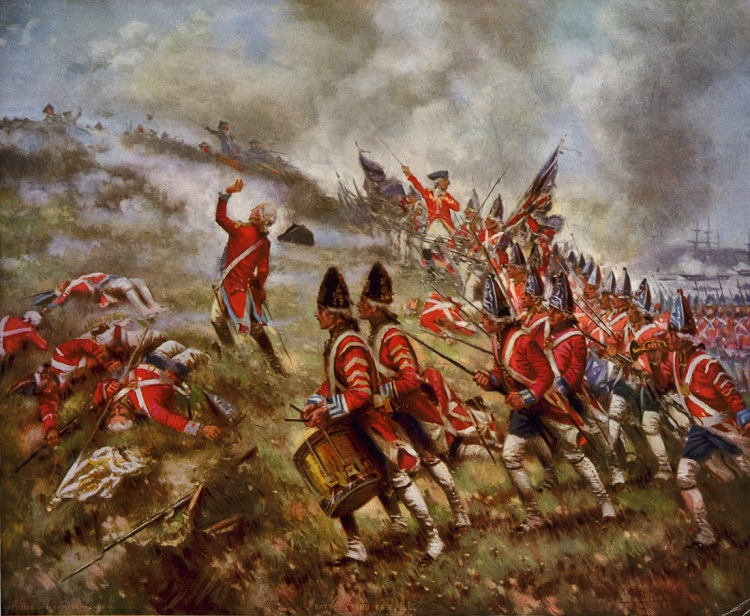
To inspire confidence and perhaps intimidation, grenadiers often wore tall caps to give them greater stature and a more imposing appearance. That became an iconic part of their uniform. Grenades fell out of regular use by the eighteenth century due to limited effectiveness. However, British Army grenadiers retained their reputation as elite soldiers. Their name came to symbolize ferocity and strength on the battlefield, even when their function was identical to that of line infantry. Grenadier companies within regiments continued to be considered elite elements. They often led the charge during assaults, were often placed on the right flank of battle formations, a position of honor.
From when they were first formed and until the end of the Napoleonic Wars, British Army grenadiers were a type of soldier within infantry regiments. There were grenadier companies within regiments, but no “Grenadier Regiment” in the British Army’s roster – although grenadier companies from various regiments were sometimes brigaded together into an ad hoc unit for a specific task or campaign, after which they returned to their regiments. It was not until 1815 that a regiment earned the right to style itself “grenadier”. And it was not until 1877 that a regiment officially had the word “grenadier” attached to its name: the Grenadier Guards.
The Grenadier Guards

The Grenadier Guards are the most famous embodiment of the grenadier tradition in the British Army. Originally the Royal Regiment of Guards, they were formed in 1656 to serve King Charles II during his exile. When Charles was restored to the throne in 1660, it became the First Guards, then the First Regiment of Foot Guards. In 1815, it was granted the right to style itself “The First or Grenadier Regiment of Foot Guards”. They were also granted the right to adopt the distinctive bearskin headdress seen on Buckingham Palace ceremonial guards today. The new name was in honor of their distinguished service at the Battle of Waterloo. There, they had fought fiercely against Napoleon’s Imperial Guard, and defeated the French grenadiers in close combat.
The regiment was officially renamed “Grenadier Guards” in 1877. The renaming of the First Regiment of Foot Guards to Grenadier Guards underscored the unit’s elite status, and connected it directly with the heritage of grenadier soldiers. The regiment was already one of the British Army’s most prestigious. Although the Coldstream Guards are older, having been formed in 1650, the Grenadier Guards were the first to enter the service of the Crown. As such, the Grenadier Guards are first in the British Army’s order of precedence, with the Coldstream Guards second.
A Distinctive Appearance

British Army grenadiers have always stood out visually. In the seventeenth and eighteenth centuries, they wore tall mitre caps instead of the more common tricorn hats. That added to their height and intimidating appearance. British Army grenadier mitre caps became iconic, with elaborate embroidery and regimental insignia. Later, the famous bearskin cap was adopted. After Waterloo, the First or Grenadier Regiment of Foot Guard – today’s Grenadier Guards – wore bearskin caps to symbolize their victory over Napoleon’s grenadiers, who had sported similar headgear. The bearskin remains the most recognizable symbol of the Grenadier Guards today, worn during ceremonial duties such as the Changing of the Guard at Buckingham Palace.
Another distinction of British Army grenadiers was their placement in parade and battle formations. Traditionally, grenadier companies were positioned on the right of a regiment’s line, the place of honor. Even as their specialized roles disappeared, the right-flank privilege reinforced the British Army grenadiers’ elite status. As the eighteenth century progressed, the use of hand grenades in combat waned. They were heavy, short-ranged, and dangerous for their throwers as well as the enemy. By the time of the Seven Years’ War (1756 – 1763), grenades were largely obsolete in the British Army. However, the “grenadier” designation did not disappear.
Grenadiers Without Grenades

Grenadier companies continued to exist as elite troops within regiments. British Army grenadiers no longer used grenades as standard weapons, and fought with muskets and bayonets like other infantry. However, they retained their special identity, traditions, and uniforms. By the Napoleonic Wars, grenadiers were no longer distinguished by weapons, but by being the strongest and bravest men. They were often chosen to lead assaults or form storming parties. Their battlefield significance was less about grenades, and more about morale and reputation.
Without grenades, the title “grenadier” became a mark of honor, rather than a description of function. The Grenadier Guards, meanwhile, solidified their place as a household name in British military history. Their service in campaigns from the Peninsular War to Waterloo, the Crimean War, and beyond, established them as one of the British Army’s foremost fighting units. Their dual role as both combat soldiers and ceremonial guards of the monarchy gave them a unique status unmatched by most other regiments.
The Grenadier Tradition

In the nineteenth and twentieth centuries, the grenadier tradition was narrowed to the Grenadier Guards. Grenadier companies in other regiments ceased to be designated as such, and became standard companies within their units. Today, the Grenadier Guards serve as one of the five Foot Guards regiments of the Household Division, alongside the Coldstream, Scots, Irish, and Welsh Guards. They are responsible for both operational military duties, and ceremonial tasks in London and Windsor. The Grenadier Guards guard the monarch, and participate in state ceremonies. They are far from mere parade ground soldiers, though.
The Grenadier Guards have fought in the twentieth century’s major conflicts, including World War I and World War II. They served with distinction on the Western Front in WWI, and suffered heavy casualties in battles such as Ypres and the Somme. In WWII, they fought in France, North Africa, and Northwest Europe, and again earned a reputation for courage and discipline. In the twenty first century, the Grenadier Guards have deployed to Iraq, Afghanistan, and other conflict zones. They have thus balanced ceremonial splendor with frontline combat service. Their role today is much like other infantry regiments, though their traditions and place within the Household Division maintain their unique identity.
The Legacy of British Army Grenadiers

British Army grenadiers have long represented qualities of strength, courage, and steadfastness. Their journey from grenade-throwing shock troopers to ceremonial guardsmen encapsulates the broader evolution of military tradition. What began as a specialized function has endured as a title of honor. Today’s Grenadier Guards are the heirs of that legacy. The bearskin caps, the parade ground precision, and the storied history of the Grenadier Guards have become symbols of Britain itself, instantly recognizable to people worldwide. They embody both continuity and adaptability. Their original battlefield role disappeared centuries ago, but their reputation and traditions have allowed them to remain relevant and respected.
British Army grenadiers are a fusion of history, tradition, and military excellence. From their seventeenth century beginnings as fearsome grenade-throwers, to their modern incarnation as elite guards and combat troops, they have consistently been associated with valor and distinction. The Grenadier Guards, in particular, serve as a bridge between past and present, and carry the grenadier name into the twenty first century. Their uniforms, symbols, and battlefield heritage reflect the evolution of warfare and the enduring power of tradition. To speak of British Army grenadiers is not merely to discuss soldiers. It is to reflect on a legacy of courage, ceremony, and service to the Crown, unbroken for more than 360 years.

_________________
Some Sources & Further Reading
Fraser, David – The Grenadier Guards (1978)
History Halls – Redcoat Recruit Training: Transforming Civilians Into Crack Soldiers
National Army Museum – The Grenadier Guards

