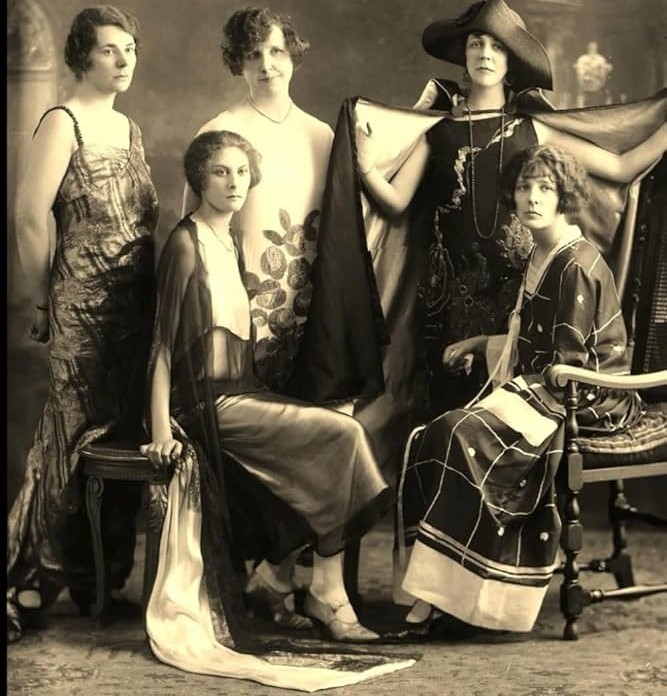
In early twentieth century London, few department stores were as posh as Selfridge’s. In 1915, a group of elegantly-dressed women, clad in expensive clothes, furs, and jewels, stepped out of chauffeured cars and into the store. They received the usual deference from the staff, trained to cater to well-heeled elites. In accordance with the era’s prudish norms, the women were allowed all the privacy they wanted to try out the most expensive of dresses, other clothing items, and jewels. As it turned out, it was too much privacy. After they left, the store discovered that the women had stolen a fortune in jewels, and expensive clothes and furs. Selfridge’s had been raided by the Forty Elephants, an all-female gang that operated for nearly two centuries.
The Long-Lived Forty Elephants

Throughout history, gangs and organized crime have been a mostly male affair. Every now and then, though, exceptions crop up, such as the all-female Forty Elephants gang. For almost two hundred years from the 1700s, throughout the nineteenth century, and all the way into the 1950s, they held sway over a part of London. Their predation was not confined to their own neighborhood, though. The female gangsters committed crimes all over the city, and eventually ventured out to the rest of Britain.
The Forty Elephants were so named because they operated out of the Elephant and Castle. An area in London’s Borough of Southwark, its most famous landmark was a pub and coaching inn that bore that name. Their specialty was shoplifting, helped by the multilayered, voluminous, and complicated clothing worn by women until well into the twentieth century. Because of the era’s mores and prudish norms that afforded women significant privacy, it was easy – or easier – for female shoplifters to escape notice.
A Versatile Gang

The Forty Elephants’ favorite stomping grounds was London’s West End, whose posh stores they bled white in daring raids. It got so bad that the mere rumor that they were present in an upscale neighborhood made shop owners hyperventilate. The female gangsters claimed shoplifting as their domain, and forced smaller gangs engaged in shoplifting to pay them tribute for the privilege of allowing them to operate. Those unwise enough to not pay were beaten, and sometimes kidnapped and tortured until they saw the light and fell in line.
Shoplifting was a significant part of the Forty Elephants’ repertoire, but it was not all they did. They also stole thousands of pounds worth of goods – serious sums back then. Such loot allowed them and their male partners to live in relative comfort. They also branched into document forgery, and became experts at it. That went well with another sideline: faking reference letters to get hired as housemaids, then robbing their employers’ homes. They also engaged in blackmail, seducing respectable men, then threatening to tarnish their reputations with exposure of the affair if they did not receive hush money.
Brains Before Brawn

The Forty Elephants were not wilting flowers, as evidenced by their willingness to kidnap, torture, and beat up other criminals into paying tribute. They were not squeamish about violence, and were not above throwing down. Members often engaged in fisticuffs with male gangsters, and their toughness and viciousness earned them respect in London’s underground. In the decades between World Wars I and II, they worked hand in glove with south London’s Elephant and Castle Gang, a huge collection of burglars, receivers, smash-and-grab artists, and assorted roughnecks. The female gangsters differed from their often-messy male allies, though.
The Forty Elephants were disciplined, well-organized, and ran a tight shop to avoid attracting attention. For example, they stole jewels, furs, and expensive clothes, but avoided ostentation and never wore them. Instead, they offloaded them through a network of fences, and sold them to unscrupulous store owners whom they furnished with forged receipts to show that they had been legally purchased. That brains-before-brawn was a key factor in their extraordinary longevity. For example, the Elephant and Castle mob with whom they associated in the interwar years barely lasted a decade before it was crushed by rivals. By contrast, the Forty Elephants operated across three centuries, from the 1700s and into the 1950s, before they faded away.

_________________
Some Sources & Further Reading
Guardian, The, December 27th, 2010 – Girl Gang’s Grip on London Underworld Revealed
History Halls – The Eighteenth Century Wig-Snatching Crime Wave

