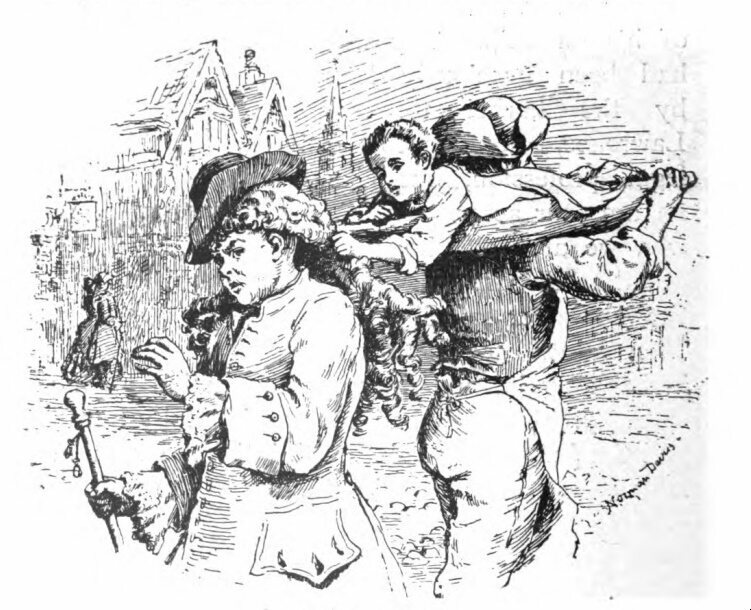
Wigs today are so common and so cheap, that a realistic looking one can be bought online for less than ten dollars. However, there was a time when wigs were expensive luxuries. As seen below, that led to an eighteenth wig-snatching crime wave.
A Fortune Propped on the Heads of the Prosperous

In the eighteenth century, wigs were expensive upper class necessities. Back then, the manufacture of good wigs was labor intensive, and could take “six men working six days from sunup to sundown” to make a decent wig. A quality wig could cost as much as an average workman earned in a year. Such small fortunes propped atop the heads of the rich made wigs an attractive target in England for highwaymen, strong arm robbers, or simple snatch-and-run street urchins. Highwaymen in particular targeted aristocrats who were spotted wearing elaborate wigs.
Only the wealthy could afford big wigs, which is the term “bigwigs” came about, to refer to rich aristocrats, after the lucrative target atop their heads. Not all wig thieves used force. One account tells of a wig bandit so bold and skilled, that he could replace his target’s expensive wig with a cheap rug when the mark was distracted. The victim, unaware of the switch, would then walk away, unaware that he had just lost a fortune. Another crook trained a monkey to snatch wigs off the heads of the unwary. Unfortunately for the wig bandits, the good times came to an end when wigs went out of fashion.

_________________
Some Sources & Further Reading
Gizmodo – In the 18th Century, Wig-Stealing Bandits Roamed England’s Countryside
History Halls – What Made the ‘Wild West’ So Wild?

