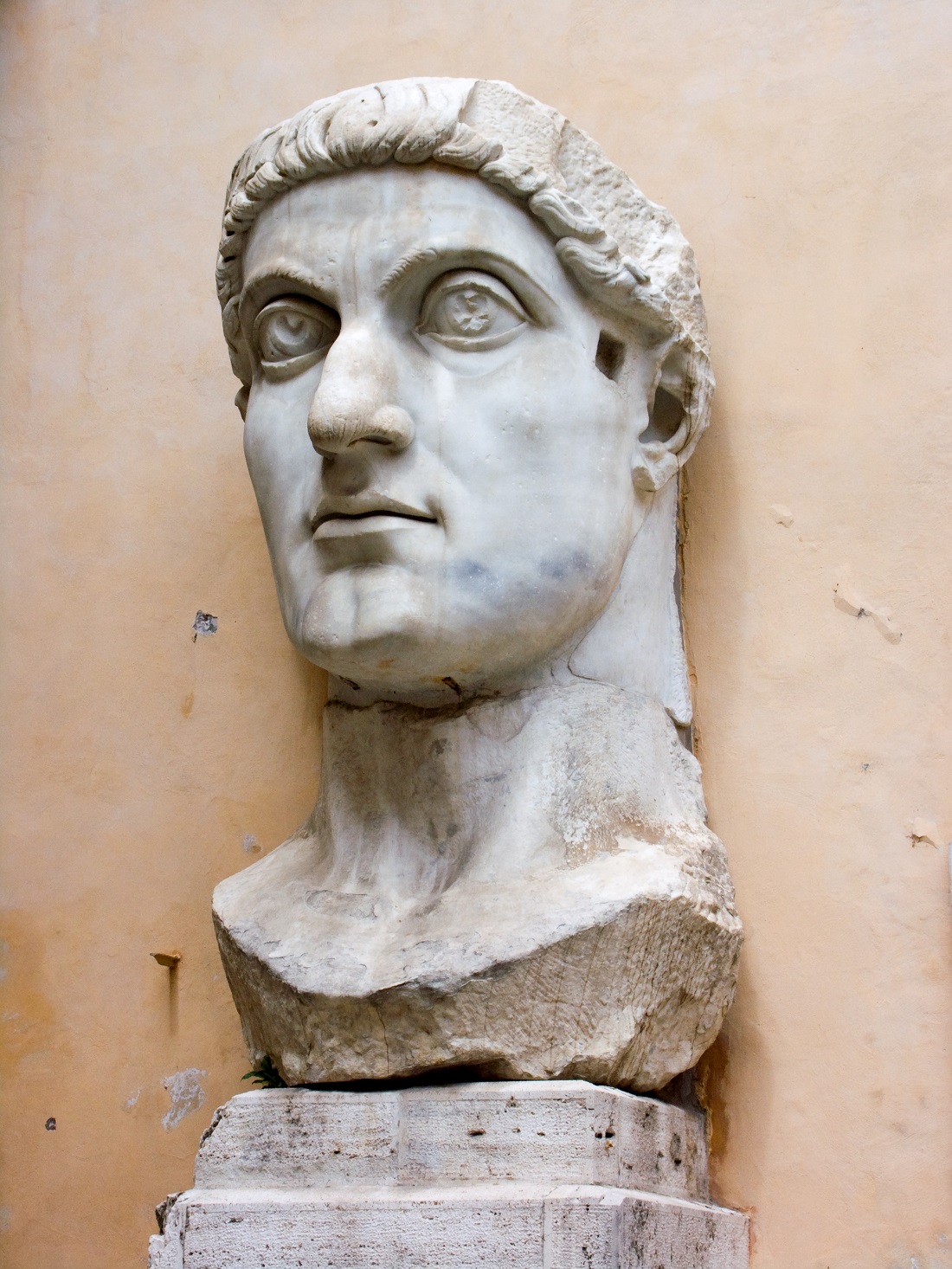
Roman Emperor Constantine the Great (reigned 306 – 337 AD) had many admirers in his day. Chief among them were the Christians, grateful that he had taken their faith out of the catacombs and into the palace when he became the Roman Empire’s first Christian emperor. He also gave the empire a new lease on life when he relocated the capital from Rome to the newly-built Constantinople, and laid the foundations for the Eastern Roman Empire, which survived the fall of Rome by nearly a millennium. However, Constantine’s admirers seldom mentioned his shortcomings, such as the volatile temper that made him kill his eldest son, Crispus.
The Capable Crispus

Flavius Julius Crispus (circa 300 – 326), was a dutiful and capable young man who would have made any father proud. When Crispus was a teenager, Constantine appointed him commander in Gaul. Despite his tender years, the young man came through, and won a series of victories in 318, 320, and 323, that secured the province for his father and the Germanic frontier for the empire. In a civil war against a challenger, Licinius, Crispus commanded Constantine’s navy and led it to a decisive victory over a significantly bigger fleet.
Crispus also played a key role in the war’s decisive battle, which ensured his father’s triumph over Licinius. Constantine made his eldest son co-ruler as his junior colleague, or caesar as the position was known at the time. Things were going great for Crispus, until 326, when his life came to a sudden end. His stepmother was eager to remove an obstacle to her own sons’ succession to the throne. So she falsely accused Crispus of having tried to forcibly have his way with her. An enraged Constantine ordered Crispus executed.
Manipulating the Emepror Into Killing His Son

Flavia Maxima Fausta (289 – 326) was the daughter of Constantine’s predecessor, Roman Emperor Maximian. To seal an alliance between her father and Constantine, she married him in 307. Fausta bore Constantine three sons, but Crispus, Constantine’s eldest from a previous marriage, stood between her offspring and the throne. In 326, Crispus was at the height of his power. He had proved instrumental in defeating a recent challenger to Constantine, had already been declared co-ruler, and was the clear favorite to succeed his father.
Fausta’s sons on the other hand not in any position to make a bid for throne: the eldest of them was only ten-years-old at the time. For any of Fausta’s sons to become emperor one day, something would have to happen to Crispus. So she saw to it that something did. Fausta reportedly tried to seduce Crispus, but he was repelled, and hurriedly left the palace. Undaunted, she told her husband that his eldest son did not respect his father. When asked what made her say that, she replied that he was in love with and had tried to assault his father’s wife.
Constantine, who by then was getting on years, believed Fausta, became enraged, and ordered his eldest son executed – either by poison or by hanging, depending on the source – without trial. A few months later, however, the emperor discovered how his wife had manipulated him into killing his son, and ordered Fausta executed by having her thrown into boiling water. He then issued a damnatio memoriae (“condemnation of memory”) to erase her from official accounts – a form of dishonor issued against traitors and those who brought discredit to the Roman state. Although she lost her life, Fausta had achieved her goal. Crispus had been removed from the path of her son, two of whom eventually ascended the throne as emperors Constantine II and Constantius II.

_________________
Some Sources & Further Reading
Gloria Romanorum – Constantine’s Execution of Crispus and Fausta
Historia, Bd. 41, H. 4 (1992) – Flavia Maxima Fausta: Some Remarks
History Halls – When Santa Beat Up a Priest: The Not So Nice Side of Saint Nick

