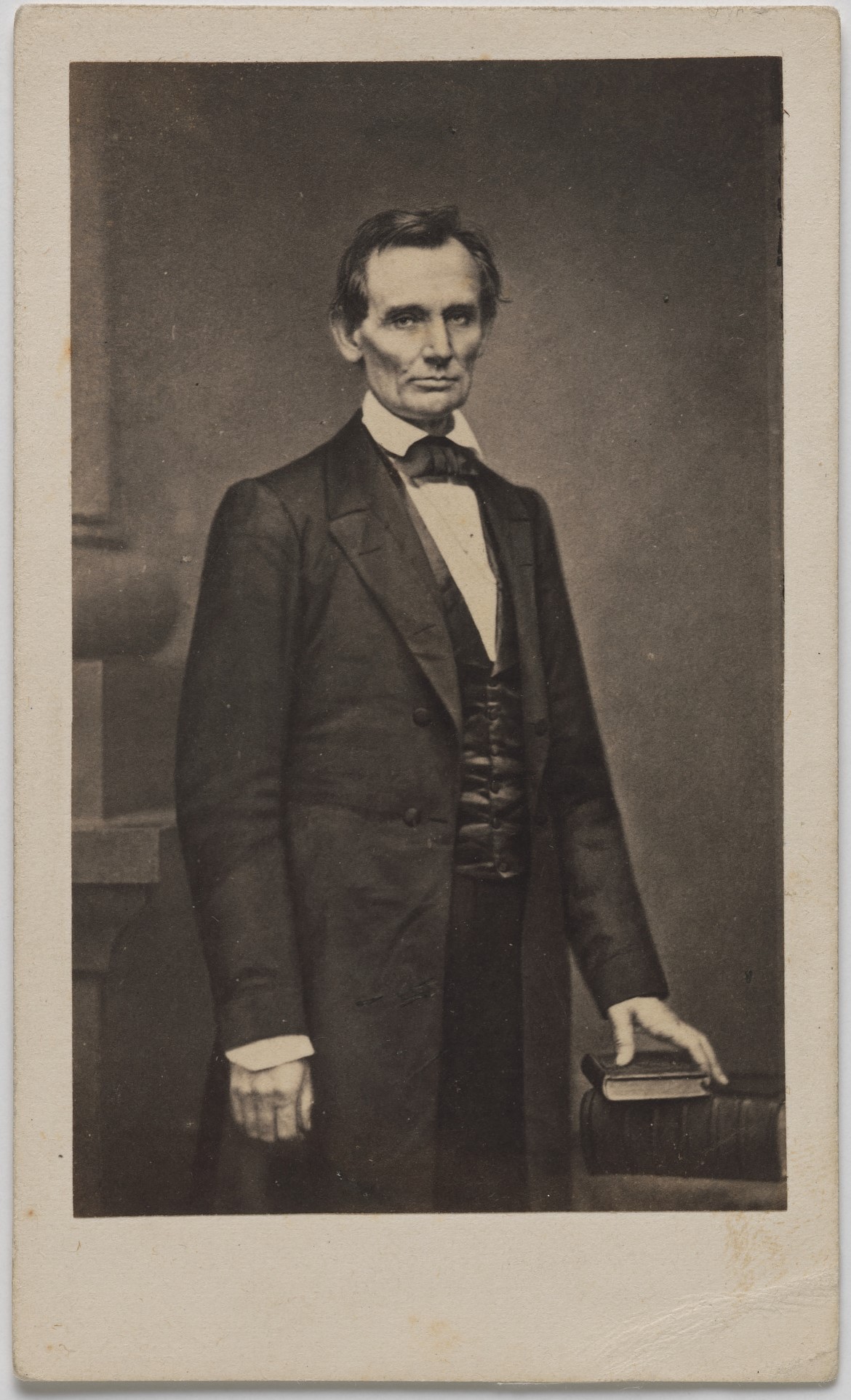
Most historians see Abraham Lincoln as one America’s greatest presidents, or even the greatest president. Before he got the top job, though, there was a job interview: the 1860 presidential election. Among the myriad problems plaguing any presidential campaign, Honest Abe’s had an unusual one: his appearance. By 1860, cameras had been invented, but photos were not yet widely disseminated. As a result, many voters had no idea what Lincoln looked like. His opponents took advantage of that spread rumors that he was grotesque in appearance. Basically, that he fell off the ugly tree, and hit all its branches on the way down.
When Lincoln’s Looks Were a Campaign Liability

The Houston Telegraph wrote that Abraham Lincoln was: “the leanest, lankiest, most ungainly mass of legs, arms and hatchet face ever strung upon a single frame. He has most unwarrantably abused the privilege which all politicians have of being ugly”. Another newspaper described him as: “coarse, vulgar, and uneducated”. A woman claimed that the Republican candidate was “grotesque in appearance”. His opponents concocted a rallying cry that ended with: “We beg and pray you – Don’t, for God’s sake, show his picture”. That was a problem.
Attacking Lincoln’s appearance was petty, but it was also effective. Unfortunately, contra what we were told in childhood and what we tell our children, looks do matter. Or at least they do sometimes. An election in which enough voters might be turned off by a candidate’s looks to impact the result is one such time. So Lincoln turned to famous photographer Matthew Brady to help him out. Brady had him pose for a photo just before he gave an early 1860 speech at Cooper Union, that Lincoln the Republican nomination. The resultant photo tamped down the claims that Lincoln was too much of an eyesore to be president.
Matthew Brady Saved Lincoln’s Presidential Campaign

Matthew Brady’s 1860 photo portrait was the first time that Abraham Lincoln’s image was widely disseminated. The presidential hopeful was reportedly not only hideous to look at, but also gangly to the point of ungainliness. Brady made sure that extra light was focused Honest Abe’s mug. That highlighted a face that was not exactly handsome, but was also nowhere near as horrendous as Lincoln’s detractors claimed. To counter the talk about Lincoln being gangly and ungainly, Brady touched up the photo to artificially enlarge the collar.
By doing that, Brady made his subject’s neck appear more proportional. He also made Lincoln curl up his fingers, to avoid fueling the “gangly” narrative with their excessive length. In the modern era, public figures have their images Photoshopped and edited as a matter of routine. Not so in 1860, when Brady’s photo editing was downright revolutionary. The Cooper Union photo was so positively received, that the sixteenth president would later state: “Brady and the Cooper Institute made me president”.
Slapping Lincoln’s Face on a Portrait of His Political Opposite

Matthew Brady’s touching up of Lincoln’s 1860 Cooper Union photo was not the only the only time that Honest Abe’s image was edited back then. Nor was it anywhere close to the most extreme example. After Lincoln was assassinated, the public – at least the public in the North – was eager for a then-popular “heroic pose” image of the martyred president. To satisfy that demand, portraitist Thomas Hicks went to extremes. He took a heroic pose image of slavery advocate and extreme racist John C. Calhoun – a man who the exact political opposite of Honest Abe and all he stood for – and replaced Calhoun’s head with Lincoln’s. Nobody noticed at the time, and it too about a century before anybody realized what Hicks had done.

_________________
Some Sources & Further Reading
Abraham Lincoln Online – Cooper Union Address
Atlas Obscura – The Great Lengths Taken to Make Abraham Lincoln Look Good in Portraits
Encyclopedia Britannica – Abraham Lincoln
History Halls – The Incompetent Bodyguard Who Got Abraham Lincoln Killed

