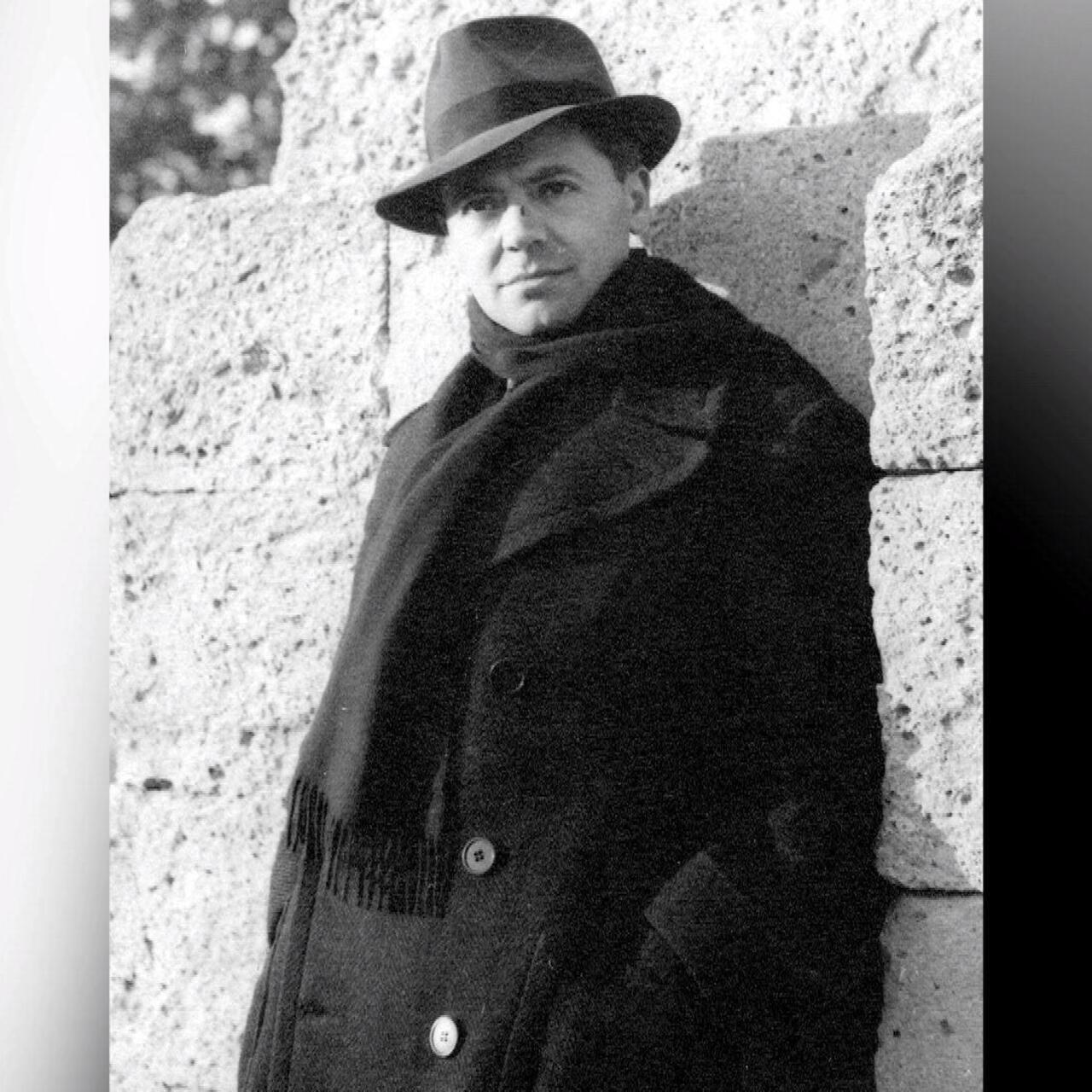
In 1940, Jean Moulin was a mid-level civil servant in an unremarkable department in the Loire Valley. Germany’s defeat and occupation of France that summer set him on a path that transformed him into one of the most important French Resistance figures. He ended up as a national hero who remains a symbol of unity, courage, and patriotism in France. Below are some interesting facts about Moulin’s remarkable career.
An Early Stance Against the Nazis

Jean Pierre Moulin was born on June 20th, 1899, in Béziers, into a politically active republican family. He studied law, became a civil servant, and swiftly ascended the rungs of bureaucracy to become at age 38 France’s youngest prefect – the central government’s representative responsible for upholding the law and overseeing the local authorities in districts that are somewhat similar to American counties. Moulin was the Eure-et-Loir department’s prefect when Germany defeated France in 1940. Early in the occupation, he refused to sign documents that falsely blamed French Army Senegalese soldiers for atrocities committed by German soldiers.
Moulin’s refusal to do as he was told got him imprisoned and tortured so badly, that he attempted suicide by cutting his own throat with a piece of broken glass. A guard found him and he was taken to a hospital, where he recovered. The attempt left Moulin with a distinctive scar on his neck that he often hid with a scarf. That early act of defiance marked the start of Moulin’s resistance of the Nazis. As seen below, the occupiers had created a formidable enemy.
Unifying Various Resistance Groups to Create the French Resistance

In 1941, Moulin made a dangerous journey to London via Spain and Portugal, and met General Charles de Gaulle, leader of the Free French Forces. De Gaulle recognized his integrity and organizational skills, and tasked him with bringing some order out of the chaos of the often competing resistance movements in occupied France. Moulin was parachuted back into France on January 1st, 1942, and using the codenames Rex and Max, met with various resistance leaders. He began to organize and coordinate the activities of the disparate resistance groups.
Moulin returned to London in February, 1943, to brief de Gaulle and the Free French higher ups on his activities. He was sent back to France the following month, with orders to unify the resistance factions under an umbrella organization. Moulin succeeded, and his greatest accomplishment was the creation in May, 1943, of the Conseil National de la Résistance (National Council of the Resistance), an organization that brought together various resistance groups under a single political leadership aligned with de Gaulle. Such unity was essential for the often fractious and separate resistance movements in France to become the French Resistance.
Making the Ultimate Sacrifice

The unification of the resistance movements in France reduced what had at times verged on anarchy. The umbrella organization established by Moulin created an effective force against the German occupation, and helped pave the path for eventual liberation. Unfortunately for Moulin, his success made him a target, and he was arrested by the Nazis during a meeting near Lyon in June, 1943. He had probably been betrayed by a Resistance member. Moulin was savagely interrogated by Klaus Barbie, the infamous “Butcher of Lyon”, who headed the Sicherheitsdienst (the intelligence service of the SS) branch in Lyon.
The Nazi torturers did their worst, but could not get Moulin to give up any vital information. They ordered him transported to Germany, but he died from his injuries en route, sometime around July 8th, 1943. Jean Moulin’s legacy lives on in France, where he is seen as a national hero. His ashes were symbolically interred in the Panthéon in 1964. It was a moving ceremony that honored Moulin as the embodiment of the Resistance spirit. In France’s darkest hour, he created unity out of division, and chose sacrifice over submission.

_________________
Some Sources & Further Reading
BBC – Jean Moulin (1899 – 1943)
Clinton, Alan – Jean Moulin, 1899-1943: The French Resistance and the Republic (2001)

