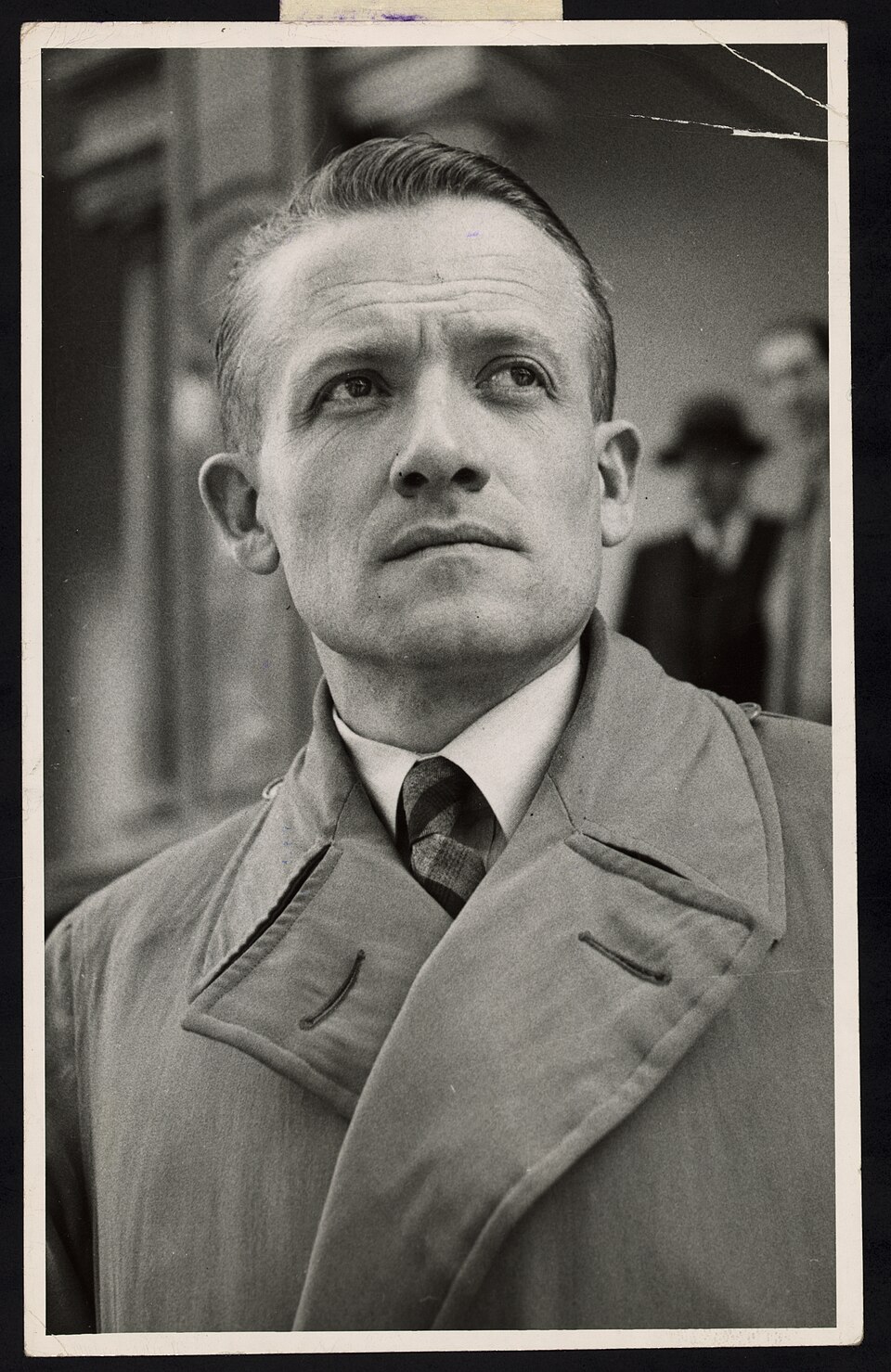
After France fell to the Germans in 1940, many put their heads and tried to make the best of it. Others collaborated with the Nazis. Some, though, chose the path of resistance – a very hazardous path. Especially in the early days, when disparate and disorganized groups of French patriots tried to fight back. Most, however, had no idea how best to go about it. It took pioneer organizers to stitch together many well-intentioned but ineffective bands of resisters into what eventually became the French Resistance. One such early organizer was Henri Frenay, and below are some interesting facts about his career.
A French Resistance Pioneer

Henri Frenay Sandoval, birth name Henri Auguste Antoine Frenay, went by Henri Frenay, was a key figure in the early French Resistance. His tireless work helped bring a semblance of organization to the multitude of groups seeking to fight back against France’s German occupiers. Born in 1905, in Lyon, Frenay was a French Army officer when World War II began. When France surrendered in 1940, he was captured by the Germans, but managed to escape. Initially conservative, his views underwent a major transformation. He became one of the first to organize armed resistance against the Nazis.
Frenay was deeply disturbed by the German occupation, which governed two thirds of France. He was equally disturbed by the collaborationist Vichy regime led by Marshal Pétain, that ruled the unoccupied third of the country. Like many French professional soldiers, Frenay had initially supported Pétain. However, he soon grew disillusioned with the Vichy regime’s authoritarianism, and its shameful collaboration with the Nazis. In late 1940, he began to organize one of the first resistance movements in the unoccupied zone: Combat. The movement began as an underground network that spread anti-German propaganda and information. It did so chiefly through the secret publication of a newspaper, Combat. It which became one of the most influential Resistance publications.
Organizing the Resistance, and Navigating the Politics

As the reach and influence of Combat grew, Frenay helped establish a structured underground organization that conducted intelligence operations, recruitment, and coordinated with other resistance groups. He also tried to unite the various resistance movements, and worked closely with Jean Moulin, who was sent by Charles de Gaulle to organize the Conseil National de la Résistance (CNR). Their politics differed – Frenay leaned right, while Moulin and many in the Resistance were leftists. However, they managed to work together. Nonetheless, tensions and ideological differences often caused friction.
After the liberation of France in 1944, Frenay served briefly in de Gaulle’s provisional government as Minister for Prisoners, Deportees, and Refugees. He eventually gave up on politics, and focused on writing to preserve the history of the Resistance. His memoir, La Nuit finira (“The Night Will End”), published in 1973, is a milestone work about the era. Henri Frenay passed away on August 6th, 1988. Today, he is remembered as a pioneer of the French Resistance – an organizer, writer, and patriot who helped lay the foundation for the larger, coordinated efforts that contributed to France’s liberation. He demonstrated that early resistance to oppression, even in isolation and against great odds, could grow into a formidable national movement.

_________________
Some Sources & Further Reading
Chemins de Memoire – Henri Frenay
New York Times, August 9th, 1988 – Henri Frenay, Resistance Fighter, 82

