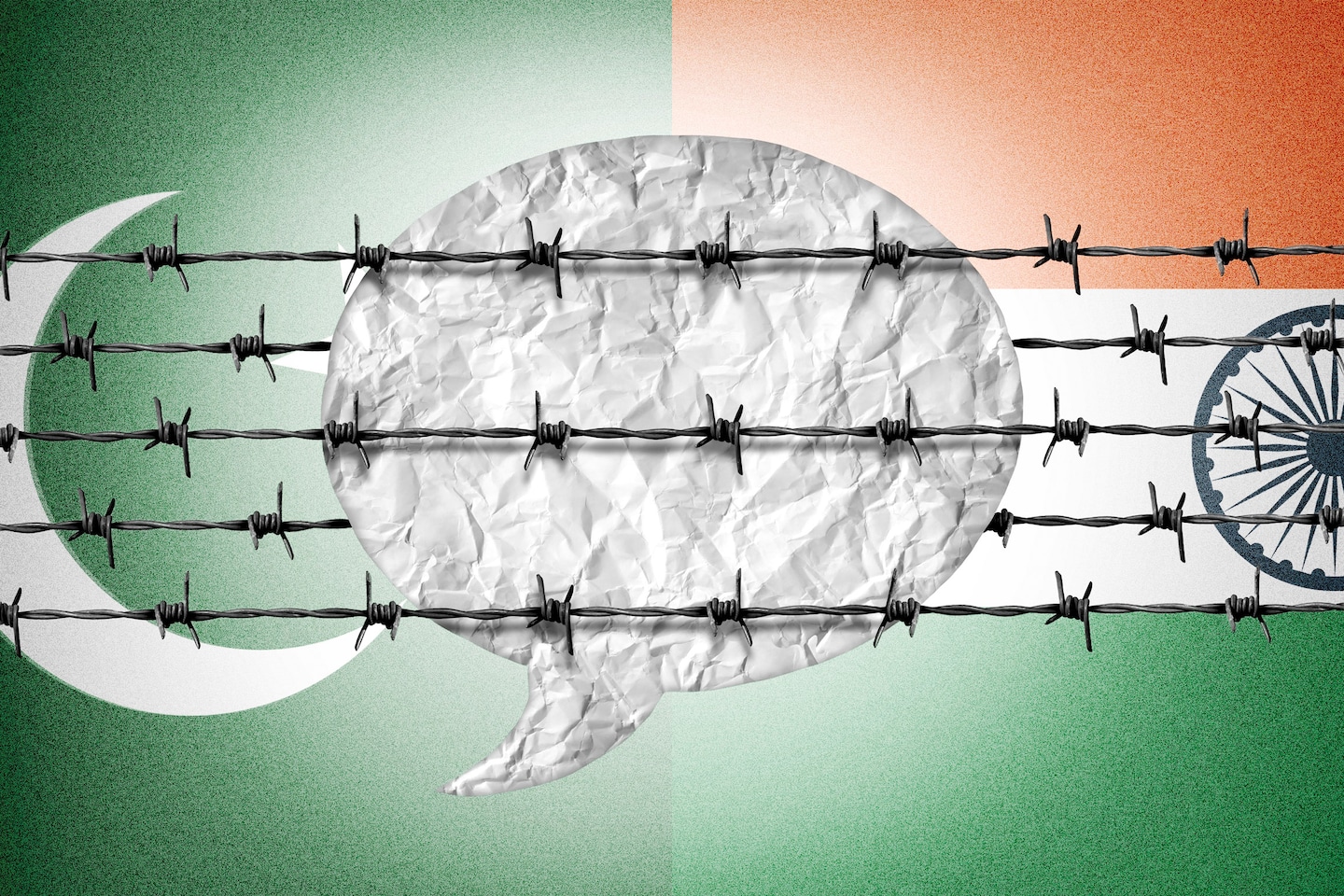
Neighboring and nuclear armed rivals India and Pakistan have fought at least three major wars since they gained independence in 1947, in addition to many skirmishes and smaller clashes that did not lead to major conflict. Schools in the two countries teach wildly different versions of the same shared history and events. Below are some interesting facts about their textbook war over the history of their wars.
A Dangerous Rivalry

India and Pakistan probably have the world’s most toxic neighbor relationship. Within three decades after they emerged as independent countries, they fought three major wars. Atrocities abounded in those conflicts, in which millions perished and millions more were displaced. Today, both continue to stare daggers at each other across thousands of miles of a fortified and heavily-patrolled border. Visible from outer space due to 150,000 floodlights installed by India on 50,000 poles, it is considered one of the world’s most dangerous boundaries. Especially since each has atomic weapons.
The next war between India and Pakistan could well witness the world’s first mutual nuclear exchange. Indeed, at the time of this writing, in August, 2025, India and Pakistan had only recently climbed down from a series of armed clashes on the ground and in the air that, for a while, threatened to escalate into all-out war. Against that backdrop, it is unsurprising that the rivalry has reached into classrooms and textbooks. As seen below, each country ensures that its schoolbooks are heavily edited to educate new generations of citizens with a biased version of events.
The Textbook War Over the History of the Indo-Pakistani War

Take for example the 1947 partition of Britain’s former colony of India into the independent countries of India and Pakistan. It was a bloody and violent mess that saw mass riots in which hundreds of thousands were slain, millions injured, and tens of millions displaced. Each country’s textbooks blame the other for the atrocities. Indian schools teach that Pakistanis had never really wanted their own country, and only saw independence as a bargaining chip. Pakistan teaches its students that Pakistani Muslims sought independence only after Indian Hindus transformed them into literal slaves.
Or take the 1965 Indo-Pakistani War: both Indian and Pakistani textbooks claim victory for their country. Then there is the Indo-Pakistani War of 1971, which ended with East Pakistan partitioned from Pakistan to form the independent country of Bangladesh. Pakistani textbooks accuse India of unjustified aggression. Indian textbooks claim (with some justification) to have acted only after Pakistan began a mass slaughter of Bangladeshis, and to help Bangladeshi freedom fighters. Nearly eight decades have passed since the two countries gained their independence, and their textbook war over the history of their wars continues on, with no end in sight.

________________
Some Sources & Further Reading
History Halls – Myths and Realities: Just How Real Was Hollywood’s ‘The Alamo’?
Talbot, Ian, and Singh, Gurharpal – The Partition of India (2009)

