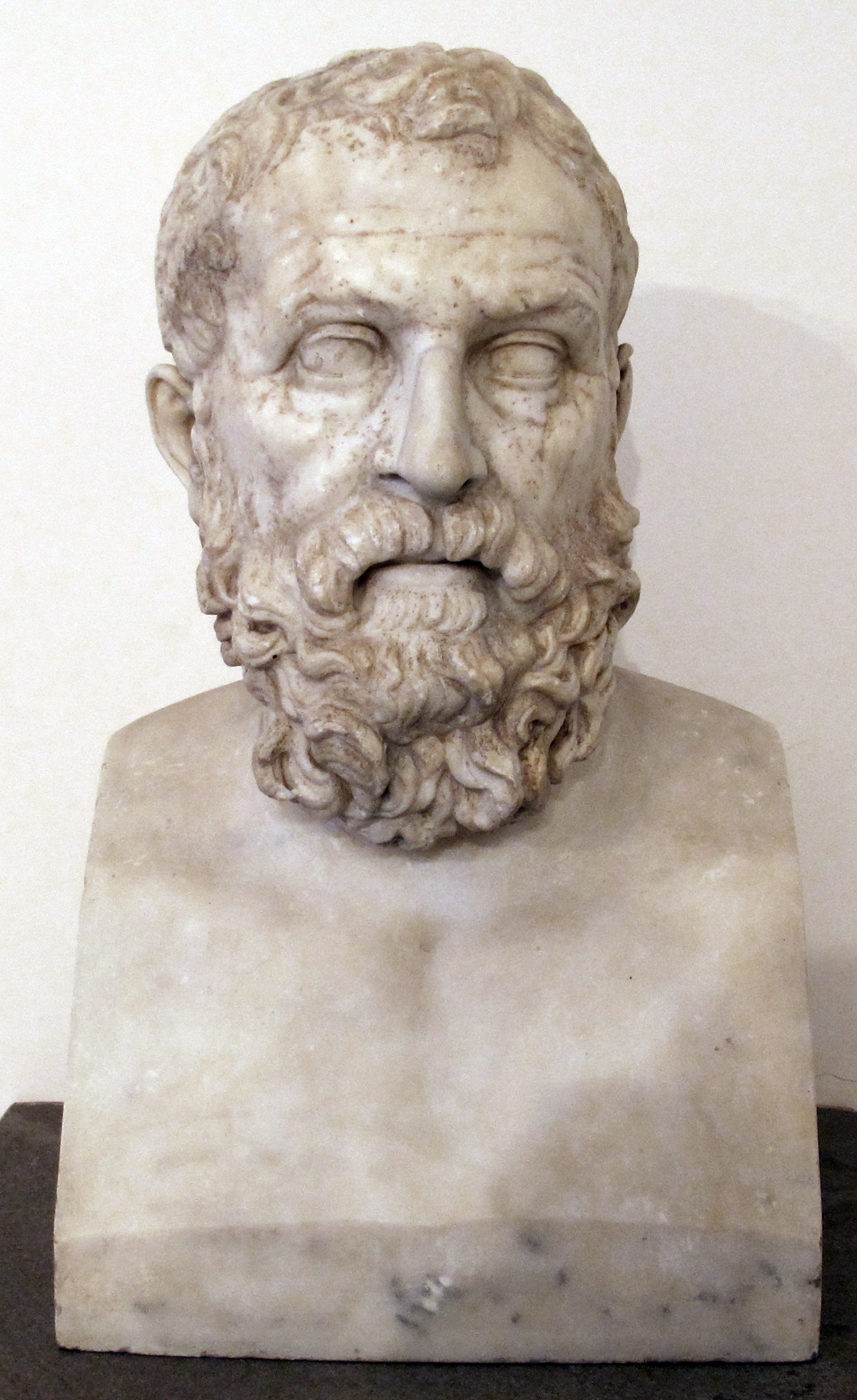
Archaic Athenian statesman Solon (630 – 560 BC), nicknamed “The Lawgiver”, established the foundations of what eventually became Athenian democracy. He is credited with reforms that ended the aristocracy’s exclusive control of government. He replaced a political system controlled by a blood nobility with an oligarchy controlled by the wealthy, regardless of pedigree.
The Regional Divisions of Athens

For millennia, wealth had been based on land ownership. That ownership was disproportionately concentrated in the hands of a hereditary aristocracy. As in the rest of Greece, Athens was dominated by nobles who owned the best land and monopolized government. Geography played a key role in Athenian politics. Attica, the region in which Athens and its surrounding countryside lay, was made up of three parts. First was the Plains, a prosperous agricultural interior, dominated by aristocrats. Second, was the Coast, which relied on fishing and trade. Finally, there were the Hills, an impoverished region that contained a majority of the population. They were mostly shepherds and small farmers, who eked a living from poor soil.
Over the centuries, a pattern had developed in which poor farmers borrowed seed from rich aristocrats to plant, then repaid the loan at harvest time with grain and labor. As seen below, economic changes in the seventh century BC disrupted the pattern whereby poor Athenian farmers routinely borrowed seed grain from the rich. It all began with a revival of commerce throughout the Mediterranean after a centuries-long slump, which led the non-aristocratic Athenians of the coast to get into seaborne trade.
The Disruption of Athens’ Traditional Economic Patterns

Athenian traders profited handsomely from the revival of commerce. They bought land with their profits, and used slave labor to farm it more efficiently than the aristocrats. The aristocrats found themselves outcompeted by the nouveau riche, so they resorted to squeezing their poorer neighbors. They enslaved poor farmers and seized their lands, whenever they failed to repay their seed loans on time. That outraged other Athenians. Not that they objected to slavery per se, but to the enslavement of Athenians.
That, combined with the resentment of the middling farmers, craftsmen, and rising merchants at their exclusion from government, brought Athens to the brink of revolution. So the citizen body met in the Ecclesia, the Athenian Assembly, and entrusted Solon, a respected aristocrat, to reform Athens, and bound themselves with solemn oaths to accept his decisions. It was a good thing that Solon had extracted such oaths, because, as seen below, his reforms solved the immediate problem, even as they upset all sides.
Solon’s Transformational Reforms

The rich were upset because Solon had cancelled debts, freed the Athenian debt slaves, and prohibited the future enslavement of Athenians. The aristocrats were upset because he granted the vote to all adult male citizens, regardless of class or wealth. The poor were upset because he did not return the lands that had been seized by the aristocrats; refused to break up the big estates and redistribute the land; and because he reserved all posts in the Athenian government for the wealthy. And the non-aristocratic rich were upset because Solon had reserved some government positions for aristocrats, to the exclusion of non-nobles.
Despite their discontent, the Athenians kept their promise to accept Solon’s decision. That done, and in order to avoid having to constantly defend and explain the reforms, Solon left the Athenians to work out for themselves the kinks in his new system, and went traveling. He informed his fellow citizens that he would be gone for at least ten years. Solon’s reforms alleviated the immediate crisis and averted civil war, but they did not resolve many underlying tensions that would continue to plague Athens for years. Solon took the first steps by making all citizens equal before the law and reducing the power of the aristocracy, but it would take generations of reformers to build upon and fine tune what he had created before Athenian democracy was established.
_________________
Some Sources & Further Reading
Encyclopedia Britannica – Solon
Grant, Michael – The Rise of the Greeks (1987)
History Halls – The Men Who Made and Unmade the Roman Republic: Lucius Junius Brutus

