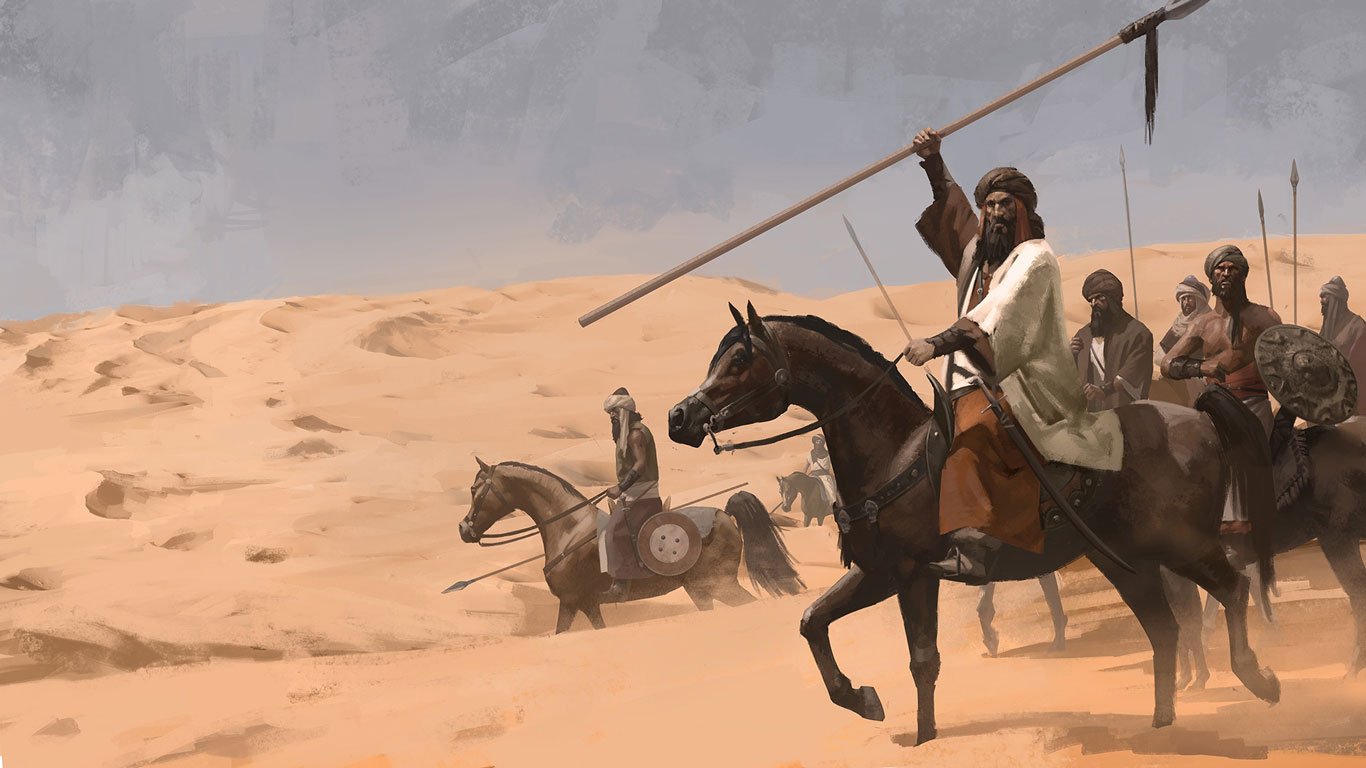
The Sa’alik, singular Su’luk (Arabic: الصعاليك and صعلوك) were ancient Arab bandits and brigands who operated in the Arabian Peninsula and its surroundings in the pre-Islamic era. “Honorable thieves”, they have been likened to Robin Hood – although they preceded him by centuries, were real, and actually did rob the rich to give to the poor. The Sa’alik flourished mostly in the sixth century AD. Some remnants, however, continued to operate until well into the eight century. Below are some interesting facts about those ancient Arab brigands.
Ancient Arabia’s Robber-Poets

The Sa’alik were outcasts and rebels who either fled their tribes, or were expelled for violating tribal norms. Survival in ancient Arabia without the kind of protection afforded by a tribe was difficult. So some of those figures coalesced into bands that offered the members mutual protection. And to make ends meet, they turned to raids and robbery. Some Sa’alik factions, mainly those who had been expelled from their tribes, harbored resentment and preyed chiefly upon their former tribesmen. Others honored kinship obligations, and preyed only upon outsiders. Sa’alik were often poor, and robbed or raided to keep body and soul together. However, some Su’luks came from wealthy backgrounds. Whatever their economic background, they tended to be extremely individualistic, which is reflected in the poetry of famous Su’luks who became folk heroes – especially to lower class Arabs, the class from which most of the Sa’alik came.
Poetry was extremely important in ancient Arab culture. Until the Sa’alik emerged, Arabic poems had focused mainly on collective pride in and brags about the prowess of the poet’s tribe. Su’luk poets created a new genre of poetry that abandoned many traditional tenets. They were proud of themselves as individuals, and to the extent they got into collective boasts, their collective was limited to the other Sa’alik of their band. Their poetry tended to revolve around their prowess, courage, defiance of society, and fierce pride and individualism. One of their more famous verses stated that the poet would rather eat sand than bow down to another. They introduced to Arabic verse powerful personal emotions and greater imagination and introspection. Themes of poverty, hunger, defiance, and rebellion against injustice were common.
The Sa’alik Factions

The Sa’alik can be broken into three groupings each of which will be discussed in future articles. First were the original Su’luks. They were outcasts expelled from their tribes for acts that violated tribal norms, or because of unauthorized predation upon outsiders that exposed the rest of the tribe to collective retaliation. They operated mostly in the western parts of the Arabian Peninsula. Next were the Ghurban or Aghribat, literally “Crows”, so named because of their dark skins: they were the sons of African slave mothers, who were not acknowledged by their Arab fathers, and faced significant racial discrimination and oppression.
Some of them rebelled, fled to the margins of their tribes, and there formed Su’luk bands. They robbed and raided outsiders, but notably did not prey upon those of their birth tribes. They were concentrated in eastern Arabian Peninsula. Last were “gentlemen” Su’luks – ones who were neither expelled from their tribes nor fled. They were not forced or pressured into banditry, but chose that life for reasons having to do with personal honor and a desire to help the poor and oppressed. Those became the best known and most celebrated of the Sa’alik.
A Protest Movement In the Form of Banditry and Brigandage

The Su’luks were known for their rebelliousness, ferocity, courage, and individual prowess that birthed Arabic sayings. For example, that somebody is “faster than Sulayk”, after a prominent Su’luk famous for his speed, or “fiercer than Al Shanfari”, after another Su’luk known for his ferocity. The Sa’alik made it a point to share their loot with the poor. One of the more common brags in their poetry is their generosity. They boast that it keeps them in constant poverty because they seldom keep anything for themselves, but distribute all the proceeds of their raids and robberies to the needy. The Sa’alik wore that kind of poverty, caused by their generosity, as a badge of honor. In line with their theme of wealth redistribution, they tended to mostly prey upon and raid the stingy rich. Wealthy people who were known for their generosity, philanthropy, and helping the poor were left alone.
The Sa’alik were a protest phenomenon against grave inequalities and injustices in their era’s society, that took the form of banditry and brigandage. The rise of Islam in the seventh century contributed greatly to the phenomenon’s decline. The new religion shattered the Arabian Peninsula’s preexisting society, and restructured it in a manner that reduced many of the inequalities that had birthed the Sa’aliks. In Islam’s early days, many Su’luks accepted Muhammad’s offer of amnesty if they converted, which was sweetened by allowing them to keep their booty. As to future would-be Sa’alik, new doors for advancement were opened to Arabs from humbler backgrounds, that were more attractive than the path of brigandage.

_________________
Some Sources & Further Reading
Allen, Roger – The Arabic Literary Heritage: The Development of Its Genres and Criticism (2005)
Critical Inquiry, Vol. 12, No. 1 (Autumn, 1985) – The Crows of the Arabs
History Halls – Al Basus: The Forty Year War Fought Over Disrespect Shown a Camel

