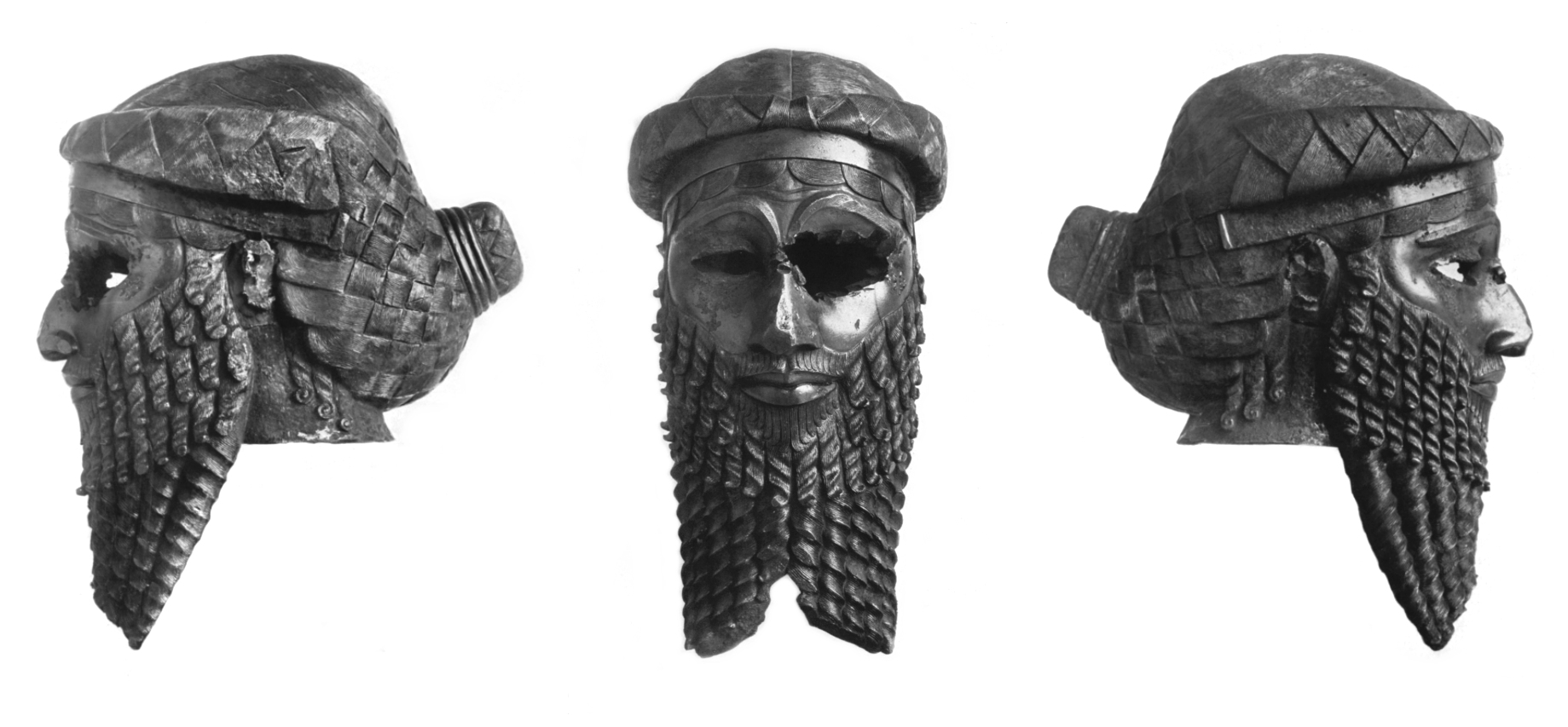
Ancient Mesopotamian ruler Sargon of Akkad (reigned circa 2334 – 2279 BC) was history’s first powerful conqueror, first empire builder, and first de facto emperor. Sargon changed history’s trajectory by throwing out the old schoolbook whereby kings claimed their right to rule came directly from the gods. In a first that was copied by many since, he rose to power with help from the commoners by asserting that he was one of them. In another first that was copied by many since, soon as he secured power, he forgot all about the commoners who had been instrumental to his rise, and screwed them over. Below are some fascinating facts about history’s first empire builder.
An Innovative Conqueror

As a young officer, Sargon led a revolt that toppled the king of Kish. He then marched north, conquered cities and recruited an army, then turned south against ancient Sumer’s city states. Sargon crushed the combined Sumerian forces in a decisive battle. A brilliant military commander, he conquered all of southern Mesopotamia. He also overran parts of Syria, Anatolia in modern Turkey, and Elam, in what is now western Iran. Through such diverse conquests, he cobbled together history’s first multi-national empire, the Akkadian Empire. His empire was the first political entity to be administered efficiently through the use of bureaucracy on a large scale.
Sargon’s model was copied by future rulers and kingdoms. He was also an innovator in the realm of propaganda. Sargon concocted a radically different origin story than his real one in order to gather support, and to justify his right to rule. Before Sargon, Sumerian rulers believed in an ancient version of the divine right of kings. To set themselves apart from the commoners and elevate themselves above the masses, Sumer’s kings asserted that they were chosen by the gods to rule. As seen below, Sargon ditched that narrative and invented a new one, tailored to his specific needs.
Exploiting the Commoners, Then Screwing Them

At the time, there was a great and growing wealth gap between the powerful nobles, who controlled three fourths of the land, and the working masses who scratched a living from what was left. Sargon knew that the commoners resented the exploitative nobility, so he presented himself as a fellow commoner of humble origins, who had picked himself up by his bootstraps. In The Legend of Sargon of Akkad, recounted in an ancient stele that dates to circa 2300 BC, Sargon presented himself as an orphan – an illegitimate child of a temple priestess, or holy prostitute. As he put it at the start of the narrative: “Sargon, the mighty king, king of Akkad, am I. My mother was a changeling, my father I knew not”.
More than a millennium before the Biblical Moses narrative, Sargon recounted that as a baby his mother had placed him in a basket, and set him adrift on the Euphrates River. He was found by a kind gardener of a Sumerian city’s king, who raised him as his own. As a young gardener, Sargon claimed to have been visited by the goddess Ishtar, who inspired his rise to power. Sargon presented himself as a man of the people, which earned him the commoners’ support. Unfortunately, he seems to have screwed over the commoners once he secured power with their help. His reign was not always popular with the masses, and he spent much of it putting down revolts. Still, Sargon of Akkad established history’s first empire, which endured for nearly two centuries. Quite impressive, for an illegitimate orphan abandoned on a river by his mother.

________________
Some Sources & Further Reading
Foster, Benjamin R. – The Age of Agade: Inventing Empire in Ancient Mesopotamia (2015)

