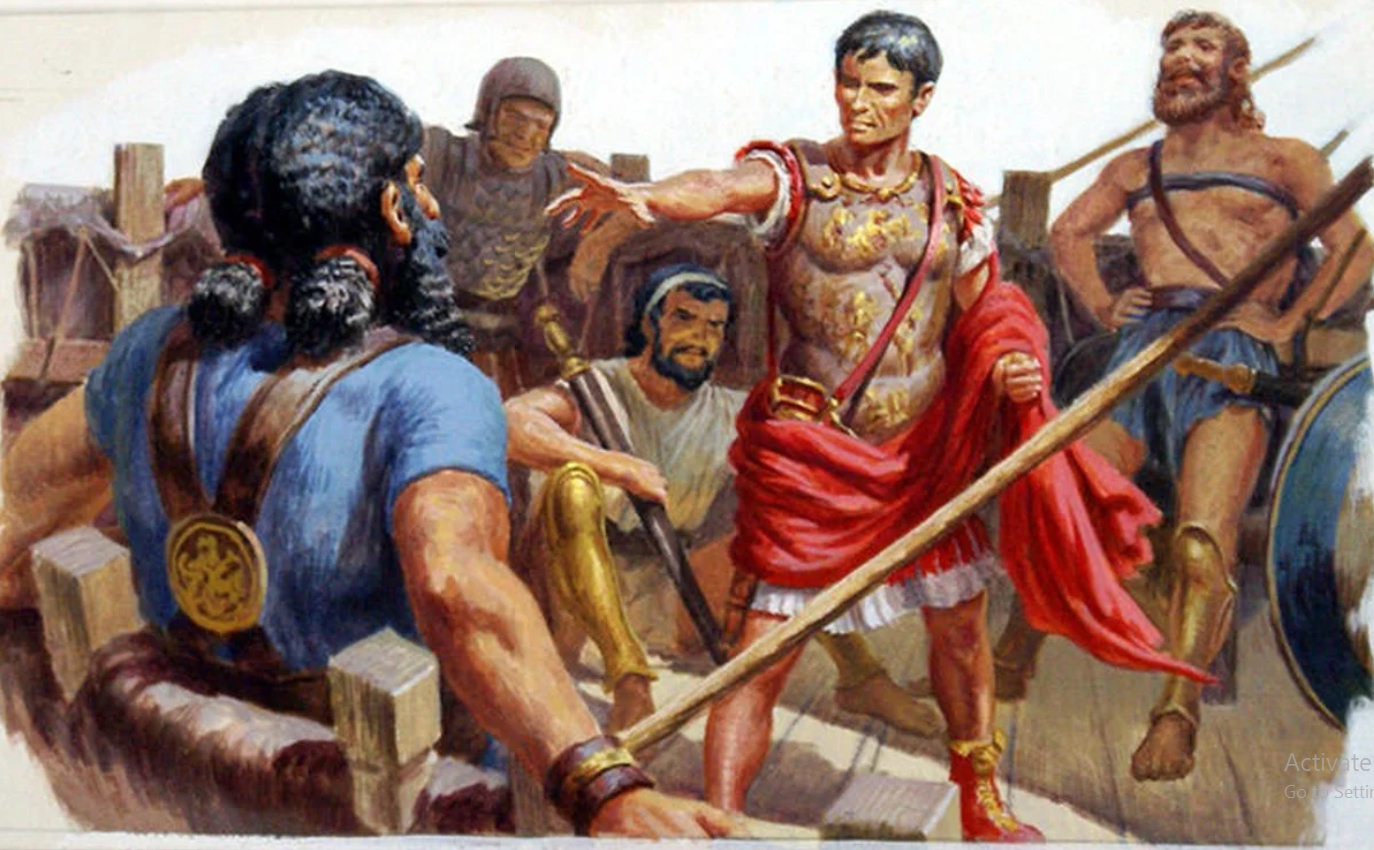
In 75 BC, Julius Caesar had not yet attained the fame and power he would in later years. A member of an ancient but not particularly powerful patrician family, his gens, the Julii, had roots that stretched back to before Rome had even been founded. In 75 BC, he sailed to the island of Rhodes to study oratory, as ambitious young Romans who sought to enter politics were wont to do at the time. Unfortunately, pirates from Cilicia – a region of southern Asia Minor notorious at the time for piracy – captured Caesar’s ship and held him for ransom. That was unfortunate for Caesar, whose voyage and the start of his studies was delayed. As seen below, it was even more unfortunate for the pirates.
A Hostage Who Negotiated for a Bigger Ransom

Julius Caesar was nothing like the other wealthy captives previously held for ransom by the pirates. Rather than quake in fear, he became familiar with his captors. Not familiar enough, though, to abandon the air of superiority that was part and parcel of Roman aristocrats. When the pirates told their young captive that they wanted a ransom of twenty silver talents – roughly 1400 pounds of silver, he scoffed at their ignorance. Instead, he suggested that fifty talents – about 3500 pounds of silver – was more appropriate for a nobleman of his pedigree.
The pirates thought it was hilarious that their hostage negotiated for a higher ransom, and went along with it. Caesar continued to amaze them with his sublime confidence as they awaited the ransom. For weeks, the pirates thought their odd and seemingly overconfident captive was funny. Whenever they got too loud when he wanted to sleep, Julius Caesar demanded that they quiet down. He often recited speeches and poems that he had composed, and berated them as uncultured barbarians if they failed to appreciate them.
A Funny Threat That Wasn’t a Joke

Julius Caesar told the pirates that as soon as he was freed, he would come back and crucify them all. They thought he was joking. He was not. After 38 days of captivity, Caesar’s ransom arrived, and he was released. He immediately headed to Miletus, on Asia Minor’s western coast. Despite the fact that he possessed no official authority whatsoever, Caesar raised an ad hoc naval force. He stopped being funny in his former captors’ eyes when he sailed back to the site of his captivity, surprised the pirates, and captured them all. He took them to Pergamum, further up Asia Minor’s coast, and locked them up.
Caesar then headed to Ephesus, the province’s capital, and demanded that the Roman governor do his duty and execute the pirates. The governor however was corrupt, and schemed to set the pirates free in exchange for a bribe – they had piled up plenty of booty in their years of piracy, so they could afford to be generous. Disgusted, Caesar returned to Pergamum, took the pirates out of prison, and ordered them all crucified on his own authority. He showed the pirates some leniency, though, for old times’ sake. Rather than crucify them alive, which is what Romans did when they wanted a condemned to linger in excruciating pain before expiring, Caesar had their throats slit first.

_________________
Some Sources & Further Reading
Ball, Warwick – Rome in the East: The Transformation of an Empire (2000)
History Halls – The Men Who Made and Unmade the Roman Republic: The Selfless Cincinnatus
Plutarch – Parallel Lives: The Life of Julius Caesar

