Lucius Quintius Cincinnatus (519 – 430 BC) was one of the Roman Republic’s most admired figures. He was elected consul in 460 BC, and was twice appointed dictator, in 458 and 439 BC. He became legendary for his selfless devotion to the Republic during crises. Although he had major grievances against political enemies who had brought him to a low estate, in the Republic’s hour of need, he assumed power that was thrust upon him to deal with grave problems, then surrendered it when the crises were over. He was praised for resisting the urge to use that power for personal gain, or to settle scores.
The Roman Republic’s Most Admired Statesman

Cincinnatus was a capable general and conservative patrician, who opposed the plebeians’ demands for a greater share of power. He ended up on the losing side of that fight, and when his son killed a plebeian and fled Rome, Cincinnatus’ opponents held him accountable. They impoverished him with a huge fine, and his possessions were reduced to a small farm. Cincinnatus was reduced to manual labor at an advanced age, forced to toil in his fields with his own hands.
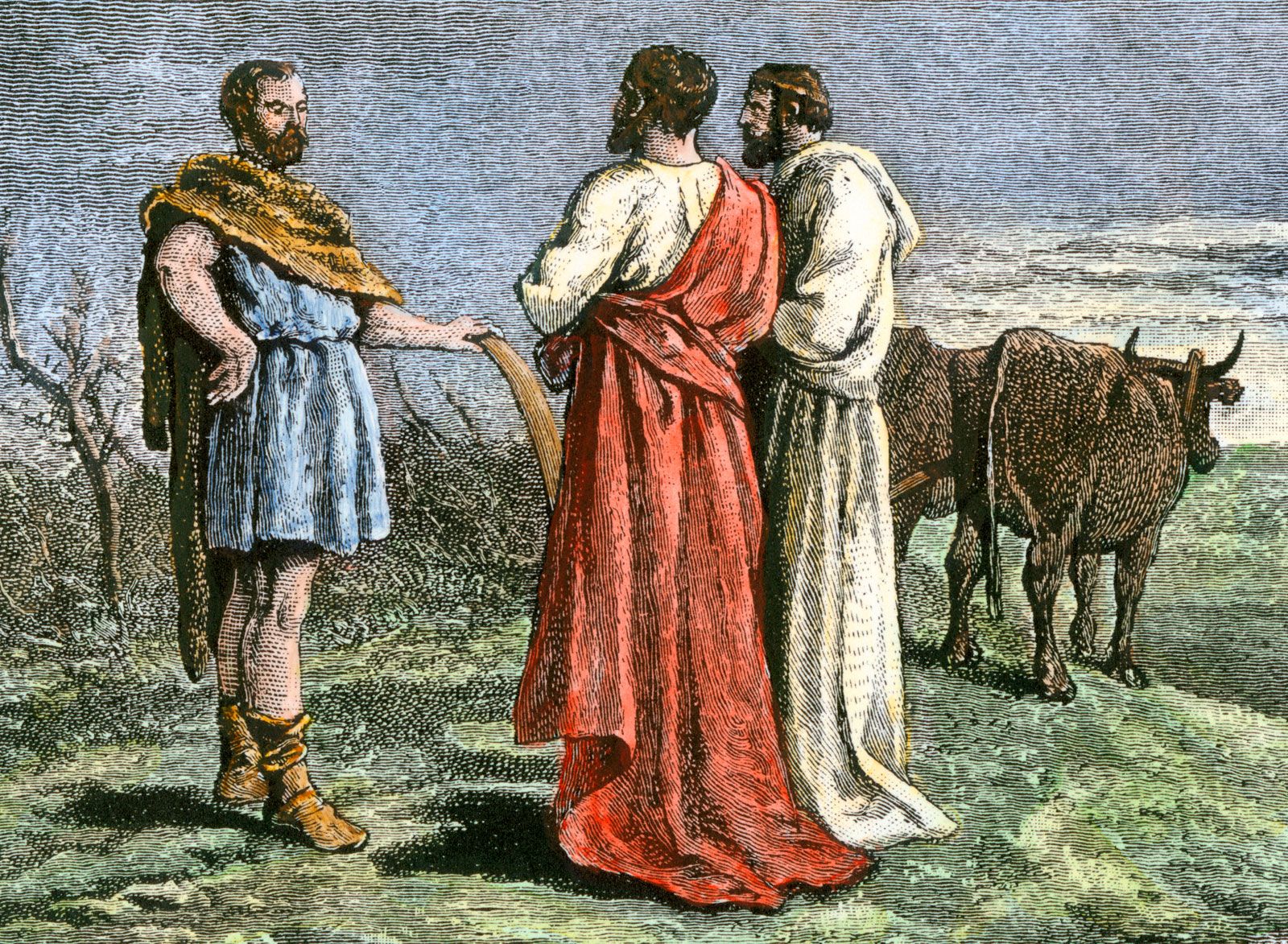
However, a military emergency in 458 BC led to his appointment as dictator – a constitutional office of absolute power to which Romans appointed a leader during crises for a six-month period. When a delegation arrived to let him know, they found Cincinnatus toiling in his farm. He put aside the plow and took up the sword, and led the Romans to a swift victory. He then resigned the dictatorship and went back to working his small farm.
Cincinnatus Became an Inspirational Figure in His Day and For Centuries After

In 439 BC, Cincinnatus was once again appointed dictator when Rome was threatened with an internal conspiracy. He suppressed the conspirators, and again laid down his power as soon as the crisis was over and returned to his farm. Cincinnatus went down as one of the most revered figures of the Roman Republic, and as an exemplar of civic virtue, modesty, and outstanding leadership.
George Washington consciously sought to model his career after that of Cincinnatus. The comparison resonated during the Age of the Enlightenment with contemporaries who grew up on the classics and knew their Roman history well. They noted the similarity with the ancient Roman statesman when America’s first president and first great general voluntarily laid down his power at the end of his second term, and went into retirement.

_________________
Sources and Further Reading
Beard, Mary – SPQR: A History of Ancient Rome (2015)
Cornell, Tim – The Beginnings of Rome: Italy and Rome From the Bronze Age to the Punic Wars (2012)
Goldsworthy, Adrian – In the Name of Rome: The Men Who Won the Roman Empire (2016)

