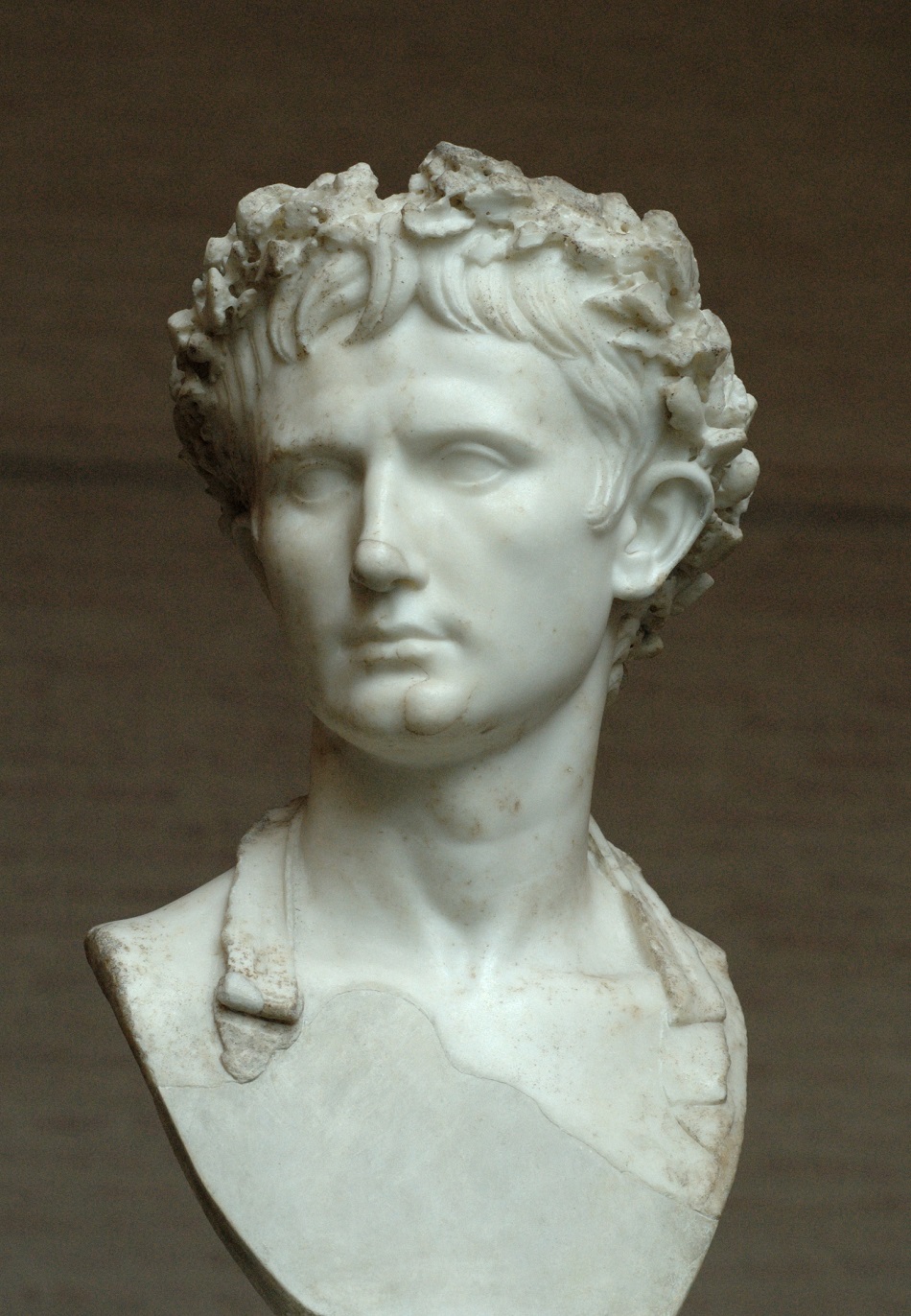
Gaius Octavius, eventually Gaius Julius Caesar Augustus and commonly known as Augustus (63 BC – 14 AD), was Rome’s first emperor. He brought to an end the ailing Roman Republic, which had been dysfunctional and riven by deadlock, political violence, and civil wars for a century. In its place he established the Roman Empire, a highly authoritarian but more stable form of government that brought Rome two centuries of relative peace and prosperity that came to be known as the Pax Romana. Below are some interesting facts about the rise of Octavius, before he became Augustus.
A Dangerous Inheritance

Gaius Octavius was born into an affluent plebian family on his father’s side. His mother was of the patrician Julii lineage, and a niece of Julius Caesar. Octavius’ famous granduncle launched his grandnephew into public life, and groomed him to be his heir. He was in Albania, completing his military and academic studies, when his granduncle was assassinated in 44 BC. When he returned to Italy, he discovered that Caesar had adopted him as his son in his will, and made him his chief heir.
Octavius, who was only eighteen-years-old when Caesar was assassinated, was advised to decline the dangerous inheritance. He ignored the advice, and went to Rome. There, Caesar’s lieutenant, Mark Antony, refused to honor Caesar’s will, and Caesar’s assassins ignored the teenager. Cicero, one of Rome’s key elder statesmen and a prominent figure in a politically powerful but militarily weak faction, sought to manipulate him, quipping that he would: “raise, praise, then erase” the young man. As seen below, all underestimated Octavius.
An Underestimated Teenager

Those who underestimated the young Octavius assumed he was just a callow teenager with a famous last name. Unbeknownst to them, the unprepossessing youth – he was frail and sickly throughout his life – was a master politician. The future emperor paid for public games in honor of Julius Caesar, his adoptive father. He sought to gain recognition and popularity, and to lead Rome’s populist faction, fittingly known as the Populares. Octavius also set out to win Caesar’s veteran soldiers to his side.
The teenager succeeded beyond anybody’s expectations. Once he had a military force under his command, Cicero’s faction reconsidered and sought Octavius’ aid. They bent the rules to appoint him a senator even though he was legally below the minimum age, and sent him against Mark Antony, who was forced to retreat from Italy to Gaul. The consuls in official command of the forces arrayed against Mark Antony were slain. So Octavius made the Senate appoint him to a vacant consulship, even though he was legally underage for that position as well.
The Violent Swings of the Late Roman Republic’s Politics

Octavius betrayed the senators who had ignored the rules make him consul, and struck a deal with Mark Antony to share power in a joint dictatorship. A generation earlier, after he won the first Roman civil war, the dictator Sulla, head of the conservative patrician Optimates faction, had gone after the Populares faction that championed he Roman commoners. Sulla slew the Populares by the thousands in terrifying proscriptions. The conservative victory was not permanent, however. Once Octavius secured power at the head of the Populares, he paid back the Optimates in full, and with interest.
A generation after Sulla at the head of the patrician Optimates had devastated the Populares faction, the pendulum swung. Octavius and Mark Antony, now leaders of the commoner faction, persecuted the Optimates in even bloodier and more thorough proscriptions than those of Sulla against the populares.The duo launched a massive purge that executed thousands of Rome’s conservative Optimates. They also slaughtered other suspected opponents, including Cicero, who had tried to follow a centrist path but only ended up offending both sides.

[This is the first of two articles about the rise of Octavius. Click here for Part II, which explores how Octavius became Augustus, and how he ended the Roman Republic and replaced it with the Roman Empire.]
_________________
Some Sources & Further Reading
Eck, Werner – The Age of Augustus (2002)
Goldsworthy, Adrian – Augustus: First Emperor of Rome (2014)
History Halls – The Men Who Made and Unmade the Roman Republic: The Selfless Cincinnatus
Severy, Beth – Augustus and the Family at the Birth of the Roman Empire (2003)
Suetonius – The Lives of the Twelve Caesars: Augustus

