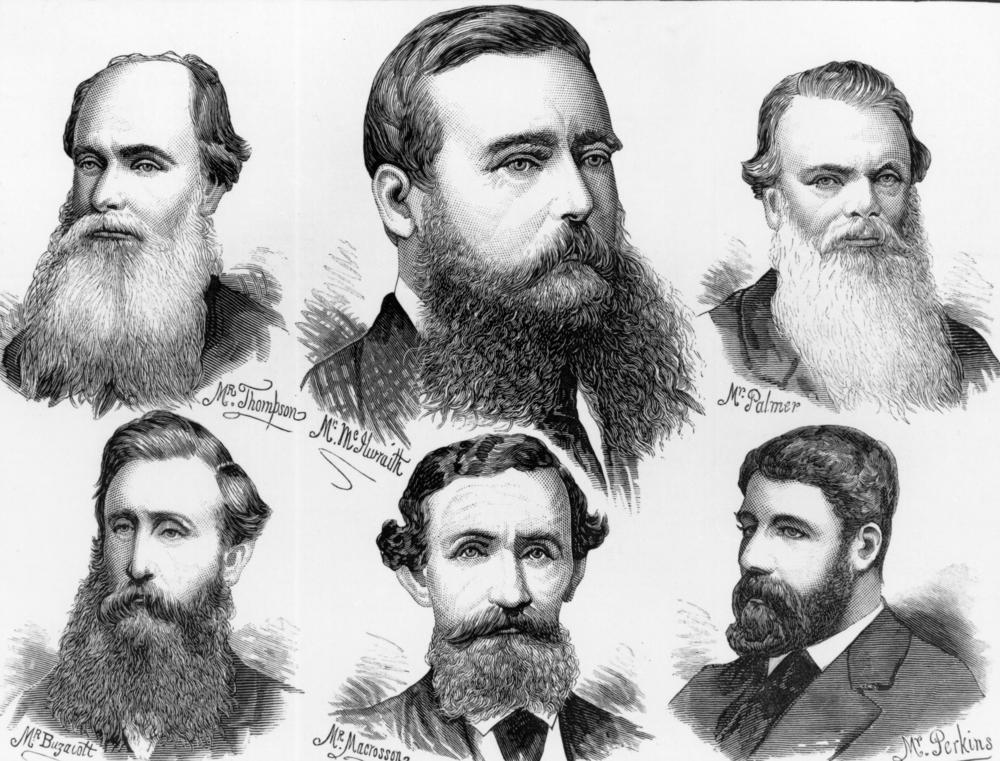
Beards have made a comeback – and not for the first time. Centuries ago, beards were out of fashion, and facial hair was deemed bodily waste – something disgusting to get rid of. Then facial hair made a major comeback in the nineteenth century, driven in part by a medical belief that beards could prevent diseases.
Facial Hair Was In and Out of Style for Centuries

Facial hair was out of style in the West for more than a century, but it made a comeback in the past few years, largely driven by hipsters. It is not the first time that facial hair fell out of fashion, only to become stylish once again – beards have often oscillated between popular and unseemly over the centuries. For example, facial hair was fashionable in archaic and early classical Greece, but went out of style in the Hellenistic era.
The Roman Republic’s founding fathers went about with beards. That changed within a few generations, however, and Romans switched to a clean-shaven look. The beardless style lasted for centuries until Emperor Hadrian made facial hair fashionable once again. Beards fell in and out of fashion throughout much of the medieval era, but by the sixteenth and seventeenth centuries, medical opinions held that facial hair was bodily waste.

That being so, shaving one’s beard was seen as a way to rid the body of a potentially harmful substance. Eighteenth century Enlightenment men were clean shaven. The ideal enlightened gentleman’s face was smooth, youthful, with a clear countenance that suggested an equally clear and open mind. Then came the nineteenth century, when beards roared back into style.
After generations of smooth-shaved faces, beards made a huge comeback in the nineteenth century. Much of that had to do with the Victorian era’s ideal of rugged manliness. Beards are great visual markers of maleness, so the thicker the facial hair, the manlier the man. Big beards fit in great with the new zeitgeist. It was not just changed cultural norms and mores, though.
Nineteenth Century Doctors Encouraged Men to Grow Their Facial Hair

Thick facial hair’s renewed popularity was also helped by medical opinions about the health benefits of beards. In the mid-nineteenth century, doctors began to encourage men to grow thick beards in order to prevent disease. The medical benefits of beards as imagined by Victorian doctors are nonexistent, but it makes sense why many theorized that they offered health benefits.
The coal burned in unprecedented quantities to fuel the Industrial Revolution caused massive air pollution. The notorious London fog first became noticeable in the nineteenth century. Add to that the recent discovery of germ theory, which many doctors had heard of but had not yet fully understood. Mix all those factors, and concern with tiny bad things floating in the air becomes understandable.

Doctors theorized that thick facial hair could filter out bad air and the bad little things that floated in it. Some even expressed the medical opinion that beards could prevent sore throats and a variety of other ailments, but keeping germs out of a bearded man’s mouth. In the days before microscopes were widespread among the medical community, few grasped just how tiny germs and bacteria are.
In reality, as we now know, beards cannot filter air – harmful germs and aerial pollutants are too small for facial hair to block them. Beards actually do the opposite of what nineteenth century medical opinion thought. Rather than filter out harmful bacteria, germs and other tiny harmful particles can get stuck to beards, which thus increases rather than reduces the odds of infections.

_________________
Some Sources & Further Reading
History Halls – Hoaxes: The Keely Engine Proved That Gibberish Sells if it Sounds Like Science
Insider, May 14th, 2014 – How Bad Medical Advice Helped Make Beards Trendy
Withey, Dr. Alun – The Medical Case for Beards in the 19th Century

