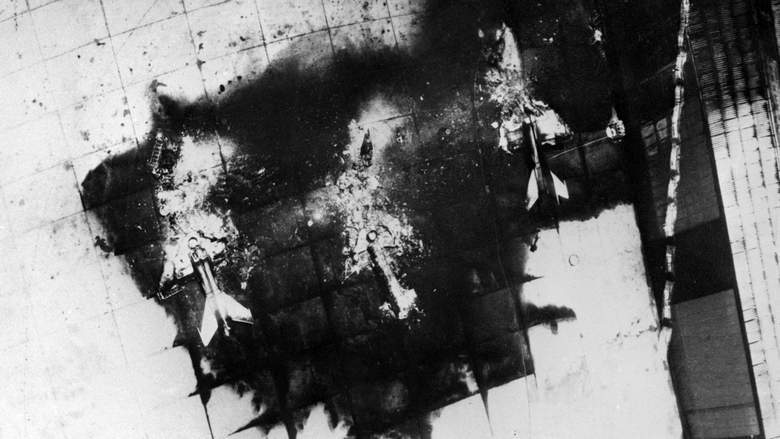
A jet fighter or bomber is among the deadliest weapons ever invented. On the ground, however, it is utterly useless and defenseless. That was demonstrated to great effect in Mivtza Moked, or Operation Focus, the code name given the preemptive Israeli airstrikes on June 5th, 1967, at the start of the Six Day War. The strikes destroyed the Egyptian, Syrian, and Jordanian air forces on the ground, and disabled their airbases. As seen below, Israel’s quick victory in that war largely stemmed from the success of Operation Focus in the conflict’s early hours.
A Surprise Onslaught

Operation Focus launched nearly all of Israel’s 196 warplanes in an all-out attack against enemy air forces. The Israeli pilots maintained radio silence, flew low beneath enemy radar, headed out westward over the Mediterranean, then turned south towards Egypt. The Egyptian Air Force was surprised by the sudden and simultaneous appearance of enemy warplanes over eleven airfields at 7:45AM that morning.
The Israeli air force planners chose that time because the Egyptians had committed the mistake, unpardonable in warfare, of becoming predictable. They had fallen into the habit of going on high alert at dawn to guard against surprise attack, but the alert was usually over by 7:45AM. The airplanes by then would have returned to their airfields, and the pilots disembarked to eat breakfast.

In addition to surprise, success was due to the use of new technology. The first wave of attackers concentrated on the runways with a new prototype of penetration bombs that used accelerator rockets to drive the warheads through the pavement before detonation. The result was a crater atop a sinkhole. Damage caused by normal bombs when they strike runways simply requires filling in the bomb crater and paving it over. That of the new bombs was worse.
Crippling the Enemy’s Air Force
The sinkholes caused by the prototype Israeli bombs necessitated the complete removal of the damaged pavement segment in order to get at and fill in the sinkhole. That was a far more laborious and time-consuming process. With the runways destroyed, the airplanes on the ground were stranded, sitting ducks for follow up airstrikes. 197 Egyptian airplanes were destroyed in the first wave of Operation Focus. Only eight Egyptian planes managed to take to the air.

After they struck an initial eleven Egyptian airbases, the Israeli planes returned to base. There, they quickly refueled and rearmed in under eight minutes. They then headed back to strike an additional fourteen Egyptian airbases. They returned to Israel for yet another speedy refueling and rearming, then flew a third wave, this one divided. Some planes attacked what was left of Egypt’s air assets, while others struck the Syrian and Jordanian air forces. By noon on June 5th, the Egyptian, Syrian, and Jordanian air forces were largely destroyed, having lost about 450 airplanes.
About twenty Egyptian airbases and airfields were seriously damaged. The devastation of the infrastructure further crippled what was left of the Egyptian Air Force and prevented its intervention in the remainder of the conflict. All in all, Operation Focus was one of history’s most successful preemptive strikes, and left the Israeli Air Force in complete control of the skies for the rest of the Six Day War.

_________________
Some Sources & Further Reading
Bowen, Jeremy – Six Days: How the 1967 War Shaped the Middle East (2012)
History Halls – World War II Bombers: Britain’s Handley Page Halifax
Oren, Michael B. – Six Days of War: June 1967 and the Making of the Modern Middle East (2002)

