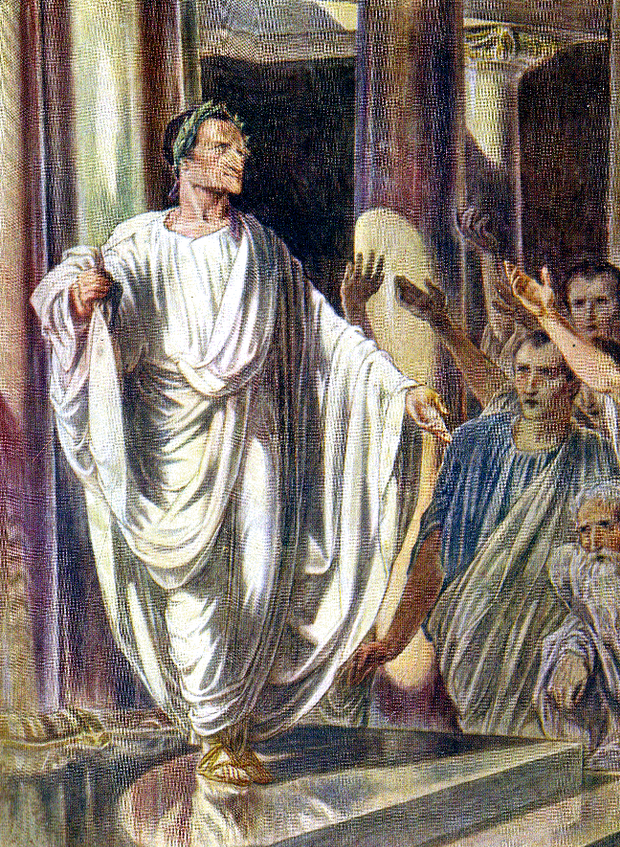
Quintus Fabius Maximus Verrucosus (circa 280 – 203 BC) was a Roman statesman and general whose cautious delaying tactics and strategies against the Carthaginian general Hannibal Barca earned Fabius the nickname Cunctator, or “the Delayer”. Those tactics saved a Rome that was reeling from a string of humiliating defeats, and gave it time to recover its equilibrium and gird itself for a difficult war.
The Original Fabian Strategist

Hannibal had led an army into Italy at the start of the Second Punic War (218 – 201 BC) and won a series of major victories against the Romans. The Carthaginian’s successes threatened Rome’s hold on Italy, as many Roman allies defected and joined Hannibal, or declared neutrality. Fabius by then was a respected senior statesman. He had been elected Consul in 233 and 228 BC, as well as Censor – a highly prestigious position – in 230 BC.
Faced with a dire emergency, the Romans appointed Fabius dictator for six months. He realized that Rome had no general at the time, including himself, who was Hannibal’s equal as a battlefield commander. So rather than face the Carthaginian general in a standup fight on the battlefield, and probably suffer yet another defeat, Fabius adopted an attrition strategy which came to be known as “Fabian”.
Saving Rome With Delaying Tactics

Fabius shadowed the Carthaginian, refusing to offer pitched battle, gradually whittling the enemy’s strength with scorched earth tactics, coupled with attacks against his supplies and isolated detachments. That stabilized the situation, but it was resented by Romans who took to calling Fabius Cunctator, or “Delayer”. It was an insult that, in hindsight, became a badge of honor. When Fabius’ six month term as dictator expired, his countrymen amassed 87,000 men, the biggest Roman army to date, and marched off to crush Hannibal. The Carthaginian commander was eager to let them try.
At the Battle of Cannae in 216 BC, Hannibal adopted a brilliant tactical plan that was executed to perfection. He lured the eager Romans into a double envelopment, and destroyed them. Of 87,000 Romans, only 10,000 escaped – all the rest were killed or captured. There were no more snide comments and sneers directed at Fabius, and Cunctator became an honorific instead of an insult. He was elected consul three more times before his death in 203 BC, and his Fabian strategy became the official one followed by Rome for the remainder of the war, which was finally won in 201 BC. Fabius did not live to see the victory, but he laid the groundwork that led up to it.

_________________
Some Sources & Further Reading
Cornell, Tim – The Beginnings of Rome: Italy and Rome From the Bronze Age to the Punic Wars (2012)
History Halls – The Men Who Made and Unmade the Roman Republic: Lucius Junius Brutus
Plutarch – Parallel Lives: Fabius

