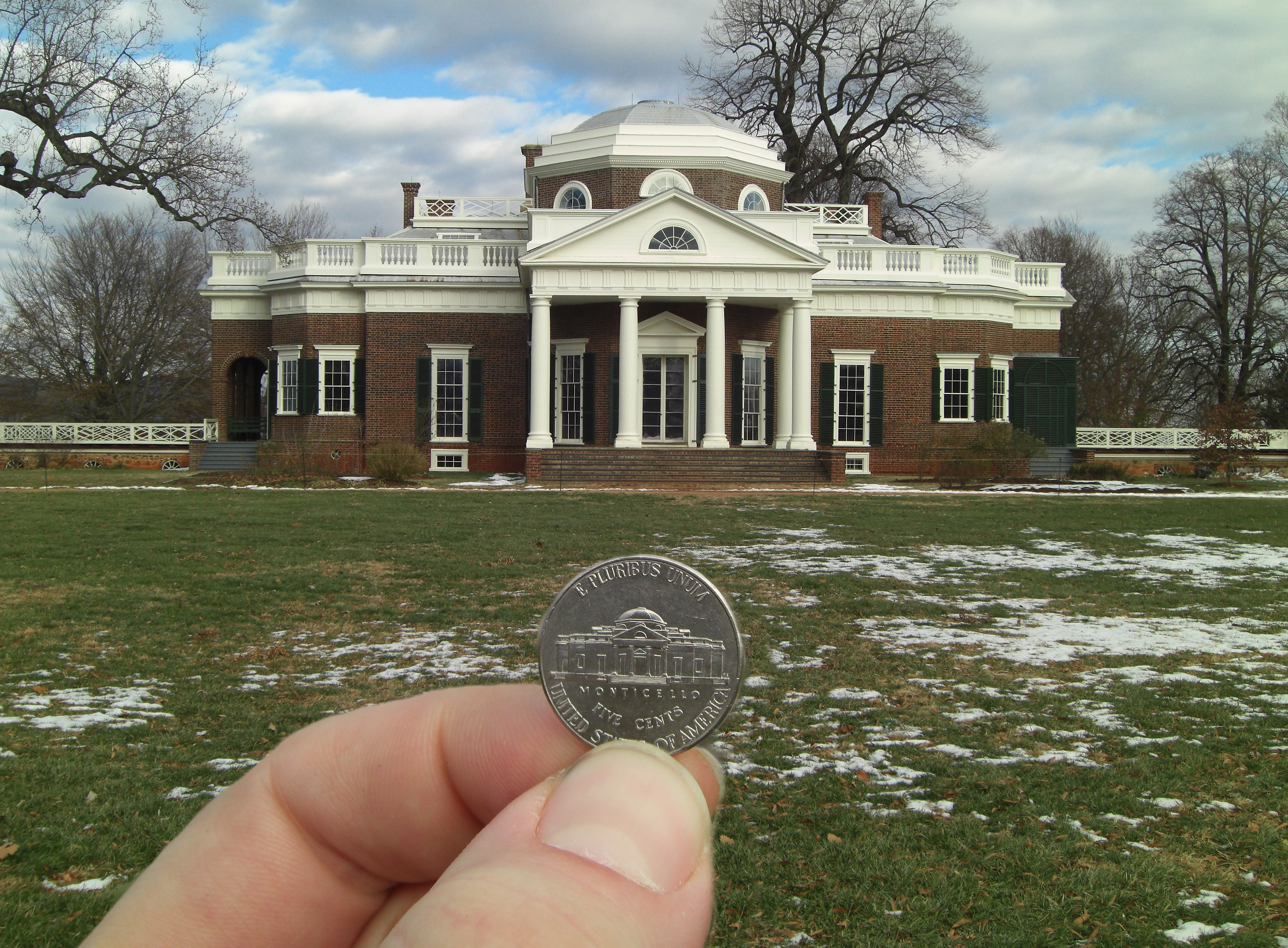
Thomas Jefferson was a complicated figure, to say the least. The Founding Father, third US president, and leading member of the committee that drafted the Declaration of Independence, penned some of the most stirring words to advocate for freedom, liberty, and equality. The phrase at the start of the of Declaration of Independence, “We hold these truths to be self evident, that all men are created equal, that they are endowed by their Creator with certain inalienable Rights, that among these are Life, Liberty and the pursuit of Happiness” has moved and inspired idealists for centuries. On the other hand, Jefferson pursued his happiness in a slave-operated plantation, and led a life of luxury that was only made possible by the labor of hundreds of chattel slaves.
Thomas Jefferson Was a Complicated Figure

Jefferson called slavery a “moral depravity” and “a hideous blot”, thought it was contrary to nature’s laws, by which every human had a right to personal liberty, and told anybody who would listen of the need end slavery. Those views were quite radical in the environment in which he grew up and lived. However, despite whatever objections he had towards slavery, the fact remains that Jefferson did own slaves – hundreds of them.
Throughout his life, Jefferson owned over 600 slaves. Over 400 of them lived and worked in his plantation estate, Monticello, and in any given year around 130 toiled in slavery on the plantation. He constantly monitored his human property to extract the maximum labor out of them, and strove to increase their numbers through procreation – sometimes with his own personal participation. As he put it: “I consider a woman who brings a child every two years … an addition to the capital”.
Monticello

Although hundreds were enslaved at Monticello, many details of their lives are lost to history. Slaves were denied access to education and literacy – to teach a slave to read and write was criminalized – and contemporary white historians seldom recorded their lives. Jefferson owned 5000 acres, around eight square miles, near Charlottesville, in central Virginia, which he divided into separate farms for ease of management. The main one where he lived was a mountaintop plantation, Monticello, whose name means “little mountain” in Italian.
Jefferson further divided each of his farms into “quarter farms”. Each of those was run by an overseer, and worked by an allotment of slaves placed under his command. He further sought to divide the farms and split them into agricultural fields of forty acres each. Until his death at age 83, Jefferson rode around his property on horseback every day to inspect the land and the slaves upon whose toil his solvency rested.
Thomas Jefferson’s Method to Introduce Slave Children to the Lives of Bondage That Awaited Them

Thomas Jefferson was usually meticulous in what he did, and that meticulousness extended to how to brought up and acclimated the children he owned to the lives of slavery that awaited them. He detailed his strategy for child labor in his Farm Book. A firm believer in the need to maximize the returns on his investment in human property, Jefferson wanted to get the most work possible out of his slaves, and to start them on their labors for him as early as practicable.
In the earliest years of his slave children, Jefferson put the tots to work as babysitters and nurses. When girls hit sixteen, they began to spin yarn and weave clothes. As to boys, he had those from ages ten to sixteen make nails. In addition, Jefferson put his child slaves of both sexes to work in the tobacco fields: children had the right height to reach and kill tobacco worms.
Eventually, Monticello shifted from tobacco to wheat, which called for less manual labor. So he had the children taught trades as an alternative to field toil. As he put it, his slave children must “go into the ground or learn trades”. Not one to miss a trick, Jefferson used food as an incentive to make the slave children toil harder on his behalf: if they did a good job, they got more food.
Slavery at Monticello Was Bad, But Not as Bad as at Many Other Plantations

If the child slaves were particularly diligent in the performance of their assigned tasks, they might also get new clothes. Jefferson had a clock installed on an exterior Monticello wall that only had an hour hand. Jefferson, who believed that blacks were racially inferior and “as incapable as children,” figured that hour increments were all that the slaves could understand or needed to know.

Jefferson had cabins built for the house slaves about a hundred yards from and facing the mansion. For the blacks who worked the fields, he housed them at a further distance from his abode. That way, they and slavery would be out of his sight in both the literal and figurative senses. Originally, Jefferson’s slaves lived in two-room cabins, with one family per room and a single shared doorway to the outside.
From the 1790s onwards, slaves at Monticello began to be housed in single-room cabins, each one with its own door. To be fair, it should be noted that by the dismal standards of slavery in the United States at the time, the lives of Jefferson’s slaves at Monticello were less terrible than the lives of most slaves elsewhere in the US. Their lot was still bad, but not as bad as the lot of slaves who were owned by other masters.

_________________
Some Sources & Further Reading
Bear, James A. Jr. – Jefferson at Monticello (1967)
Brodie, Fawn McKay – Thomas Jefferson: An Intimate History (1974)
Encyclopedia Britannica – Monticello, Thomas Jefferson’s Home
History Halls – Politicians Who Couldn’t Keep it in Their Pants: Thomas Jefferson

