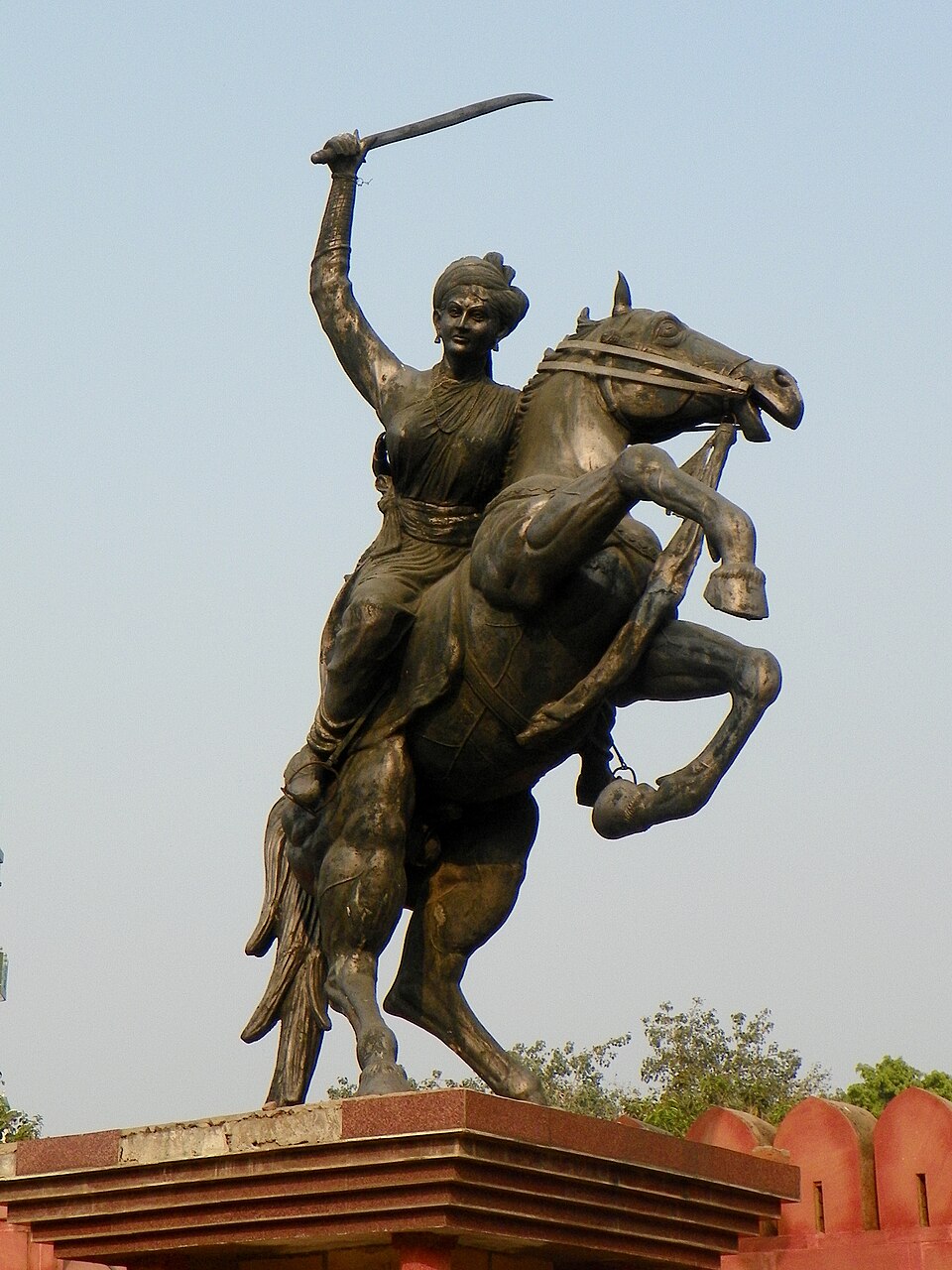
Lakshmibai was one of the key figures of the Indian Mutiny, or Indian Rebellion, against the British Raj in 1857 – 1858. A warrior princess, she ferociously defended her lands against the British and their allies, personally led her men in combat, and died in hand to hand fighting against British cavalry. Below are some remarkable facts about this remarkable warrior woman.
The Rani of Jhansi

Lakshmibai Newalkar, also known as the Rani of Jhansi (circa 1830 – 1858), was the rani, or queen, of the Indian princely state of Jhansi in northern India. She is best known as a leader of the Indian Mutiny against British rule in 1857 – 1858, during which she personally led troops and fought in the line of battle. Her exploits made her an Indian national heroine, a symbol of resistance to British rule, and a martyr for independence.
Born and raised in an upper caste Brahman family, Lakshmibai had an unusual upbringing for a girl of her class. She was brought up among boys in a prince’s household, and was taught and became proficient in a wide variety of martial arts such as swordsmanship, shooting, and horseback riding. When she came of age, Lakshmibai was married to the maharaja, or princely ruler, of Jhansi.

The couple did not have children, but Lakshmibai’s husband adopted a child as his heir. Upon her husband’s death, the British authorities employed legal chicanery, refused to recognize the adopted child as heir to Jhansi, and annexed that state to the territory of the East India Company. When informed of this, Lakshmibai vowed “I shall not surrender my Jhansi!”
An Indian Mutiny Rebel Leader

“I shall not surrender my Jhansi!” became Lakshmibai’s war cry in the subsequent rebellion. In 1857, Indian troops in British service mutinied, and their rebellion quickly spread throughout northern India. Lakshmibai was declared regent of Jhansi, and governed on behalf of the underage heir. She raised troops and joined the rebels. Disgruntled natives from across Indian flocked to her standard to offer their support and fight under her command.
Lakshmibai led her forces in a series of successful engagements that asserted her command and consolidated her rule. Eventually, the British sent an army to recapture Jhansi. When they demanded her surrender, she responded with a proclamation stating: “We fight for independence. In the words of Lord Krishna, we will if we are victorious, enjoy the fruits of victory, if defeated and killed on the field of battle, we shall surely earn eternal glory and salvation.”
The British surrounded Jhansi, and a fierce battle ensued, during which Lakshmibai led her troops in offering stiff resistance. British heavy artillery eventually reduced her fortifications and breached the city walls. When Jhansi was about to fall, Lakshmibai led a small force in a ferocious attack that cut its way to safety. The warrior princess fought her way through the British siege lines with her child strapped to her back. Lakshmibai escaped, reached other rebel forces, and resumed the fight. She was finally killed in battle on June 17th, 1858, in combat against British cavalry.
_________________
Some Sources & Further Reading
Encyclopedia Britannica – Lakshmi Bai
History Halls – Queen Zenobia of Palmyra
Lebra, Joyce C. – Women Against the Raj: The Rani of Jhansi Regiment (2008)

