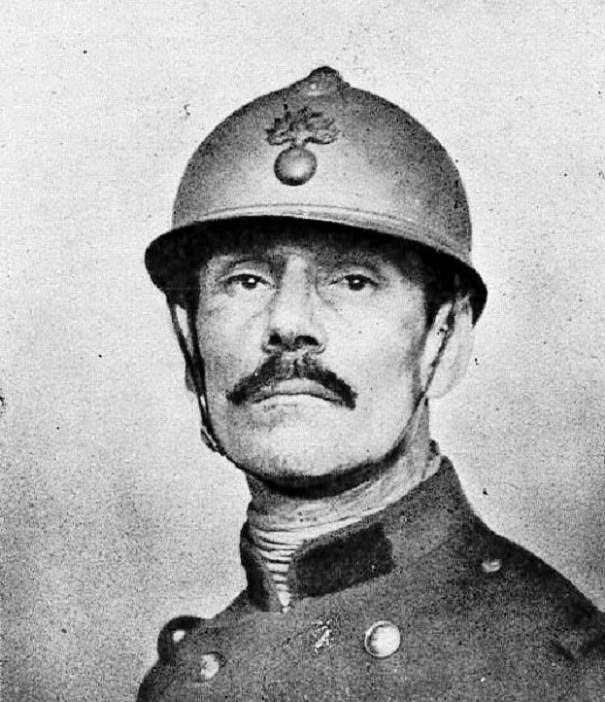
The Adrian helmet was one of the most important and recognizable pieces of military equipment developed during World War I. Introduced by the French Army in 1915, it marked a turning point in battlefield protection. It was the first modern steel combat helmet used on a large scale. Its distinctive shape, crest, and front badge made it an enduring symbol of WWI French soldiers. It remained associated with France’s military identity for decades afterward.
Realizing the Importance of Head Protection

Before the Adrian helmet was introduced, French soldiers wore cloth caps known as kepis. Those caps were part of a long military tradition, but offered no protection against modern weapons. The nature of warfare had changed dramatically by 1914, and artillery became the dominant battlefield killer. Exploding shells sent fragments of metal, rock, and debris falling from above, and head wounds became extremely common. Military authorities soon realized that providing soldiers with even basic head protection could save many lives.
In response to that urgent need, French General Louis Adrian designed a steel helmet that would protect soldiers while remaining lightweight enough for everyday use. The Adrian helmet was officially adopted in 1915 and quickly distributed to frontline troops. Constructed from mild steel, it consisted of several key components: the rounded dome, a front visor, a rear neck guard, and a distinctive ridge-like crest running along the top. That crest helped deflect falling debris, and also strengthened the helmet’s structure.

Inside, the helmet contained a leather liner that provided comfort and helped absorb shock. A chinstrap kept it secure during movement. On the front, a metal badge displayed the emblem of the wearer’s branch, such as a flaming grenade for infantry or crossed cannons for artillery. Such insignia reinforced unit identity and helped distinguish different military roles. One of the helmet’s greatest advantages was its relatively light weight. At 0.76 kilograms, it was lighter than many later steel helmets. That made it more comfortable for soldiers to wear over long periods. This was important because soldiers often spent days or weeks continuously exposed to danger.
A Greatly Influential Design

The Adrian helmet could not stop direct rifle bullets. However, it was highly effective against shrapnel and falling debris, the main causes of head injuries in trench warfare. Studies conducted during the war showed a noticeable reduction in head wounds among soldiers who wore steel helmets. They proved the helmet’s effectiveness and encouraged its widespread use. The Adrian’s appearance was carefully considered as well as its function. Early versions were painted in a blue-gray color known as horizon blue, which matched French military uniforms of the period. Later versions were painted in different colors depending on the nation or branch using them. Some soldiers added camouflage paint to help blend into their surroundings. The crest and badge also gave the helmet a distinctive and somewhat traditional appearance, reflecting France’s long military heritage.
Production of the Adrian helmet was massive. Millions were manufactured during and after the war, allowing nearly every French soldier to receive one. Its success quickly attracted international attention, and other countries adopted the design or produced their own versions. Nations such as Belgium, Italy, Russia, Serbia, Romania, and Brazil issued Adrian-style helmets to their troops. Some American forces serving alongside the French used the Adrian helmet before the United States fully developed its own helmet. That widespread adoption made the Adrian one of the early twentieth century’s most influential helmet designs. It continued to evolve after WWI. In 1926, an improved version known as the M26 was introduced. That model used stronger steel and improved manufacturing methods, making it more durable and efficient to produce.
Significance and Legacy of the Adrian Helmet

The Adrian helmet remained standard equipment for French forces into World War II, and continued to be used by police, colonial troops, and reserve units for many years afterward. In some countries, it remained in service into the mid-twentieth century, long after newer designs had been introduced. Beyond its practical value, the Adrian helmet held important symbolic meaning. It represented the adaptation of traditional armies to the realities of industrial warfare. Its introduction showed how technology and battlefield experience could lead to innovations that saved lives. The helmet also became a powerful visual symbol of French soldiers, appearing in wartime photographs, propaganda posters, and historical memory.
The Adrian helmet influenced the development of later helmets used by other nations. Realization of the importance of head protection led to the British Brodie helmet and the German Stahlhelm. They differed in design and protection level, but all shared the same essential purpose of the pioneering French helmet. Today, the Adrian helmet remains an iconic WWI artifact. It can be seen in museums, historical collections, and commemorations around the world. Its distinctive crest and badge make it instantly recognizable, and it stands as a reminder of how armies adapted to the deadly conditions of modern warfare. More importantly, it represents a simple but crucial innovation that helped protect millions of soldiers.

_________________
Some Sources & Further Reading
Brayley, Martin J. – Tin Hats to Composite Helmets: A Collectors Guide (2008)
Doyle, Peter – The First World War in 100 Objects (2014)
History Halls – WWI’s Chauchat: One of History’s Worst Ever Firearms
Latest Articles
- The Johnstown Flood – Thousands Perished When A Dam Collapsed After Gilded Age Tycoons Modified it for their Private Resort
- The Jacquerie: The Medieval Peasant Uprising That Terrified France’s Aristocrats
- Things That Weren’t Thought Through: WWII’s Sticky Bomb Stuck to Users’ Hands Once Activated
- German Tanks of World War II – The Panzer 38(t), a Czech Tank in German Service
- Nicholas Alkemade: The WWII Airman Who Survived an 18,000 Foot Fall From a Bomber Without a Parachute

