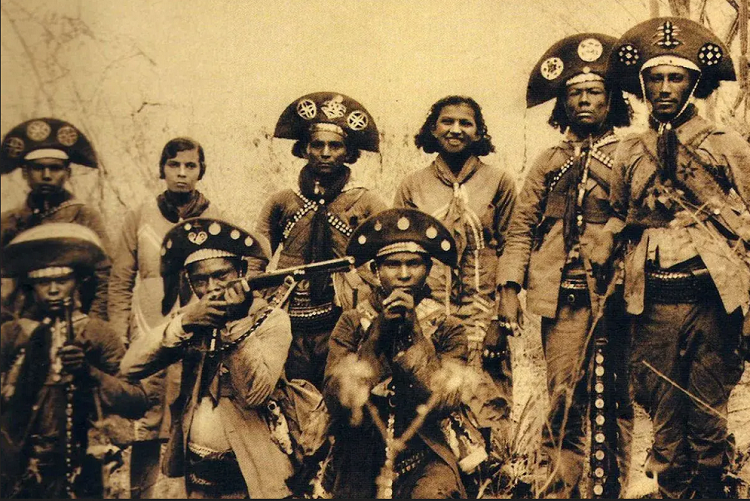
The Cangaco was a social banditry phenomenon that emerged in northeastern Brazil between the late nineteenth century and the 1930s. It was rooted in the harsh realities of the sertao – semi-arid backlands marked by drought, poverty, and weak state authority. The Cangaco combined elements of crime, rebellion, and folk heroism. Its participants, known as cangaceiros, became some of the most iconic and controversial figures in Brazilian history.
The Bandit Bands of Brazil’s Northeast

The origins of the Cangaco lay in the profound inequalities of the Brazilian Northeast. The region was dominated by powerful landowners, or coroneis, who exercised near-feudal control over vast estates and local politics. Justice was often private and violent, administered through personal militias and patronage networks rather than courts. Periodic droughts devastated livelihoods, and forced many rural workers into debt peonage or displacement. In that environment, banditry became both a survival strategy and a form of resistance. Some men turned to the Cangaco after family feuds, wrongful imprisonment, or abuses by landowners and police. They saw life outside the law as preferable to submission.
Highly mobile and organized cangaceiro bands operated across state boundaries in Pernambuco, Ceara, Bahia, Sergipe, Paraiba, and Alagoas. They raided towns, ranches, and trading posts. They extorted money and supplies from wealthy targets, and sometimes distributed gifts or money to poor villagers who aided them. That practice contributed to their Robin-Hood-esque reputation as “bandits with a cause”, though their violence was real and often brutal. Torture, executions, and reprisals against informants were common, reflecting the ruthless logic of survival against a backdrop of constant pursuit.
The Most Famous Cangaceiros

The most famous cangaceiro was Virgulino Ferreira da Silva, better known as Lampiao. His nickname referred to the speed with which he fired his rifle, supposedly lighting the night like a lantern. Active from the 1910s until his death in 1938, Lampiao transformed the Cangaco into a sophisticated, quasi-military enterprise. His band maintained strict discipline, used modern firearms, and cultivated an unmistakable visual identity: leather hats decorated with stars and medals, bandoliers crossing the chest, and carefully crafted outfits suited to the thorny caatinga terrain. That distinctive aesthetic became central to the Cangaco’s enduring cultural legacy.
Women also played a notable role, particularly after the 1920s. The most famous was Maria Bonita, Lampiao’s partner, who helped normalize the presence of women within the bands. While women rarely fought, they shared the hardships of the campaigns and participated in decisions. That challenged the traditional gender norms of the sertao. Their presence humanized the bands in the popular imagination, and reinforced the romantic dimension of the Cangaco in folklore and song. Opposing the cangaceiros were the volantes, special police units raised by state governments to hunt them down. Those forces were often as violent as their quarry. They employed summary executions, torture, and the display of severed heads to intimidate the cangaceiros’ supporters.
Significance and Legacy of the Cangaco and Cangaceiros

The conflict between cangaceiros and volantes became a low-level war across Brazil’s Northeast, with shifting alliances, betrayals, and vengeance cycles. In many cases, the same coroneis who denounced banditry privately hired cangaceiros as mercenaries to settle disputes. That further muddied the waters, and blurred the line between outlaw and authority. The end of the Cangaco came with the gradual expansion of federal power under President Getuliu Vargas in the 1930s. Improved communications, motorized transport, and coordinated policing reduced the freedom of movement that had sustained the bands for decades.
In 1938, Lampiao, Maria Bonita, and several companions were ambushed and killed by police at Angico, in Sergipe. Their heads were severed and displayed publicly, a grim spectacle meant to signal the definitive triumph of the state. Despite its violent reality, the Cangaco left a deep imprint on Brazilian culture. It inspired cordel literature, music, cinema, and academic debate. It also came to symbolize both resistance to injustice, and the destructive consequences of lawlessness. Today, the Cangaco is remembered as more than mere banditry. It was a complex social phenomenon born of inequality, regional neglect, and the struggle for dignity in an unforgiving landscape.

_________________
Some Sources & Further Reading
Chandler, Billy Jaynes – The Bandit King: Lampiao of Brazil (1978)
History Halls – The Bitch Wars: The Soviet Gulag Gang War that Killed Tens of Thousands
Newest Articles
- The Johnstown Flood – Thousands Perished When A Dam Collapsed After Gilded Age Tycoons Modified it for their Private Resort
- The Jacquerie: The Medieval Peasant Uprising That Terrified France’s Aristocrats
- Things That Weren’t Thought Through: WWII’s Sticky Bomb Stuck to Users’ Hands Once Activated
- German Tanks of World War II – The Panzer 38(t), a Czech Tank in German Service
- Nicholas Alkemade: The WWII Airman Who Survived an 18,000 Foot Fall From a Bomber Without a Parachute

