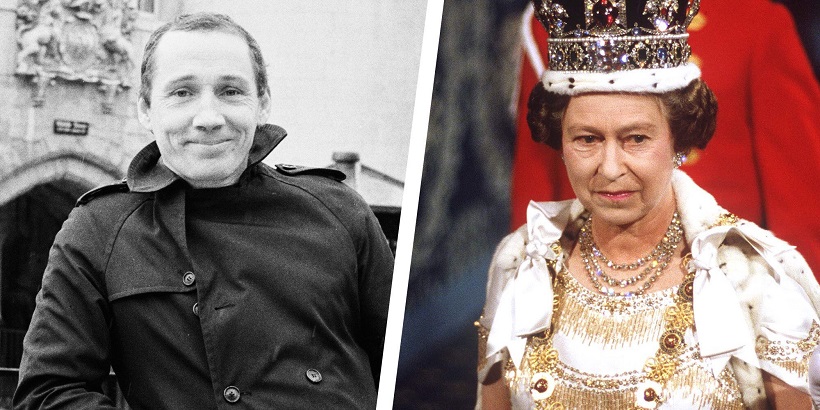
Security at Buckingham Palace has long left a lot to be desired. Way back in the nineteenth century, more than one stalker managed to get close to Queen Victoria with little trouble. Palace security had not improved much by the time Britain had a new queen. In 1982, Elizabeth II woke up to find a disturbed man, Michael Fagan, at the edge of her bed. One of his hands was seeping blood, and the other held a piece of broken glass. Her Majesty couldn’t even get security to show up when she pressed an alarm. So she had to go out of the bed and phone the palace operator to send help. Remarkably, it wasn’t Fagan’s first intrusion into the royal residence.
A Case Study in Lax Security

Michael Fagan’s break-ins at Buckingham Palace in 1982 are among the most startling security failures in modern British history. Bizarrely, a mentally distressed man managed to penetrate one of the world’s most guarded royal residences, not once, but twice. His actions, particularly the second break-in that culminated in an encounter with Queen Elizabeth II in her bedroom, exposed profound weaknesses in palace security and captured global attention. The story is a mixture of farce, danger, and psychological struggle. Decades later, it is still cited as a cautionary tale about complacency in high-security environments.
Born in London in 1948, Fagan led a troubled life. By the 1980s, he was unemployed, struggling with his marriage, and grappling with mental health issues that went largely unaddressed. On July 7th, 1982, he managed to scale a 14-foot drainpipe at Buckingham Palace and enter through an unlocked window. Once inside, he wandered aimlessly through the lavish yet poorly protected rooms. He triggered more than one alarm, but the security staff dismissed them as system malfunctions. He roamed the palace for half an hour, sipping half a bottle of white wine he found in the Duke of York’s quarters before he finally left, undetected.
A Disturbed Man and a Queen

The second break-in on July 9th, 1982, was even more astonishing. Michael Fagan climbed the same drainpipe and slipped through another unlocked window. He once again benefitted from faulty alarms and inattentive guards. Once inside, he cut his hand on a broken ashtray and left a trail of blood through the corridors. Nobody noticed as he wandered around the palace for over an hour. He entered various rooms and triggered multiple sensors, but palace security once again dismissed the alerts as technical malfunctions. Finally, guided by a mixture of aimless curiosity and emotional turmoil, he found his way into the queen’s private bedroom.
What happened next became one of the most sensational moments in royal history. Queen Elizabeth II awoke to find Fagan standing by her bed. He was bleeding, disoriented, and holding a piece of glass from the broken ashtray. Accounts vary on exactly what the two said. Fagan later stated that he wanted to talk to the queen about personal problems, including his unemployment and troubled marriage. Her Majesty remained outwardly calm, as she repeatedly pressed a bedside alarm to summon help. No help arrived. She eventually got out of bed to telephone the palace switchboard herself. No help arrived. So she called again. Still, nothing. Eventually, she left the bedroom and went out into the corridor, where she came across a housemaid and sent her to summon help. Even then, it still took several minutes before security finally arrived and removed the intruder.
The Legacy of Michael Fagan’s Buckingham Palace Break-Ins

That the United Kingdom’s queen had been left alone with a disturbed intruder for so long led to widespread outrage. Remarkably, Michael Fagan was not charged with trespass on a royal residence. It turned out that it was not a criminal act at the time. So the authorities had to settle for charging him theft of the wine he drank during the first break-in. That charge was later dropped, though. Ultimately, he was committed to a psychiatric hospital for several months.
The case exposed profound weaknesses in palace security: unreliable alarms, lax guards, unlocked windows, and a general culture of complacency. A comprehensive overhaul followed, including improved electronic systems and stricter guard procedures. Eventually, a dedicated Royalty Protection branch was created within the Metropolitan Police. Public reaction to the incident oscillated between disbelief, humor, and concern. Some saw Fagan as a symbol of growing social alienation and economic despair in Thatcher-era Britain. Others simply saw him as a disturbed man who should never have been able to get near the Queen.
Fagan’s break-ins prompted difficult but necessary conversations about mental health, policing, and the often-mythologised aura of royal invulnerability. Michael Fagan’s unlikely encounter with Queen Elizabeth II remains one of the most extraordinary intrusions in modern royal history. It demonstrated that even the most fortified institutions rely as much on vigilance and competence as on walls and alarms. The episode is remembered both for its surreal nature, and the far-reaching reforms it spurred. It was an unsettling reminder that human systems, no matter how prestigious, are never entirely secure.

_________________
Some Sources & Further Reading
History Halls – Colonel Blood: The Audacious Rogue Who Stole the Crown Jewels of England

