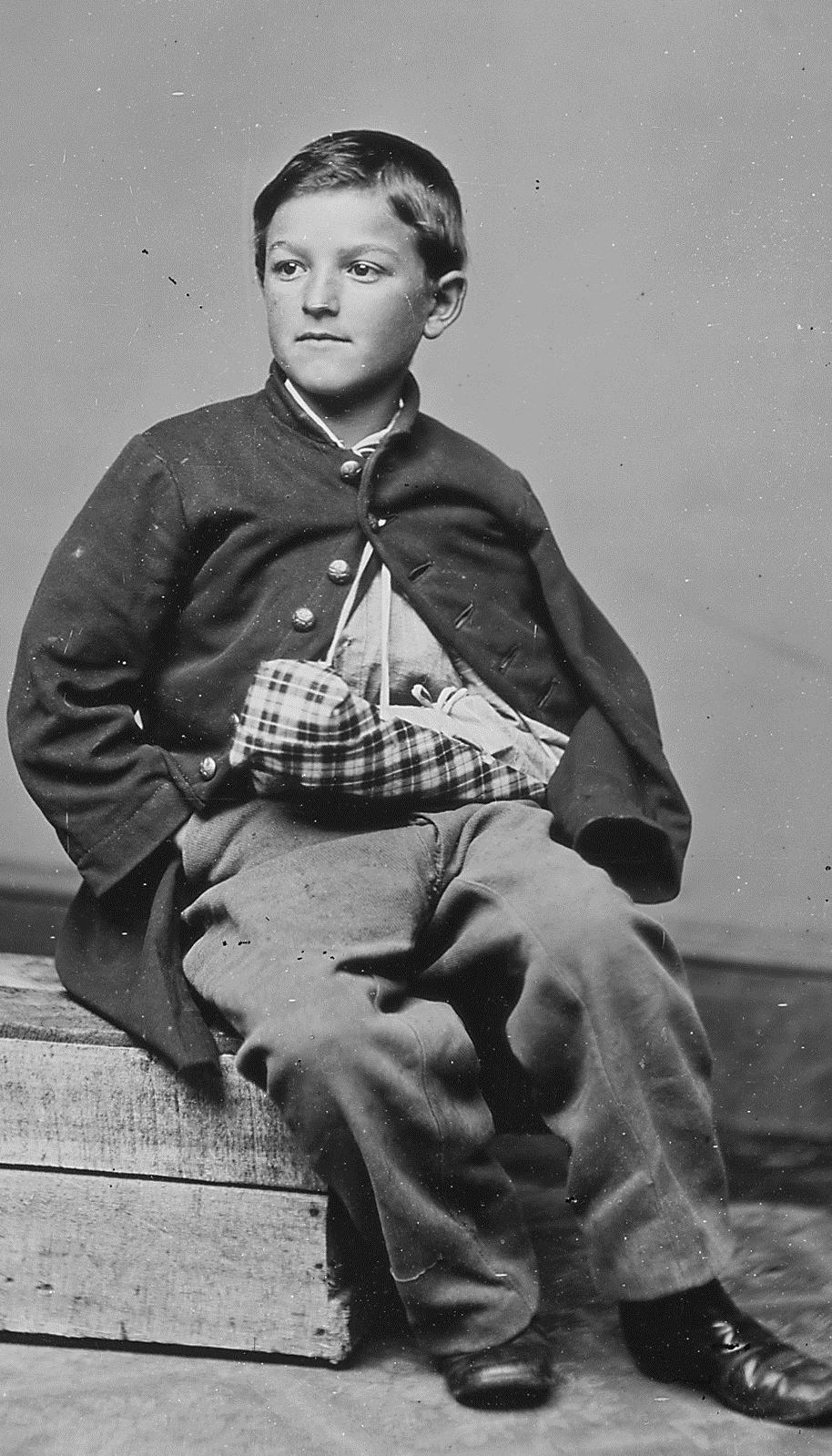
Edward Black was the youngest known US Civil War soldier. His tale is a poignant symbol of youthful patriotism and the tragic reality of warfare. Born in Indianapolis, Indiana, in 1853, Edward’s life and military service were both brief yet remarkable. They reflected the intense enthusiasm and patriotic fervor that gripped America in the war’s early years. His story sheds light on the experiences of child soldiers swept up in the tide of national crisis.
An Eight-Year-Old in the Army

When the Civil War erupted in April, 1861, Edward Black was only eight-years-old. Like many children back then, he was caught up in the wave of Unionist zeal that surged through northern states. His uncle, Captain William W. Black, commanded Company L of the 21st Indiana Volunteer Infantry. It was through him that Edward became involved with the regiment. Despite his tender age, Edward was officially mustered into the Union Army and became arguably the youngest enlisted soldier in American history.
Child drummer boys were not uncommon, and many regiments had drummers between ten and fifteen years old. Edward’s enlistment at eight, though, made him a striking exception. Drummer boys had crucial roles. In an era before radios or field telephones, drummers helped communicate commands on the battlefield. The drum’s cadence directed troop movements, called men to arms, and provided rhythm during marches. The young musicians also boosted morale, and brought a sense of normalcy and spirit to the otherwise grim camp life. For Edward, however, the war’s brutality soon intruded upon his youthful innocence.
Wartime Trauma and Tragedy

Edward Black saw action early in the war, particularly in the Union campaigns along the Gulf Coast. The 21st Indiana was engaged in several hard-fought battles, including those at Baton Rouge and other engagements in Louisiana. He was injured along the way, and during one of those actions, Edward was captured by Confederate forces. His time in captivity was short, but the trauma of the experience stayed for the rest of his life. Upon release, he was reunited with his regiment and continued to serve for a time, until he was discharged in September, 1862. He reenlisted in early 1863, this time with the 1st Indiana Heavy Artillery, in whose ranks he served until January, 1866.
After his discharge, Edward returned to Indianapolis. By then, however, his wartime experiences and trauma – exposure to violence, deprivation, and fear – had taken a severe toll on his physical and mental health. The war had aged him prematurely, and accounts indicate that he was haunted by the memories of his service. Although he was treated with admiration as a patriotic young hero, the psychological scars were deep. In an age before the concept of “post-traumatic stress” was recognized, his suffering was little understood.
Tragically, although Edward Black managed to survive the horrors of the war, he died in 1871 at the age of only eighteen. His early death was often attributed to the lingering effects of the war – both physical and emotional. His grave in Crown Hill Cemetery in Indianapolis remains a site of historical interest. It is a somber reminder of the costs of war. The headstone marks him as a “Drummer Boy of the Union Army,” immortalizing his service in the national memory.
The Legacy of Edward Black

Edward Black’s story sheds light on a broader, often overlooked aspect of the Civil War: the participation of children. Thousands of boys under the age of sixteen served in various capacities – drummer, buglers, messengers, and even combatants. Some lied about their ages to enlist, while others, like Edward, were taken in by family members already in uniform. Their service reflected both the patriotic fervor of the time and the desperate need for manpower that blurred the boundaries between childhood and adulthood.
Today, Edward Black is remembered not only as a historical curiosity but as a human face to the tragedy of war’s reach. His brief life illustrates how deeply the Civil War penetrated American society, and drew in not just grown men, but also children who should have been far from the battlefield. His courage and sacrifice continue to symbolize the innocence lost amid the great national conflict that reshaped the United States. Edward’s drum was kept by his family for generations, before it was finally gifted to the Children’s Museum of Indianapolis. It became one of the museum’s most prized and popular exhibits.

_________________
Some Sources & Further Reading
American Battlefield Trust – Children of the Civil War
Head Tilting History – Like Father, Like Offspring
History Halls – Young Warriors: Civil War Drummer Boy Frank Pettis

