Wars throughout history have tended to revolve around the standbys of territory, wealth, power, and prestige, whatever their immediate sparks. The sparks that lead to conflict can be odd and colorful, though and few were more so than the War of Jenkins’ Ear (1739 – 1748). As the name indicates, its immediate cause was an offense to an ear, specifically that of a Captain Robert Jenkins. Below are ten things about that conflict which, notwithstanding the quaint name and cause, was quite serious and deadly.
10. Seeds of Conflict

The War of Jenkins’ Ear was rooted in decades of simmering commercial tension between Britain and Spain. Since the late seventeenth century, the two maritime powers had been locked in a bitter struggle for dominance over Atlantic trade routes and the lucrative markets of the Caribbean and the Americas. After the Treaty of Utrecht in 1713, Britain had obtained the Asiento de Negros, or exclusive right to supply enslaved Africans to Spanish America. The British South Sea Company also gained the right to send two trading ship per year to the region. However, Spanish authorities frequently accused British merchants of abusing that agreement by smuggling vast quantities of contraband goods.
The Spanish Crown was alarmed by the loss of revenue and its inability to control its own colonial commerce. So it empowered the Guardacostas – its coastal patrols – to search and seize foreign ships suspected of illegal trade. Per the terms of their treaties with Britain, the Spanish had the right to do that. However, there was plenty of potential for abuse. British merchants operating near Spanish colonies like Cuba and Florida complained bitterly of harassment, imprisonment, and the confiscation of cargoes. Those grievances festered for years, and became a rallying cry among British politicians, merchants, and naval officers who demanded that Spain respect British commercial rights on the high seas. The stage was thus set for confrontation, as economic rivalry became entangled in questions of national pride and imperial ambition.
9. The Offense to Robert Jenkins’ Ear

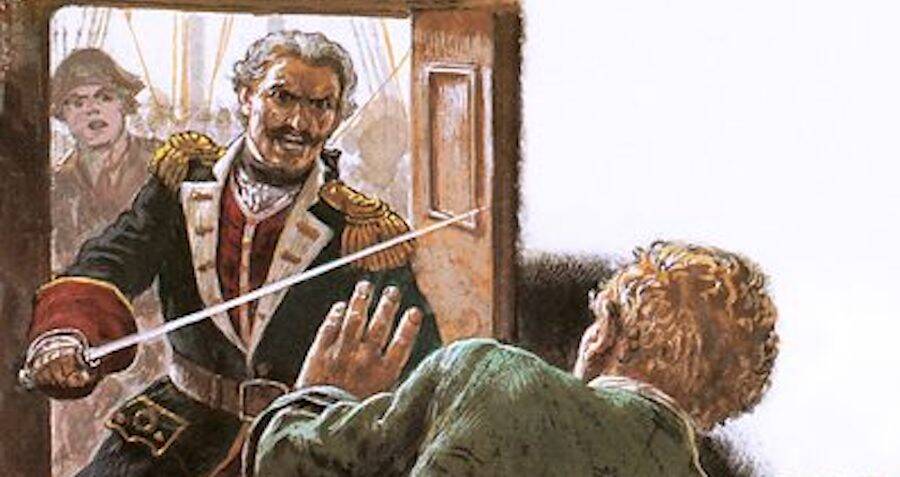
The war’s colorful and infamous name came from a relatively minor but symbolically charged event. In 1731, Captain Robert Jenkins, a British merchant seaman, was sailing his brig Rebecca near the coast of Florida when his ship was boarded by the Spanish Guardacostas under the command of Julio Leon Fandino. The Spaniards accused Jenkins of smuggling, searched the vessel, and confiscated part of its cargo. They also subjected its captain to humiliating treatment. Most notoriously, Fandino tied Jenkins to a mast, and sliced off his ear with a sword. He then handed Jenkins the severed ear to carry to King George II, and declared he would do the same even to the British monarch if he was caught smuggling in Spanish waters.
Jenkins returned to Britain and reported the assault to Parliament and to the king in person. After an initial flurry of indignation, the story was soon forgotten. Years later, amid escalating Anglo-Spanish tensions, Jenkins was summoned before the House of Commons in 1738 to recount his ordeal. According to popular legend, Jenkins dramatically displayed his severed ear – some accounts say it was preserved in a bottle, others in a box – as evidence of Spanish cruelty. The “ear” became a powerful symbol of national outrage, galvanized public opinion against Spain, and inflamed calls for war. The phrase “the War of Jenkins’ Ear” captured both the absurdity and the brutality of eighteenth century empire-building.
8. The Road to the War of Jenkins’ Ear

The cutting of Jenkins’ ear in 1731 had created a stir, but nothing came of it at the time. Within a year, it had been largely forgotten. Then, in the late 1730s, poor Jenkins’ severed ear was dusted off, and used to whip Britain into a war frenzy. Prime Minister Sir Robert Walpole, in power since 1721, was a cautious statesman who favored peace to preserve economic stability. He now faced mounting pressure from opposition politicians, merchants, and the public to take action against Spain. Jenkins’ ear, forgotten for the better part of a decade, suddenly became a rallying cry. The opposition accused Walpole of weakness and betrayal of British honor. Reports of Spanish depredations at sea, with the severed ear as a prime exhibit, stoked nationalist passions. Meanwhile, British trading interests in the Caribbean, especially in Jamaica and the West Indies, demanded protection from Spanish harassment.
Negotiations between London and Madrid repeatedly broke down. Spain insisted on its right to search ships in its own waters to curb smuggling. Britain demanded free navigation and indemnities for past seizures. In October, 1739, unable to contain the clamor for retaliation, Walpole reluctantly declared war on Spain. As crowds erupted in joy, he lamented: “They are ringing their bells now; they will soon be wringing their hands”. His foreboding proved prescient. What began as a limited trade dispute soon spiraled into a protracted imperial conflict. It stretched across the Caribbean and the Americas, and eventually merged with the wider War of the Austrian Succession.
7. The Capture of Porto Bello

The opening phase of the War of Jenkins’ Ear saw Britain achieve one of its most celebrated early victories. In November, 1739, Vice Admiral Edward Vernon led a small fleet of six ships to attack the Spanish colonial port of Porto Bello (present-day Portobelo, Panama), a major center of Spanish treasure shipments. The port’s defenses, consisting of several small forts, were quickly overwhelmed by Vernon’s naval bombardment. British forces captured the town with minimal losses within a day. The triumph electrified Britain. Porto Bello’s fall was hailed as revenge for years of Spanish affronts, and Vernon was celebrated as a national hero.
Streets, towns, and even the famous London thoroughfare “Portobello Road” were named in his honor. The victory appeared to vindicate the belief that Spanish America was vulnerable to British naval power. However, the success masked deeper strategic and logistical weaknesses. Vernon lacked sufficient troops to hold the town, and it was soon abandoned after its forts were destroyed. Nonetheless, the capture of Porto Bello bolstered morale and was used to justify the war’s continuation. It encouraged ambitious plans for larger-scale assaults on major Spanish possessions in the Caribbean and on the American mainland.
6. The Cartagena de Indias Expedition

Buoyed by the victory at Porto Bello, the British embarked on a grand expedition in 1741 to capture Cartagena de Indias, a heavily fortified Spanish port in modern Colombia. It was one of the eighteenth century’s most ambitious amphibious operations. Admiral Edward Vernon commanded a massive fleet of nearly 200 ships, 2,620 artillery pieces, and 27,000 men, including 10,000 soldiers. That figure included several thousand colonial American troops led by Lawrence Washington, George Washington’s elder half-brother. Opposing them was a smaller Spanish force under the seasoned commander Blas de Lezo y Olavarietta. One-legged, one-armed, and one-eyed – results of combat injuries – de Lezo was a naval veteran famed for his courage and ingenuity.
The siege began in March, 1741 with heavy bombardments. The British forces were soon bogged down, though, by tropical heat, disease, and logistical chaos. Malaria and yellow fever decimated the troops, while the Spanish defenders, who skillfully utilized Cartagena’s fortifications, mounted fierce resistance. By May, catastrophic losses of over 10,000 British soldiers and sailors dead or incapacitated forced the expedition’s abandonment. It was a humiliating defeat that shattered British hopes of conquering Spanish America. Blas de Lezo emerged as a Spanish national hero, while Vernon’s reputation at home plummeted. The failure marked a turning point in the war, and exposed the limits of British imperial power in tropical regions.
5. The War of Jenkins’ Ear in the Caribbean and North America

After the Cartagena disaster, the war devolved into a series of inconclusive raids, naval skirmishes, and colonial frontier clashes. In the Caribbean, British forces launched attacks on Cuba and other Spanish possessions. Those efforts largely failed due to disease, poor coordination, and the harsh tropical climate. The Spanish, though outnumbered at sea, relied on fortified harbors and swift privateers to harass British shipping. Meanwhile, the conflict extended into the North American colonies, particularly Georgia and Florida. In 1740, before the Cartagena expedition, Georgia’s Governor James Oglethorpe led an invasion of Spanish Florida and besieged St. Augustine. The operation faltered, however, when the Royal Navy failed to prevent the Spanish from bringing in reinforcements by sea.
In 1742, the Spanish attempted a counter-invasion of Georgia, and landed troops on St. Simons Island. Oglethorpe’s forces successfully repelled them at the Battle of Bloody Marsh, which effectively ended large-scale fighting in the region. Both sides were hampered by logistical challenges and limited resources. For colonial Americans, the war provided early experience in organized military campaigns, and foreshadowed future conflicts in the region. Despite sporadic successes, strategic stagnation set in, and neither Britain nor Spain was able to secure a decisive victory.
4. The War of Jenkins’ Ear Merged Into the War of Austrian Succession

The War of Jenkins’ Ear began as a bilateral New World colonial dispute. It soon merged with the much larger European conflict known as the War of the Austrian Succession (1740–1748). The succession crisis following Emperor Charles VI’s death plunged Europe into chaos. Soon, Britain, France, Spain, Austria, and other powers were drawn into a major conflict. In 1742, Britain formally allied with Austria against France and Spain. That transformed what had been a Caribbean trade war into a global struggle for balance of power. The naval theater expanded to the Atlantic and the Mediterranean, as British fleets sought to block Spanish and French shipping.
In 1742 – 1744, British squadrons captured or destroyed several Spanish galleon. France’s entry into the war in 1744 forced Britain to divert major resources to defend its own coasts. The colonies, which had once been the primary focus of the War of Jenkins’ Ear, now became secondary theaters. The broader European war overshadowed the original dispute entirely. The initial causes – ship searches and Jenkins’ severed ear – became almost absurdly trivial in retrospect. By mid-decade, the war’s scope and meaning had shifted from trade grievances to a continental power struggle.
3. The War Ended in Stalemate

By the mid-1740s, the war had reached a stalemate. British naval dominance kept Spanish trade under pressure, but major territorial gains proved elusive. Attempts to seize Havana, Santiago de Cuba, and other ports failed repeatedly, often undone by tropical diseases and supply shortages. Spanish colonial defenses, initially underestimated, proved remarkably resilient. Meanwhile, domestic support for the conflict waned in Britain as costs mounted and the promised commercial benefits failed to materialize. Prime Minister Walpole’s resignation in 1742 brought in more aggressive ministers. Even they, however, found it difficult to sustain enthusiasm for a war with few tangible victories.
On the Spanish side, the war drained resources and disrupted transatlantic commerce, but Spain maintained control of its colonies. In North America, minor raids and skirmishes continued, but none altered the overall balance of power. The conflict increasingly became an appendage of the War of the Austrian Succession, as both nations prioritized European operations over distant colonial adventures. The once-celebrated “No search!” slogan – Britain’s rallying cry against Spanish inspections – faded from public discourse as the original motives for war seemed long forgotten amidst broader geopolitical concerns.
2. The War Came to an Unsatisfying Conclusion for Both Side

The War of Jenkins’ Ear ended with the 1748 Treaty of Aix-la-Chapelle, which concluded the War of the Austrian Succession. The treaty restored the status quo ante bellum, and each side returned to its prewar possessions without significant territorial changes. The agreement made no substantial mention of the issues that had sparked the original conflict between Britain and Spain. The British gained no new colonies or trade concessions. The controversial Asiento de Negros contract was renewed only temporarily, before it was terminated in 1750.
For all the lives lost and treasure spent, little of substance was accomplished. Both nations were exhausted, and public opinion in Britain turned sharply against further imperial adventures in the Caribbean. The outcome revealed the limits of naval power when unsupported by effective logistics, healthy troops, and realistic objectives. Britain had demonstrated its ability to project force across oceans. It had also learned hard lessons about the vulnerability of armies operating in tropical disease zones, where many more men died of illness than in combat. The Treaty of Aix-la-Chapelle thus marked a disappointing and anticlimactic conclusion to a war that had begun amid jingoistic fervor but ended in weary disillusionment.
1. Although Overshadowed by Other Conflicts, the War of Jenkins’ Ear Had a Significant Legacy

Although the War of Jenkins’ Ear ended inconclusively, it had lasting consequences for Britain, Spain, and their colonial empires. For Britain, the war exposed poor coordination between the navy and army, and highlighted the challenges of large-scale overseas operations. It also offered valuable experience to colonial militias and officers, including Americans like Lawrence Washington, who would eventually influence the generation of the American Revolution. When he eventually retired, Lawrence Washington named his Virginia estate, which later became a historic landmark persevered as the plantation and residence of his younger brother George, “Mount Vernon” in honor of his former commander, Admiral Edward Vernon.
For Spain, the successful defense of Cartagena and its Caribbean territories gave it a new lease on life. It reaffirmed its imperial resilience at a time when many European observers believed its empire to be in decline. The conflict also foreshadowed eighteenth century warfare’s increasingly global nature, as distant colonies and trade routes became integral to European rivalries. The Jenkins’ ear conflict was overshadowed by the later Seven Years’ War. It nonetheless marked an early phase in the struggle for maritime supremacy that defined the century. Its curious name, born of a single mutilated ear, is a reminder that small incidents could ignite vast imperial wars.

_________________
Some Sources & Further Reading
Finucane, Adrian – The Temptations of Trade: Britain, Spain, and the Struggle for Empire (2016)
History Halls – Piet Hein: The Dutchman Who Captured the Spanish Treasure Fleet

