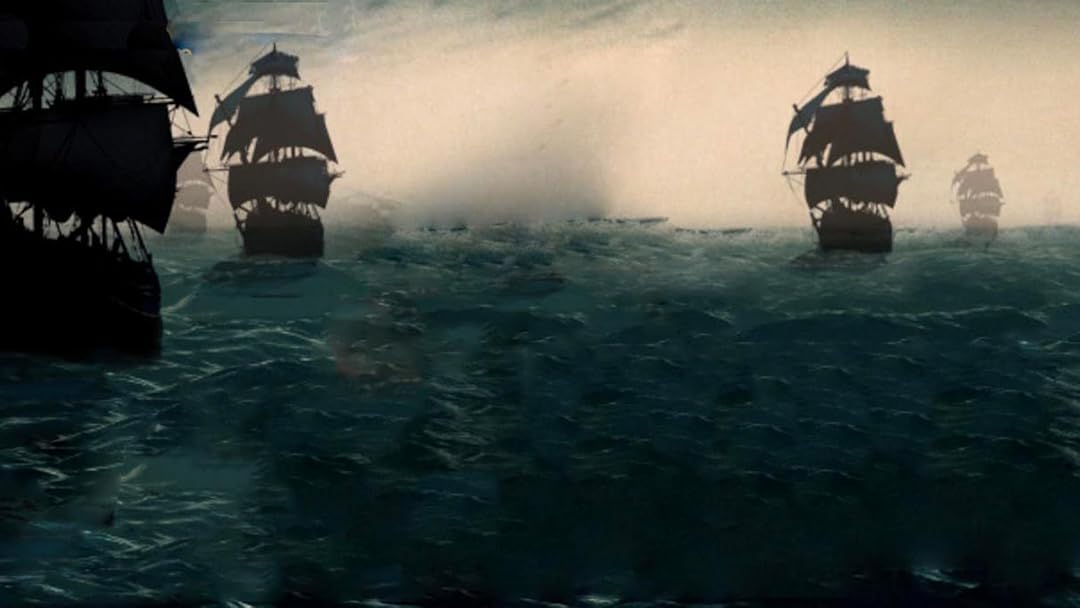
In the protracted Eighty Years’ War (1568 – 1648) between the Dutch Republic and Spain, few episodes capture the daring, ingenuity, and global reach of the conflict better than the feat of Piet Hein in 1628. A Dutch admiral and privateer, Hein rose from modest beginnings to seize one of the richest treasure fleets ever captured. His victory was not just a personal triumph, but also a major strategic and financial boon to the Dutch cause. It undermined Spain’s military capacity, and strengthened the Republic in its struggle for independence.
Piet Hein Went From Galley Slave to Seasoned Naval Commander

Piet Pieterszoon Hein was born in 1577 in Delfshaven, a small port town near Rotterdam. His childhood coincided with the turbulent early decades of the Dutch revolt against Spanish rule. The Netherlands at that time was not a single country, but a patchwork of provinces engaged in a fight for self-determination against the might of the Spanish Habsburg Empire. Hein’s family background was modest; his father was a seafarer, and Piet himself would follow the same path. Then in 1598, while serving as a sailor, he was captured by the Spanish.
Hein spent nearly four years as a galley slave – a brutal experienced that shaped him profoundly, hardened his resolve against Spain, and sharpened his seafaring skills. Freed in 1602, he rejoined the burgeoning Dutch maritime world at a time when the Republic’s global trading companies, the Dutch East India Company (VOC) and the Dutch West India Company (WIC), were expanding aggressively. Hein spent years in the East Indies as a naval commander and merchant captain, and established a reputation as a disciplined, skilled, and pragmatic leader.
The Spanish Treasure Fleets

Unlike some contemporaries who were flamboyant privateers, Hein earned respect for his fairness, professionalism, and aversion to unnecessary cruelty. In 1623 he entered the service of the Dutch West India Company, an organization created to challenge Iberian power in the Americas and West Africa by combining commerce with naval warfare. By the 1620s, the war between Spain and the Dutch Republic had entered a global phase. Spain’s empire stretched across Europe and the Americas, fueled by immense wealth extracted from its colonies.
Central to Spain’s power were the annual treasure fleets that carried silver and gold from New Spain and South America across the Atlantic. Escorted by heavily armed warships, the treasure fleets were vital to Spain: they financed its wars in Europe. The Dutch recognized that striking at these convoys could cripple Spain’s ability to fund armies in the Low Countries. The Dutch West India Company in particular viewed the treasure fleets as prime targets. Previous attempts had ended in failure or limited success, but the potential reward was enormous.
A Waiting Game Off the Cuban Coast

In 1628, Piet Hein was appointed admiral of a Dutch fleet sent to the Caribbean. He was given explicit instructions to intercept that year’s Spanish fleet, loaded with treasure from the New World and the Philippines. His squadron numbered around thirty one ships – a formidable force, but one that still required careful strategy to succeed. The treasure fleet system was designed to minimize risk. Spanish ships gathered in Havana before they crossed the Atlantic together under heavy guard. Hein realized that defeating the fleet at sea would be difficult. However, he identified a weakness: the treasure ships were not well organized and protected before they assembled at Havana for a convoy across the Atlantic.
Hein sailed into the Caribbean in mid-1628 and positioned his ships along the most likely routes to Cuba. However, the Spanish discovered his plans, and kept their ships safe at port in Veracruz, Mexico, and Cartagena, Venezuela. They waited for Hein to run out of provisions and have to sail away, but the Dutchman, unaware that the Spanish were on to him, stubbornly hung on, waiting for the treasure ships to show up. The supply situation grew critical in the Dutch ships, and eventually scurvy broke out among the fleet. So Hein loaded his weakest and most malnourished men aboard some ships, and sent them back home.
Falling Upon the Spanish Ships

The Spanish learned that some Dutch ships had sailed off, but mistakenly believed that all the Dutch fleet had gone away. So with a false sense of security, a treasure fleet of sixteen ships sailed to Havana. On September 7th, 1628, they ran into the waiting fleet of Piet Hein off the Cuban coast. The Spanish fleet was under the command of a corrupt official named Juan de Benavides. He had no naval experience, and his ships were unprepared for battle: they were so packed with cargo and passengers, that the sailors could not operate their guns.
Aware that he stood no chance if it came to a fight, Benavides made a run for the hoped-for safety of Matanzas Bay, about fifty miles east of Havana. Hein pursued, and one by one overtook and captured the fleeing Spanish. Only four of Benavides’ ships reached Matanzas, but they found no safety there. The Dutch followed them into the bay, and captured them as well. All in all, Hein’s fleet captured sixteen Spanish vessels, including eight large treasure galleons, plus several escorts and smaller merchantmen.
A Fabulous Haul

Piet Hein captured the silver fleet with remarkably little bloodshed in what came to be known as the Battle in the Bay of Matanzas. The Spanish, aware that they were outmaneuvered and faced with overwhelming firepower, often surrendered without putting up a serious fight. Hein’s reputation for treating prisoners humanely encouraged capitulation. Despite the brutal treatment he received when he was captured by the Spanish and made a galley slave, Hein was magnanimous. He released all prisoners, dropped them off on the Cuban coast, and gave them directions and ample supplies for a march to Havana.
The haul was staggering, valued at over 11 million guilders, including silver bars, gold coins, precious goods, and indigo. The silver and gold alone weighed more than ninety tons. The total value has been estimated at around 12 million Spanish pesos, an astronomical sum in the seventeenth century – equivalent to about U$600 million in 2025. It was the Dutch West India Company’s greatest victory in the Caribbean, and the psychological and economic impact was immense. Spain had lost an entire year’s worth of New World treasure – a massive blow to its finances.
The Dutch Republic, on the other hand, suddenly had a windfall large enough to fund its forces for a considerable time. For the first and only time in history, a complete Spanish treasure fleet had been captured intact. It was a turning point in the Eighty Years’ War. The Dutch were then under immense pressure, fighting both on land and at sea. Hein’s victory allowed the Republic to pay soldiers, strengthen fortifications, and sustain the war effort without relying solely on domestic taxation.
The Capture of the Spanish Treasure Fleet Was a Transformative Event

For Spain, the loss was disastrous. Already strained by multiple wars and revolts, the crown now faced financial crisis. The defeat underscored the vulnerability of Spain’s imperial lifeline and boosted the prestige of the Dutch Republic on the international stage. In addition to the value of their contents, the sixteen captured vessels represented a third of Spanish ships operating in the Caribbean at the time. Their disappearance had serious negative knock-on effects on commerce and communications that lasted for years.
The capture also elevated Piet Hein to the status of a national hero. His name became synonymous with daring and skill, and his success inspired confidence in the Dutch navy and the West India Company’s mission. In 1629, he returned to the Netherlands, where he was celebrated and lionized as a hero. The States-General rewarded him handsomely, and the public admired his modesty and straightforward character. He was aware of the vagaries of public acclaim. As crowds cheered him while he stood in the balcony of Leiden’s town hall, Hein mused to the mayor: “Now they praise me because I gained riches without the least danger; but earlier when I risked my life in full combat they didn’t even know I existed”.

Unfortunately for Hein, he did not get to enjoy his fame for long. He continued to serve as a naval commander, now focused on defending Dutch waters against the Dunkirk privateers, experienced Spanish-allied corsairs who harassed Dutch shipping in the North Sea. It was in that capacity in June, 1629, that Hein met his death. In a battle off Dunkirk, he was struck down by a cannonball. His body was brought back to Rotterdam, where he was buried with honor.
The Legacy of Piet Hein

Piet Hein’s capture of the Spanish treasure fleet remains one of Dutch history’s most legendary naval exploits. Celebrated in songs, poems, and folklore, it cemented his place as a patriotic icon. In later centuries, he was often remembered not only for his daring, but also for his sense of fairness and humanity. Amidst a brutal war in a brutal age, he was an admiral who avoided unnecessary slaughter while dealing a crippling blow to Spain. The strategic consequences of his victory endured.
The influx of wealth stabilized the Dutch war effort, and helped pave the way for continued resistance and eventual independence. As to Spain, it never fully recovered from the loss. Forever after, its treasure fleets remained a symbol of both power and vulnerability. The story of Piet Hein and the capture of the Spanish treasure fleet in 1628 is more than a tale of daring adventure. It reflects the global dimensions of the Eighty Years’ War, the centrality of maritime power in early modern conflict, and the role of individual leadership in shaping history.
Hein’s victory was not a stroke of luck. It was the result of careful planning, disciplined seamanship, and a keen understanding of Spain’s imperial system. The feat stands as one of the seventeenth century’s greatest naval coups. For the Dutch Republic, it provided both material resources, and a morale boost to continue the long struggle for independence. For Piet Hein, it ensured a legacy that has endured for nearly four centuries – a sailor who withstood personal hardship to win to one of the most celebrated triumphs of the Dutch Golden Age.

_________________
Some Sources & Further Reading
Allan, Philip K. – The Battle of Matanzas Bay
History Halls – Sea Dog Sir Francis Drake: Queen Elizabeth I’s Favorite Pirate
Society for Nautical Research – The Capture of the Spanish Silver Fleet Near Havana, 1628
Vere, Frances – Salt in Their Blood: The Lives of the Famous Dutch Admirals (1955)

