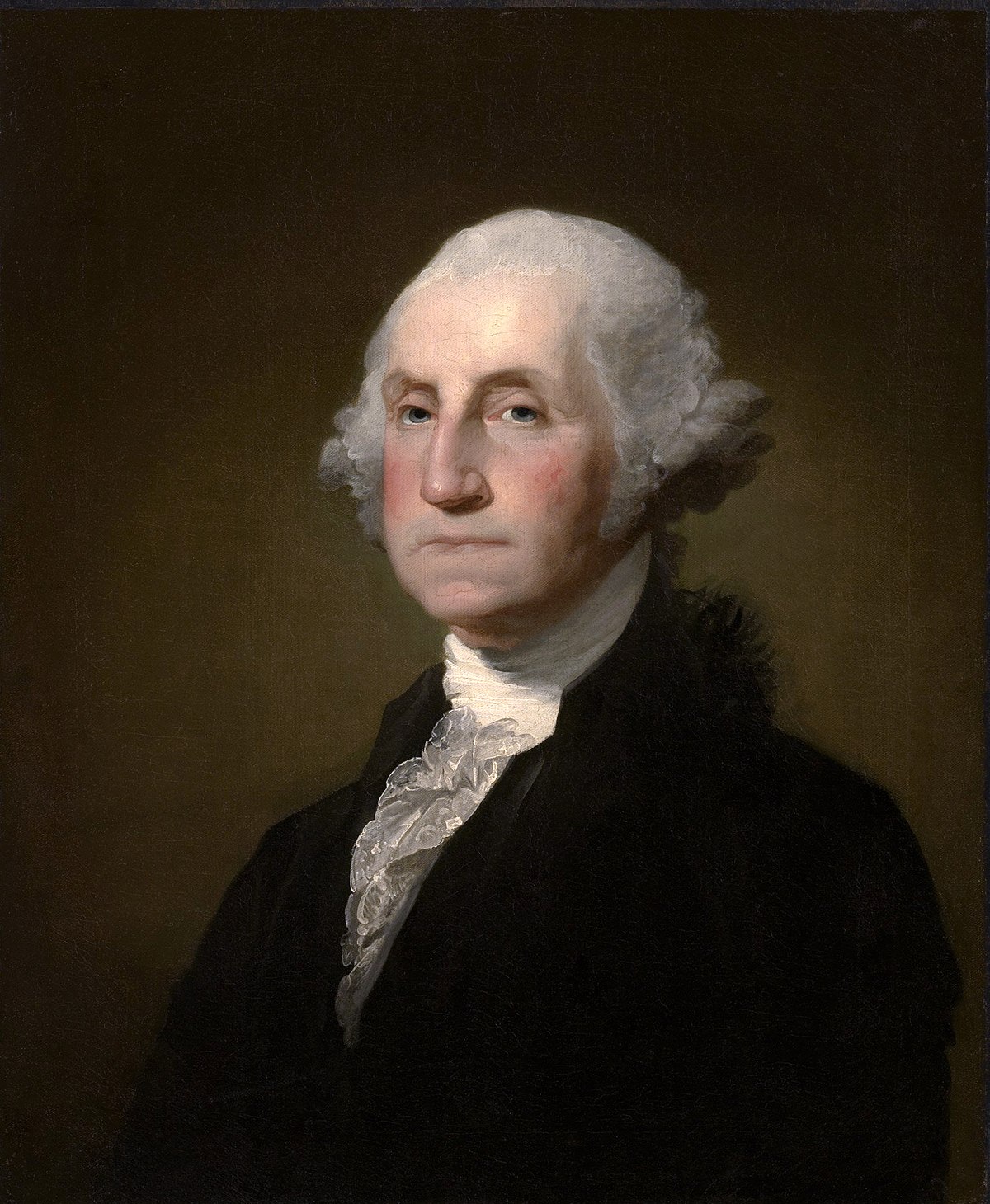
George Washington was a serious and reserved type, not exactly known for levity and a sense of humor. Especially not while out in public. On one occasion, though, with the American Revolution at a low ebb and spirits sagging, he managed to crack a joke that lifted his men’s morale and put them in the right frame of mind to pull off one of the war’s most dramatic victories.
A Dramatic Crossing

Emanuel Gottleib Leutze’s Washington Crossing the Delaware is one of the American Revolution’s most iconic images. Painted in 1851, it depicts George Washington crossing the Delaware River on the night of December 25 – 26, 1776. Leutze’s portrayal of Washington standing at the boat’s prow, eyes determinedly fixed on the enemy shore while flanked by other Patriot-laden boats, has captured imaginations then and since. The depiction of Washington is true to the essence of what is known of the man. His style was heavy on the projection of an aura of detached dignity. He deliberately kept up a wall of formality to separate himself from his subordinates.
Leutze’s depiction, however, was not true to Washington’s conduct on that particular night. The crossing of the Delaware was one of the few times that Washington abandoned formality and cracked jokes. The event itself was dramatic and worthy of commemoration. As 1776 drew to a close, the Patriots’ armed bid for independence had not been going well. Washington and his men had been out-generalled, outfought, and soundly drubbed. Defeated in New York City, it took a nearly miraculous escape to save them from annihilation. Unsurprisingly, morale was low. So Washington planned a daring raid to score a quick victory, restore confidence, and raise Patriot spirits.
George Washington’s Sense of Humor

George Washington planned a surprise crossing of the Delaware River from his base in Pennsylvania. He hoped to catch Hessian forces on the opposite bank, in Trenton, New Jersey, off guard, and destroy them. Cold, hungry, and demoralized Patriots clambered into boats on a frigid winter night, made even more miserable by driving sleet. When it was Washington’s turn to get into a boat, he looked at his overweight artillery chief, Henry Knox, and said: “Shift your fat ass, Harry! But don’t swamp the damn boat!”
Fat jokes are a dime a dozen, so it was not exactly comedy gold. Any jest by the Patriots’ commander-in-chief in public was highly unusual, though. On such a serious occasion, it was downright astonishing. The men were stunned at first, and stood around looking at each other in shocked disbelief. Then somebody chuckled. Soon, contagious laughter rippled throughout the Patriot ranks, as their general’s comment was spread and repeated. It broke the ice – at least figuratively: they still had to deal with plenty of literal ice on the Delaware. With their spirits lifted, the Revolutionaries crossed the river, and fell upon the enemy in Trenton. They killed, wounded, and captured about a thousand Hessians, for the loss of only two dead and five wounded Patriots.

_________________
Some Sources & Further Reading
Chernow, Ron – Washington: A Life (2010)
Encyclopedia Britannica – Battles of Trenton and Princeton
Encyclopedia of Greater Philadelphia – Trenton and Princeton Campaign (Washington’s Crossing)

