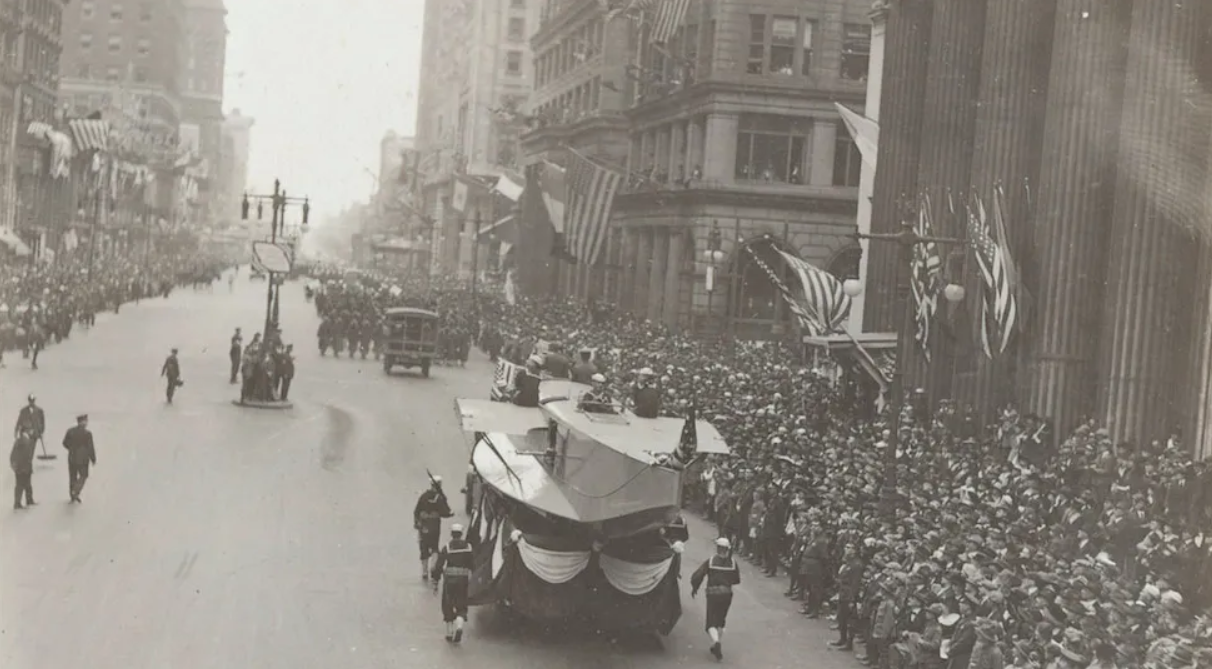
In 1918, the powers that be in Philadelphia decided to throw a parade. It was not the best time, but the authorities ignored the risks and held one anyway. It turned out to be the worst parade in the history of the City of Brotherly Love.
A Bummer of a Summer

1918 was a bummer, and by summer’s end, most people could have used something to lift their spirits. The Great War as it was called at the time by people fortunately unaware that an even greater one was due in just two decades, else they’d have been even more bummed out, had been going on for four years. Millions of men had lost their lives in the trenches and no man’s land, and millions more had been wounded. Far away from the guns, even in countries that were not at war, there were serious disruptions and hardships caused by the world’s greatest war to date.
The United States had joined the war by then, and Doughboy deaths and injuries had steadily increased from a trickle to a torrent. It was against that grim backdrop that the powers that be in the City of Brotherly Love decided that the public could use a bit of cheer to boost morale. A massive parade was organized to raise spirits, and simultaneously sell Liberty Loans – government-issued bonds that paid for the war. Named “The Liberty Loan Parade”, it was to feature soldiers, Boy Scouts, women’s groups, and many marching bands. The grand finale was to be a concert headlined by the “March King” himself, composer and conductor John Philip Sousa.
A Parade in the Middle of a Pandemic

Unfortunately, Philadelphia’s authorities overlooked – or more like ignored – the Spanish Flu, the modern era’s deadliest pandemic. The first Spanish Flu case was reported in an Army training camp in Kansas in the spring of 1918. Within days, the virus had sped across the US to reach New York City. Within a month, it had grown into a global pandemic. The virus was deadly, but the initial outbreak was relatively mild compared to what came next. A second and far more lethal wave arrived in the summer of 1918, and death rates skyrocketed.
Philadelphia’s public health director Wilmer Kursen, a political appointee, was in two minds about the parade. When news first emerged of the Spanish Flu, he downplayed it. As more information emerged, however, he grew more alarmed. Especially when he learned that nearby US Army bases like Camp Dix in New Jersey and Camp Meade in Maryland were overwhelmed by the deadly virus. However, he was worried that a quarantine might produce a public panic. He was also under extreme political pressure to help sell war bonds, which was a gauge of patriotism at the time. So he let the Liberty Loan Parade proceed.
Philadelphia’s Worst Ever Parade

More than two hundred thousand people were packed along Broad Street on September 28th, 1918, to cheer a miles-long procession. Spirits were uplifted as bands blared brassy tunes and floats passed by, displaying the newest additions to America’s arsenal, such as airplanes built right here in Philadelphia. The spectators were jammed together like sardines in a can, and the Spanish Flu’s virus could not have asked for a more hospitable environment in which to spread. Within two days, cheers turned to fear when Wilmer Kursen announced that the City of Brotherly Love was under the grip of a pandemic.
Philadelphia was not ready for the health disaster that descended upon it. Three days after the parade, every single bed in the city’s thirty one hospitals was filled, as the Spanish Flu raged. The authorities finally acted to try and stop the virus’ spread, and shuttered all public spaces. That shut the barn door after the horses had already bolted. Within a week of the parade, 2600 locals had lost their lives to the flu, and within two weeks, the figure spiked to 4500. It was the City of Brotherly Love’s worst ever parade.

_________________
Some Sources & Further Reading
History Halls – When Exxon-Mobil’s Predecessor Bragged About Melting Glaciers
Pennsylvania Gazette, November 1st, 1998 – The Flu of 1918

