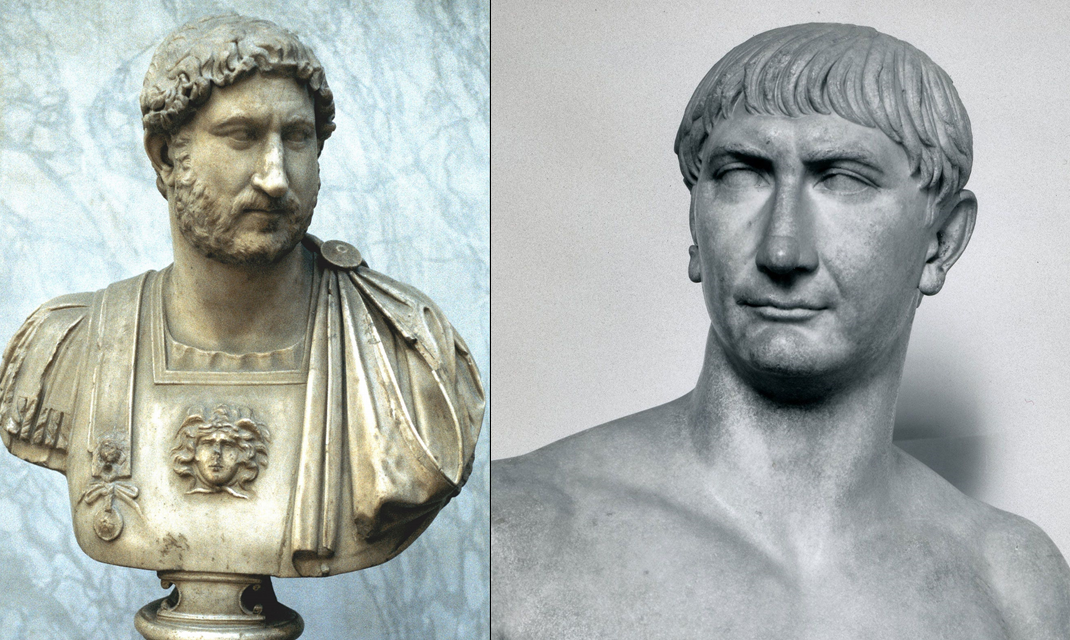
Roman Emperor Trajan and his successor Hadrian barely survived a devastating earthquake on December 13th, 115, in the Roman province of Syria’s capital city, Antioch – Antakya in today’s Turkey. Below are some interesting facts about that ancient calamity.
Antioch’s Location Was the Cause of Both its Prosperity and Doom

In the second century AD, the Roman Empire was at the height of its power and prosperity. Antioch was a flourishing and economically vibrant Greco-Roman city on the Orontes River. It was the empire’s third biggest metropolis after Rome and Alexandria. Antioch owed its success to its location at the terminus of the Persian Royal Road that linked the Mediterranean Sea with Mesopotamia and Persia. That made it a trading center and entrepot for goods between the Roman and Persian worlds.
Antioch’s location was key to its prosperity – and also the cause of the calamity that befell it. The city is situated close to where three tectonic plates – the African, Anatolian, and Arabian – meet. Their friction makes the region particularly susceptible to large earthquakes. On the night of December 13th, 115 AD, the city and its surrounding region were struck by an extremely intense earthquake that caused widespread devastation and high loss of life. The disaster destroyed Antioch, the nearby cities of Daphne and Apamea, and four other ancient cities. The tremors reached as far away as Beirut, more than two hundred miles distant, where significant damage was sustained as well.
An Extremely Violent Upheaval

On sea, the Antioch earthquake triggered a tsunami that slammed into the eastern Mediterranean coast, where it inflicted extensive damage as far south as the seaport of Caesarea in the Roman province of Palestine. That city’s harbor was wrecked by a wall of water hurled upon it by the tsunami. It is estimated that about 260,000 people lost their lives, and that many more were injured and made homeless. The disaster had started, per the Roman historian Cassius Dio, with a loud and bellowing roar heard by everybody in the region.
Then the ground began to violently vibrate and shake. People and entire trees were tossed up into the air as if they were water drops shaken off a dog’s wet fur. The tremors lifted buildings off the ground, and slammed them back to earth, instantly reducing them to rubble. Many were killed or injured by falling debris, and many more lost their lives when buildings collapsed atop and buried them. The aftershocks, which continued for days, claimed the lives of many who had survived the first day’s upheaval.
Two Emperors Caught Up in an Earthquake

Roman Emperor Trajan and his chief deputy and successor, the future emperor Hadrian, were in Antioch when the earthquake struck. The city was the headquarters of a campaign against Parthia, and the Roman Empire’s two most powerful men were wintering there, overseeing preparations for the next spring’s campaign. Because it served as headquarters for the war, Antioch and the surrounding region were even more crowded than usual. In addition to the native population, there were legions camped nearby, and many camp followers and other civilians engaged in support activities for the Roman army.
Trajan managed to escape out of a window from the building in which he had been housed, and was lucky to survive with only a few light injuries. As buildings and debris continued to collapse due to aftershocks, the emperor and his entourage relocated to the open hippodrome, or race track. There, they erected tents and set up house. Hadrian also got away with just a few minor scrapes and slight injuries. Amidst calamity, the presence of the emperor and his deputy in Antioch was a stroke of good fortune. Both were active and energetic men, and they personally oversaw the recovery and rebuilding process. It was initiated by Trajan, and after he passed away in 117 AD, continued and completed by his successor, Hadrian.

_________________
Some Sources & Further Reading
Cassius Dio – Roman History, 68, 24-25
Following Hadrian – The AD 115 Earthquake in Antioch

