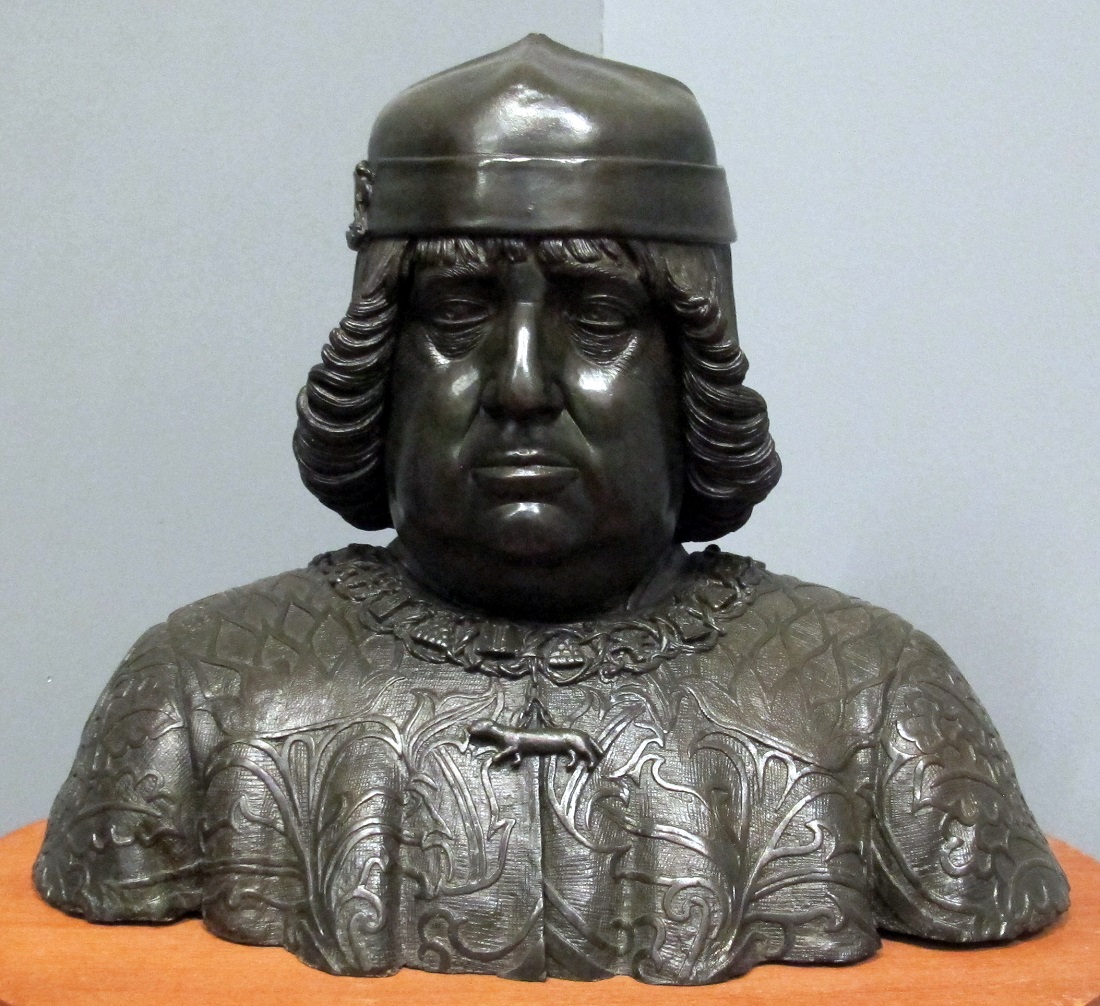
In The Godfather, the fictional Michael Corleone said “keep your friends close, and your enemies even closer”. The real life King Ferrante I of Naples (1424 – 1494) was an advocate of that kind of thinking. However, as seen below, he took it to literal extremes.
Renaissance Italy’s Politics Were Not For the Squeamish

Ferrante I, often Anglicized as Ferdinand, ruled Naples from 1458 until his death in 1494. He was widely seen as a capable monarch whose realm enjoyed peace and prosperity during his reign. He used diplomacy and strategic marriages to establish interlocking friendships and alliances with other rulers. That made Ferrante so influential, he became known as “The Judge of Italy”. He was also was an important figure in the Italian Renaissance through his generous patronage of the arts. That was Ferrantes’ good side. As to the bad side, well… politics in Italy back then were not for the squeamish.
In the fifteenth century, today’s Italy was a snake pit when it came to politics. The peninsula consisted of a kaleidoscope of independent cities and small states, often on anarchy’s edge as rival rulers fiercely competed for power and prestige. Assassination, murder, poisoning and betrayal was par for the course, and Ferrante was ruthless enough to not only survive, but thrive in that environment. Remember that part about keeping enemies close? As seen below, after he killed his enemies, Ferrante kept their corpses on exhibit in what came to be known as the “Museum of Mummies”.
It Was Not Wise to Accept an Invitation From Ferrante I

Ferrante I was not big on forgiveness and turning the other cheek. As one historian put it: “his pleasures were of two kinds: he liked to have his opponents near him, either alive in well-guarded prisons, or dead and embalmed, dressed in the costume which they wore in their lifetime”. In 1465, Ferrante defeated a coalition of rebellious barons. He then declared that in the interests of reconciliation, he would pardon his erstwhile enemies, and invited several former foes and their families to a celebration of the restored peace. When they showed up, Ferrante had them arrested. Some were imprisoned for decades, and others were executed.
The king’s victims included one who fell to his death after Ferrante personally pushed him out of a window. After that, it would be reasonable to assume that nobody who had ever displeased the king of Naples would accept an invitation from him. However, on another occasion, some who had offended Ferrante attended a wedding celebration at the king’s residence, the Castel Nouvou. They were suddenly seized at the height of the merriment, and sent to the dungeons were they were tortured, sentenced to death, and executed. As seen below, that was not the end for Ferrante’s victims.
Ferrante’s “Museum of Mummies”

It was not enough for Ferrante to simply kill his enemies. He wanted to turn them and their fates into public examples and cautionary lessons that would scare others out of even thinking about betrayal. After he had them murdered, Ferrante ordered the mummification of his enemies’ corpses. He then put them on display in an exhibit hall in Naples’ Castel Nouvo that he named the “Black Museum”, and which came to be commonly known as the “Museum of Mummies”.
As a contemporary described it: “these dried cadavers were displayed, pickled with herbs, a frightful sight, in the dress they wore when alive and with the same ornaments, so that by this terrible example of tyranny, those who did not wish to be similarly served might be properly afraid”. The king often tinkered with the exhibit and made changes to keep things interesting, and sometimes had his mummified enemies propped up in mock banquets. Ferrante frequently acted as tour guide to personally show guests his macabre museum. It was an effective warning to any who might harbor thoughts of betraying him.

_________________
Some Sources & Further Reading
Burkhardt, Jacob – The Civilization of the Renaissance in Italy (1878)

