Many ancient foundational religious texts can be read as more than just expressions of faith and moral life guidelines. They are also history. Not necessarily in the sense that they describe actual historic facts, but in the sense that they give us a window into the mindset of the people who compiled the religious text. They can also shed light on the social and political context of what was going on at the time of the text’s compilation. The Old Testament is one such historic text, and the stories of divine punishments contained therein shed light on the people who composed and compiled those narratives. As seen below, some of the most gripping punishment tales contained the Old Testament are the plagues of Egypt.
Collective Punishment in the Old Testament

The plagues of Egypt, described in the Book of Exodus, were a dramatic series of divine punishments visited upon Egypt’s Pharaoh for enslaving the Israelites and refusing to let them go. In the modern era, the collective punishment of all of Egypt and Egyptians instead of simply their evil ruler might be questionable. The moral and ethical worldview at the time, however, often saw sin as collective, and took it for granted that an entire people could and should suffer for the wrongs of their leaders. Through Moses and his brother Aaron, God sent ten devastating plagues to pressure Pharaoh to release the Israelites.
The first plague turned the Nile River into blood, killed the fish, and made the water undrinkable. The second brought a massive frog infestation. Pharaoh begged for relief, so Yahweh removed the frogs. However, Pharaoh hardened his heart and again refused to free the Israelites. A third plague was sent, which turned dust into gnats or lice that afflicted people and animals. A fourth plague brought swarms of flies that created chaos. The fifth plague was a deadly disease that devastated the Egyptians’ livestock, but spared the Israelites’ animals. The sixth plague consisted of painful boils on humans and animals. It was followed by the seventh plague, a massive hailstorm that destroyed crops, animals, and property. Then came the eighth plague, locusts that devoured all the vegetation that had survived so far. That was bad, but as seen below, the worst was yet to come.
The Historic and Social Context of the Plagues of Egypt

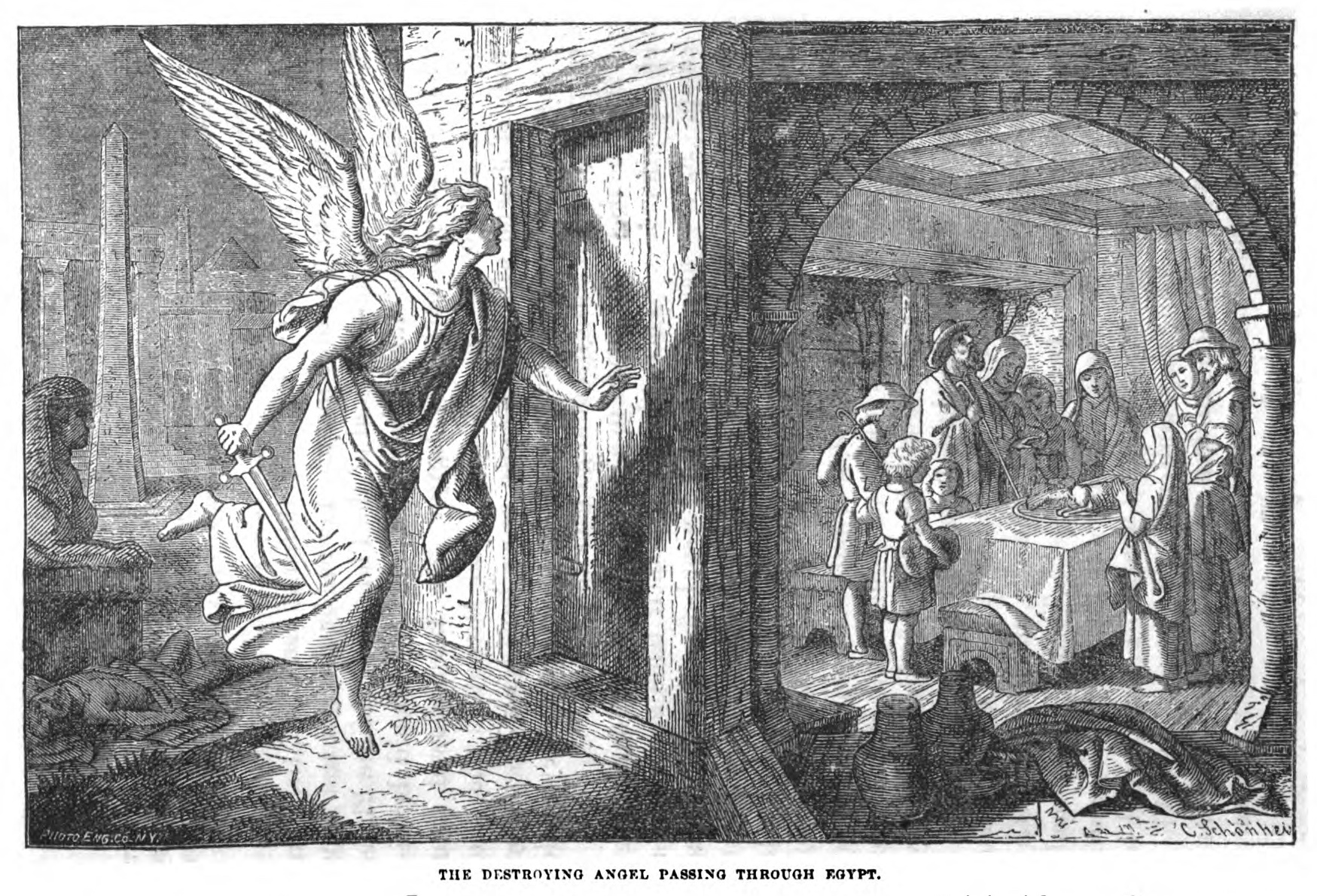
A ninth plague plunged Egypt into total darkness for three days, except in the land of Goshen, where the Israelites dwelt. The tenth and final plague was the most severe: the death of all firstborns in Egypt, from Pharaoh’s son down to the firstborn of slaves and even livestock. Before He sent the final plague, God ordered the Israelites to mark their doorposts with lamb’s blood so that the angel of death would “pass over” their homes – the origin of the Jewish festival of Passover. The final plague finally convinced Pharaoh to let the Israelites leave Egypt.
However, he later pursued them, setting the stage for Moses’ miraculous parting of the Red Sea to cross to the other side, and the drowning of Pharaoh and his army when the waters closed upon them as they continued their pursuit. The narrative sheds light on both the ancient Israelites who first composed those tales, and the later writers who penned the Old Testament centuries later. The plagues of Egypt are viewed as a combination of divine punishment, and a show of the Lord’s power and faithfulness. Each plague challenged Egyptian gods and beliefs, reinforced the Israelite God’s supremacy, and demonstrated His determination to free His people.

_________________
Some Sources & Further Reading
Day, John – Yahweh and the Gods and Goddesses of Canaan (2002)
Gonick, Larry – Cartoon History of the Universe Volumes 1 – 7 (1990)
Live Science – The Science Behind the 10 Plagues of Egypt

