Ashurbanipal (reigned 668 – circa 627 BC) was Assyria’s last great king. Unlike most rulers of his era, he was an intellectual, as was revealed when his library was excavated in the nineteenth century.
Ashurbanipal in the Old Testament

The Neo Assyrian Empire that Ashurbanipal ruled was founded in the tenth century BC. It became the world’s biggest state to date, and dominated the Middle East before it collapsed in 609 BC. Its last mighty monarch, Ashurbanipal, was more than just a great military commander. He was also an intellectual, which was rare for rulers back then. In the Septuagint, the Catholic Old Testament, Ashurbanipal appears in the Book of Judith as the mighty Assyrian King Nebuchadnezzar. He sets out to destroy the Jewish people, but they are saved when Judith seduces and assassinates his chief general.
Ashurbanipal also appears in the Old Testament’s Book of Ezra as “Osnapar”, the rule who deported the people of Samaria and settled them across the Euphrates River. In 2 Chronicles 33:10, the Assyrian ruler is God’s instrument to punish King Manasseh and his people for disobeying the Lord. In that account, Ashurbanipal defeats and captures Manasseh, puts a ring through his nose, places him in shackles, and takes him to Babylon as a prisoner. Manasseh repents, and is eventually set free.
Ashurbanipal’s Library

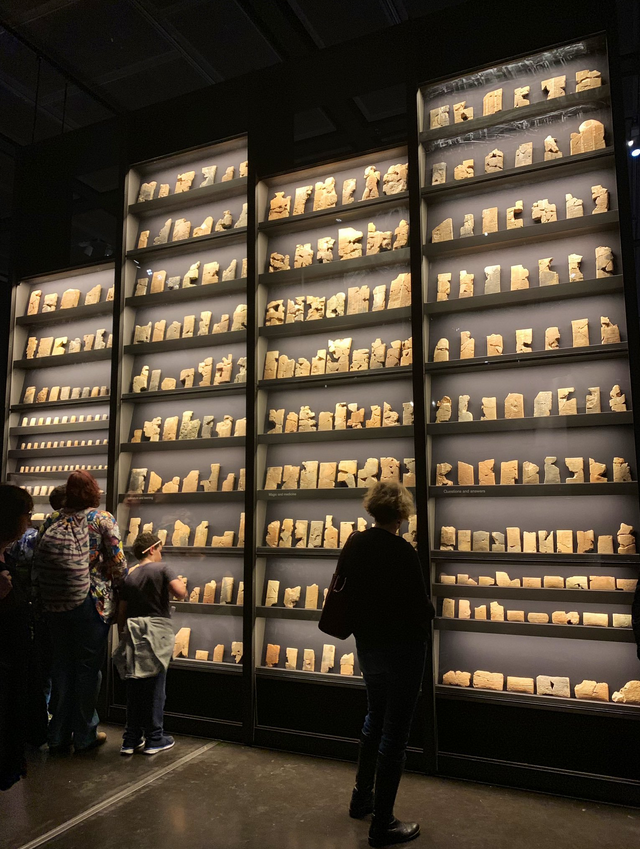
In 1849, British archaeologist Austen Henry Layard excavated Ashurbanipal’s library in Nineveh, in today’s Iraq. It contained more than 30,000 tablets and writing boards. The discovery of Ashurbanipal’s intellectual pursuits was particularly jarring because was an Assyrian ruler. The Assyrians had a reputation – one that they themselves actively promoted and gloried in – as the most vicious, cruel, and bloodthirsty of conquerors. We now know that Ashurbanipal was literate, mastered multiple languages, and passionately collected texts and tablets. He hired scribes to copy writings, and sent others across the empire to find more.
Ashurbanipal seized texts from defeated enemies as booty, and used military threats to get neighbors to send him writings from their countries. Many of the tablets and writing boards discovered in the Assyrian king’s library were severely fragmented, but quite a few were still recoverable and legible. They included financial and religious documents, diplomatic correspondence, laws, plus texts on literature, medicine, and astronomy. The greatest discovery in the library was The Epic of Gilgamesh. A masterpiece of ancient Babylonian poetry, it dates to the third millennium BC, and is considered to be humanity’s oldest known literary work.

_________________
Some Sources & Further Reading
Ahmed, Sami Said – Southern Mesopotamia in the Time of Ashurbanipal (2018)
Encyclopedia Britannica – Sir Austen Henry Layard
History Halls – Sargon of Akkad: History’s First Emperor and Empire Builder

