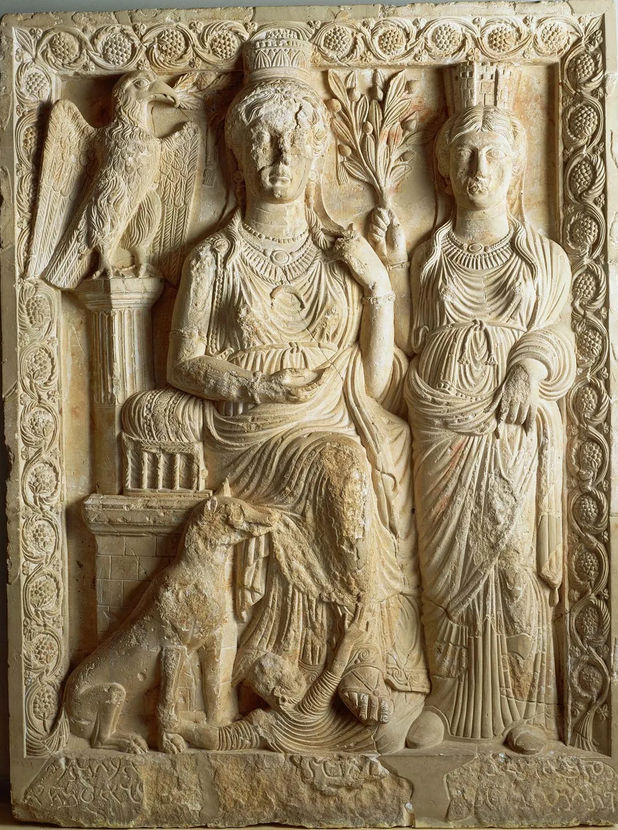
In the third century AD, a remarkable female ruler, Septimia Zenobia of the Palmyrene Empire, launched a campaign of conquest that brought much of the Roman Empire’s eastern half under her sway. She nearly severed those territories from Rome for good. She was eventually defeated, but not before she had given the Romans a terrible fright. Below are some fascinating facts about that interesting warrior woman.
The Woman Who Terrified the Romans

Septimia Zenobia (circa 240 – circa 274), Palmyrene name Bat-Zabbai, was a third century Syrian queen. She challenged the authority of Rome, and took charge of the short lived Empire of Palmyra from 267 to 272. During that period, via war, conquest, and diplomacy, she came to control and govern a sizeable realm that encompassed most of the Roman Empire’s eastern provinces. She was born Julia Aurelia Zenobia in Palmyra, a wealthy Syrian city that grew prosperous from its strategic location astride caravan trade routes. She was educated in Latin and Greek, and was fluent in Aramaic and Egyptian. In her youth, she was put in charge of her family’s flocks and crews of shepherds. As a result, she grew accustomed to horseback riding, the outdoors life, and developed endurance and stamina. Those assets came in handy later on in her life.
In her teens, Zenobia was married to Lucius Septimus Odaenathus, Rome’s client ruler of Palmyra. In the mid-200s AD, the Roman Empire was in the grip of a decades-long period of chaos and political instability that came to be known as the Crisis of the Third Century. Taking advantage of that weakness, the newly emergent Persian Sassanid Empire conquered much of the Roman east. Acting at Rome’s behest, Odaenathus fought off the Persians, and recovered the Roman east. For his services, Odaenathus was made governor of most of the Roman east, and in 260, he crowned himself king.
A Formidable Warrior

In 267, Odaenathus and his eldest son by a previous wife were assassinated, at which point Zenobia stepped up and assumed power as regent on behalf of her underage son. She also crowned herself queen of Palmyra, and surrounded herself at court with intellectuals and philosophers. Unlike her deceased husband, however, Zenobia was not content to remain a Roman client. So she conquered Egypt in 269, seized a significant part of Asia Minor, and declared herself an independent ruler. She was a remarkable queen, noted for her culture, her intellect, her beauty, and her toughness. It was recorded that she was capable of marching on foot long distances with her soldiers, could hunt as well as any man, and could out-drink anybody.
By 270, Zenobia had conquered an empire stretching from modern Turkey to Egypt, and from Mesopotamia to the deserts of Libya. Rome was finally forced to take note, and in 270, a new emperor, Aurelian, finally managed to restore a measure of order to the western Roman empire, and turned his attention to the east. Marching against Zenobia, he defeated her armies at Antioch and Emesa, and besieged her in Palmyra. Zenobia attempted to fight her way out and flee, but was eventually captured. She was supposed to march as a trophy in Aurelian’s triumph in Rome, but denied him that satisfaction by starving herself to death in 274 during the trip to Rome.
_________________
Some Sources & Further Reading
History Halls – Fighting Women: Ancient Egypt’s Queen Ahhotep I
Southern, Pat – Empress Zenobia: Palmyra’s Rebel Queen (2008)
Stoneman, Richard – Palmyra and Its Empire: Zenobia’s Revolt Against Rome (1992)

