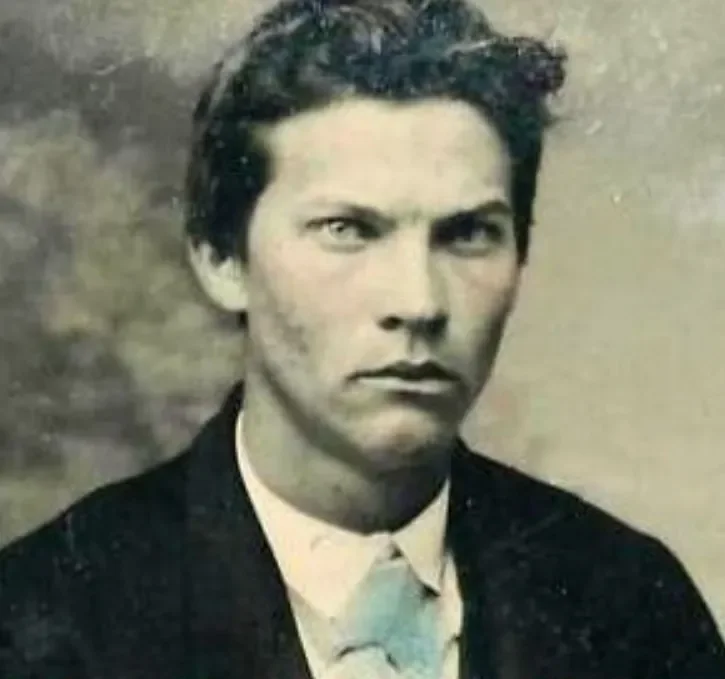
Outlaw John Wesley Hardin was most likely the Old West’s deadliest gunslinger. The number of his victims ran into the dozens – including a man he shot for snoring. To go by Hardin’s own account, which could have been exaggerated, he shot dead 42 men. At least 27 homicides were verified by contemporary newspapers and attributed to him. Below are some fascinating facts about that wild outlaw of the Wild West.
A Disreputable Outlaw’s Respectable Origins

John Wesley Hardin (1853 – 1895) was the son of a Methodist minister, and a member of a prominent Texas family that included a judge and a legislator. Despite that respectable background, he turned bad early on. His violent career started in 1867 when he stabbed a schoolmate. A year later, when he was fifteen-years-old, Hardin shot and killed one of his uncle’s former black slaves in an argument over a wrestling match. With Texas’ Reconstruction government hot on his heels, he went on the lam.
Hardin ended up in Sumpter, Texas, but he did not exactly lie low and keep his head down. He claimed to have killed three Union soldiers there in 1868, when they tried to arrest him. Within a year of that triple murder, he killed another soldier. In 1871, the fugitive Hardin decided to become a cowboy on the Chisholm Trail. While on a cattle drive, he killed seven people en route, including two men in a card game, and an Indian whom he said he shot dead “just for practice”.
Hardin’s Growing List of Homicides

Hardin’s homicidal jaunt along the Chisholm Trail finally ended when the cattle drive reached the trail’s terminus in Abilene, Kansas. His serial homicides did not end, however: within a short time of his arrival in Abilene, he killed another three men. Later that year, he walked up to two black officers of the Texas Special Police – a Reconstruction era law enforcement agency – who were looking for him. A gunfight erupted and Hardin shot both, killing one and wounding the other.
Hardin had holsters sewn into his vest, in which he carried his pistols with the butts pointed inwards across his chest. He crossed his arms to draw, which he considered to be the quickest way to get his pistols into action, and practiced his technique every day. He also continued to pile up the corpses. On his twenty first birthday in 1874, he shot dead Charles Webb, a deputy sheriff. That lawman’s murder led to a $4000 “Dead or Alive” reward placed on Hardin. He chose discretion over valor, fled Texas with his wife and daughter, and settled in Florida as a businessman under an assumed name.
The End of the Road for John Wesley Hardin

Hardin’s peaceful interlude in Florida lasted until 1877, when Texas Rangers caught up with him on a train in Pensacola. He tried to draw a pistol, but it snagged on his suspenders and the Rangers clubbed him into submission before he could bring it into action. Hardin was tried in 1878 for Webb’s murder, convicted, and sentenced to twenty five years imprisonment. He made numerous escape attempts, including a tunnel into the prison armory, but they all failed. He eventually settled down, studied law behind bars, and was put in charge of the prison’s Sunday school. After he served seventeen years of his sentence, Hardin was released from prison in 1894, and received a pardon later that year. Since he had already studied law in prison, Hardin took and passed the state’s law exam, became a licensed attorney, and moved to El Paso in 1895 to start a law practice.
In El Paso, Hardin quarreled with John Selman Jr., a lawman who had arrested one of his prostitute friends. The former outlaw reportedly pistol whipped the lawman. Selman’s father, John Selman Sr., also a lawman, exchanged heated words with Hardin on the afternoon of August 19th, 1895. Later that night, as Hardin was gambling in a local saloon, Selman Sr. walked up to Hardin from behind, with pistol drawn. He shot him in the back of the head, then fired three more bullets into him as lay on the ground. Selman Sr. was tried for murder, but he claimed self-defense, and got a hung jury. Before he could be retried, he was shot and killed in 1896 after an argument over a card game.

_________________
Some Sources & Further Reading
History Halls – Wild West Outlaws: The Reno Gang, Train Robbery Pioneers
Marohn, Richard C. – The Last Gunfighter: John Wesley Hardin (1995)
Texas State Historical Association – Hardin, John Wesley

