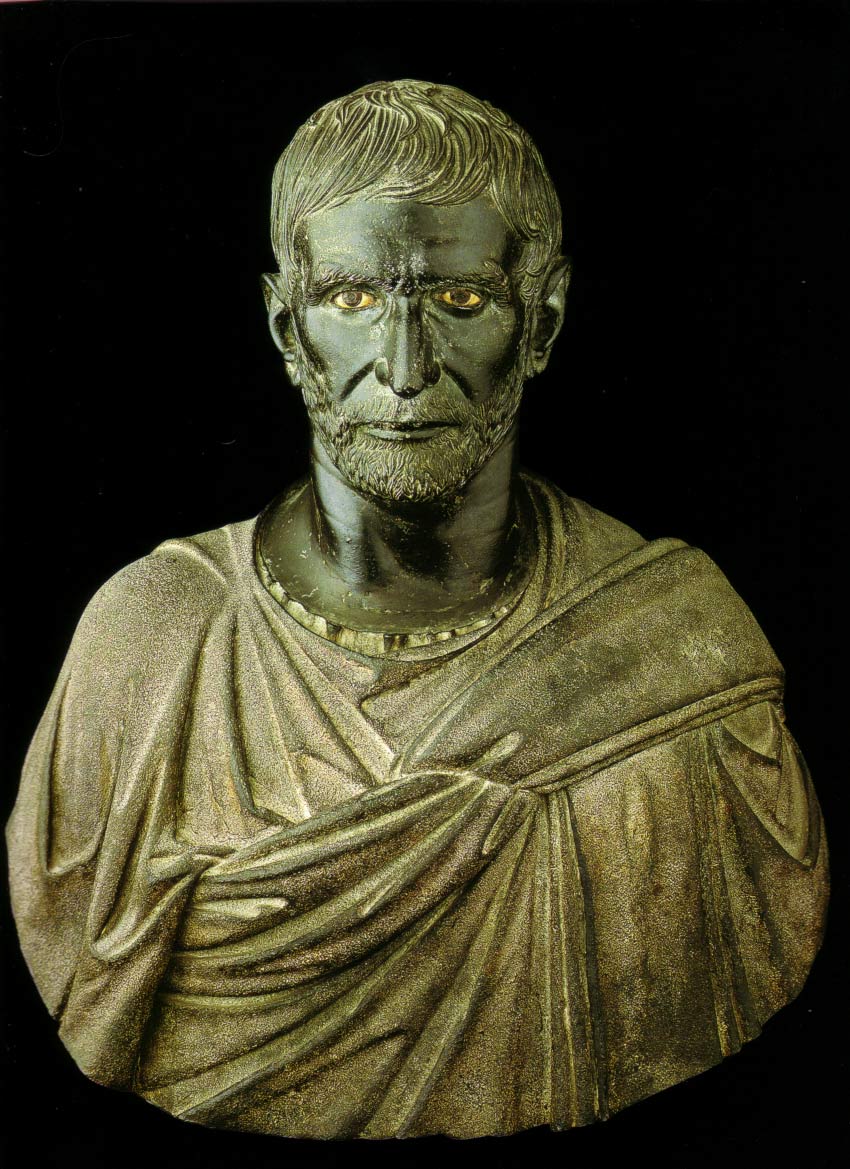
Ancient Roman statesman Lucius Junius Brutus (flourished sixth century BC) was the legendary founder of the Roman Republic. He was also the ancestor of Marcus Junius Brutus who assassinated Julius Caesar, the dictator who ended the Republic. This early Brutus organized and led the rebellion that ousted Rome’s last monarch,. His newly liberated fellow citizens then elected Brutus to the new republic’s first consulship – Rome’s highest office.
“The Dullard” Who Turned Out to be Not So Dull

Rome had been ruled by kings until 509 BC. That year, the king’s son, Sextus Tarquinus, forced himself upon a noblewoman, Lucretia. Tradition has it that to preserve the family’s honor, she told all to family members and other gathered Romans. Then she stabbed herself to death. Until then, Brutus, a nephew of the king, had given little sign of potential greatness – the name Brutus is Latin for “Dullard”. He had his own grievances against the king, who had executed Brutus’ brother. It is possible that Brutus had acted the dimwit to avert his uncle’s suspicions. Whatever the case, it all changed on the day of Lucretia’s death. Brutus pulled the knife out of her breast, vowed revenge, and led a popular revolt.
By 507 BC, the monarchy had been overthrown, the king and his family had been chased out, and Rome had become a republic, with Brutus its first chief magistrate. He epitomized the ideal of devotion to duty and severe impartiality in its fulfillment: he condemned his own sons to death when they joined a conspiracy to restore the kings. Tradition holds that Brutus was killed during a battle against a royal army, in single combat with the son of the king whom Brutus had ousted. He reportedly established many of basic institutions of the Roman Republic, which lasted for about half a millennium before it collapsed and was done away with by Julius Caesar and Augustus. Many of Brutus’ Republican institutions continued for centuries more, in altered and reduced form, as emperors strove to at least pay lip service to the republican facade.

_________________
Some Sources & Further Reading
Cornell, Tim – The Beginnings of Rome: Italy and Rome From the Bronze Age to the Punic Wars (2012)
History Halls – The Men Who Made Ancient Athens: Solon

