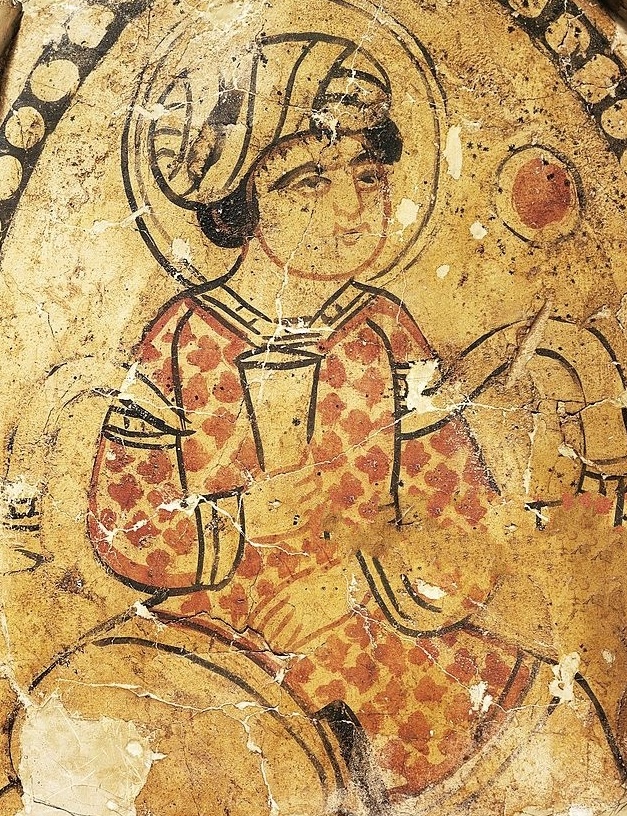
The Fatimid Caliph Abu Ali Mansur (985 – 1021) is better known by his regnal title Al Hakim bi Amr Allah (“Ruler by God’s Command”). He is even better known as “The Mad Caliph” – a well-earned nickname. Among other things, he was afflicted with a megalomania that led him to see himself as an incarnation of god. Rulers who declare themselves gods usually end up with universal scorn. The Mad Caliph was an exception: he actually ended up with some adherents. Not just sycophants, but ones who continued to revere Al Hakim long after his death. Indeed, to this day he is still viewed as a divine incarnation by the Druze sect in the Middle East. He also seen as a religiously important figure by some Shi’a Muslims.
A Child Caliph

The son of the Fatimid Caliph Abu Mansur and a consort named Al Azizah, Al Hakim became caliph in 996 at age eleven following his father’s death. Al Hakim’s father had designated three regents to govern in case he died before his son came of age. When that came to pass, the regents who ruled during Al Hakim’s minority fought amongst themselves. The victor, a palace eunuch named Barjawan, kept the young caliph isolated from governance. He distracted him with gifts and games, and encouraged him to focus on luxuries and pleasures. The child caliph was not as innocent as he let on, however. When he turned fifteen, Al Hakim organized a plot that ended with Barjawan’s assassination. He then gathered to himself the Fatimid Caliphate’s reins of power. It was not long afterwards that Al Hakim began to exhibit odd behavior that earned him the nickname “Mad Caliph”.
It started off with Al Hakim’s religious policies. His mother was a Christian, and that opened him to allegations that he was an insufficiently zealous Muslim who showed favoritism to Christians. The accusations that Al Hakim was not a proper Muslim because of his Christian mother bothered him. What bothered him even more were accusations publicized by the rival Sunni Abbasid caliph in Baghdad that the Shiite Al Hakim and his Fatimid Dynasty were not descended from the prophet Muhammad – a prerequisite for rule, per the Shiites. Instead, the Fatimids was alleged to be descended from Jews. Because of the Christian mother and Jewish ancestry, Al Hakim and the Fatimids were accused of favoring Christians and Jews over Muslims. That stung. As seen below, Al Hakim countered those accusations in… counterproductive ways.
Becoming the Mad Caliph

Al Hakim went out of his way to prove his Muslim chops, and demonstrate that he was no puppet of the Christians or Jews. As in way, way, out of his way: he launched an unprecedented wave of persecutions against Christians throughout the Fatimid Caliphate. He subjected them discriminatory laws, and ordered the destruction of many Christian monuments and churches, or their conversion to mosques. To demonstrate that being born to a Christian mother did not make him a soft Muslim, Caliph Al Hakim departed from the tolerance hitherto displayed by Muslim rulers to Christians and Jews.
Al Hakim went on a religious persecution bender. He destroyed synagogues and churches, including the Church of the Holy Sepulchre in Jerusalem – the one housing the cave where Jesus is thought to have lain before his resurrection. The Mad Caliph also banned pilgrimage to Jerusalem, and ordered Christians and Jews to wear identifying objects. Christian men had to go about with a necklace from which hung a big iron cross, while Jewish men had to go about with necklace from which dangled a wooden calf or Star of David. Jewish and Christian women had to wear different colored shoes, a red one on one foot, and a black one on the other. Jews were further singled out and required to wear bells as well, so they could be identified by sound as well as sight.
An Erratic Religious Persecutor

Al Hakim’s religious persecutions were not limited to Christians and Jews, however. The Mad Caliph persecuted not just religious minorities, but the caliphate’s religious majority as well. Al Hakim and the Fatimids were Shiites, a minority of Muslims then and now. At some point, the Mad Caliph grew upset that the majority of his Muslim subjects were Sunni. So he banned various Sunni religious practices, ordered anti Sunni slogans, curses, and insults painted on Sunni mosques, and to silence dissent, kicked off a reign of terror. He was erratic in his persecutions, however, and frequently reversed his discriminatory decrees not long after he issued them.
For example, a year after he issued his anti-Christian discriminatory decrees, Al Hakim did an about face, ordered the destroyed churches rebuilt, and compensation paid to the persecuted Christians. Likewise with his Sunni Muslim subjects, whom he would persecute for some time, then abruptly reverse his policies and shower their mosques and religious leaders with largesse and gifts. Then he would go back to persecuting them once more, and repeat the cycle. The Mad Caliph’s weirdness was not just religious, however – that was just the tip of the iceberg. His bizarre behavior went far beyond that, to negatively impact various aspects of his subjects’ daily lives.

[This is the first of two articles about the Mad Caliph. For Part II, the conclusion, click here]
_________________
Some Sources & Further Reading
Encyclopedia Britannica – Al Hakim, Fatimid Caliph
History Halls – Bizarre Rulers: The Mad Caliph’s Reign of Terror and Error
Ibn Iyas – Flowers in the Chronicles of the Ages [Arabic]

