[This is the second and final part of the saga of World War I’s German raider, SMS Emden. For Part I, click here]
The Imperial German Navy’s light cruiser SMS Emden had a brilliant but brief raiding career early in World War. She sank or captured dozens of enemy ships, and disrupted the sea lanes across the Indian and Pacific oceans. Her rampage finally ended when she was cornered and destroyed by a more powerful warship on November 9th, 1914. It was the end of road for the German light cruiser. However, as seen below, it was not the end of the road for all of her crew.
The Stranded Emden’s Sailors’ Quest for Freedom

Of the Emden’s 376 man crew, 133 were killed in the battle with HMAS Sydney. Most of the remainder were taken prisoner. The exception was the landing party in Direction Island, commanded by Hellmuth von Mucke. They had been stranded when their ship sailed away when she was surprised by the Sydney. Ashore, the German crewman watched the battle, and knew that the Emden was outmatched and doomed.
The landing party’s situation seemed hopeless, and it seemed that eventual capture and a prisoner of war camp in their future was all but inevitable. However, the intrepidity and determination of the marooned von Mucke and his men spared them that fate. Rather than give in to despair and give in, they set off on an epic and hazardous odyssey that eventually took them back home to Germany.

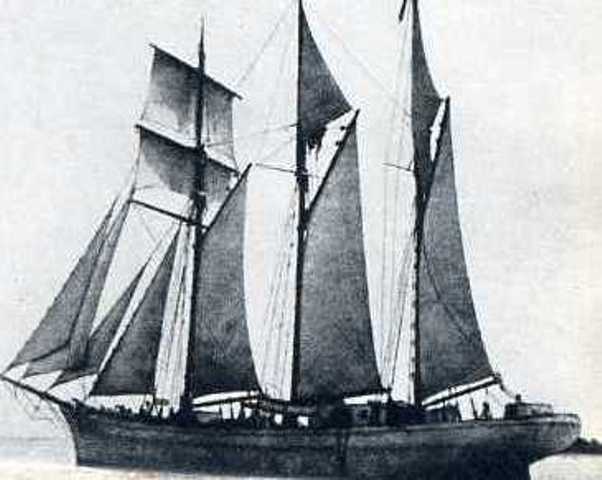
It began when the stranded German sailors looked around in Direction Island’s harbor, and spotted the 95-ton-schooner Ayesha – a rickety and leaky old freight hauler, at anchor. Von Mucke and his men seized the Ayesha, and hastily prepared her for sailing before the Sydney returned from wrecking the Emden to round them up. Just before sunset, they sailed the requisitioned and rechristened SMS Ayesha out of Direction Island and towards freedom.
The German seamen made for Padang, a port in the neutral Dutch East Indies – today’s Indonesia. Von Mucke and his men braved storms, skirted dangerous shoals and reefs, and had a close call with an enemy destroyer that passed within yards of the Ayesha, unaware that she was an enemy vessel. Finally, the German sailors reached Padang on November 27th, 1914.
The Second Adventure of the Emden’s Crew

The German seamen could not linger: the Ayesha was now a German navy ship, and under international law, it could not stay in a neutral port such as Padang for more than 24 hours. However, while in port, von Mucke contacted the German consul, and passed him a note with coordinates for a meeting with a German ship. On December 16th, after a 1709 mile journey, the dilapidated Ayesha finally met a German merchant steamer, the Choising. The Emden men transferred to the Choising, whose command von Mucke assumed, and the Ayesha was abandoned and scuttled. The Germans disguised the Choising as the British steamer Shenir, and set off on another hair-raising journey, this time to Yemen, controlled by the Ottoman Turks who by then had joined the war on Germany’s side.
Von Mucke avoided well-traveled sea lanes, and took a roundabout route around the Indian Ocean that finally brought his ship to Hodeida, Yemen, in January, 1915. They Germans spotted a French warship nearby, however. So von Mucke and his men left the Choising in longboats, and rowed ashore. From Hodeida, they took a pair of dhows – small Arab sailing vessels – which took them part way to Jeddah, avoiding British patrols along the way. They finished the trip to Jeddah by land, rode donkeys and camels, and survived a running fight with hostile tribesmen en route. The Germans resumed the journey from Jeddah in dhows, again evading British naval patrols. They eventually returned to shore, and continued their journey overland until they finally reached a Turkish railhead. From there, they made it to Istanbul, and finally, to a hero’s welcome in Germany.
_________________
Some Sources & Further Reading
History Halls – SMS Emden: World War I’s Greatest Sea Raider
Military History Now – The Kaiser’s Pirate Ship: The Astounding Voyage of SMS Emden
Naval History Net – HMAS Sydney v SMS Emden Action, November 9, 1914
Parramata Heritage Center – the Exploits of the German Cruiser SMS Emden

