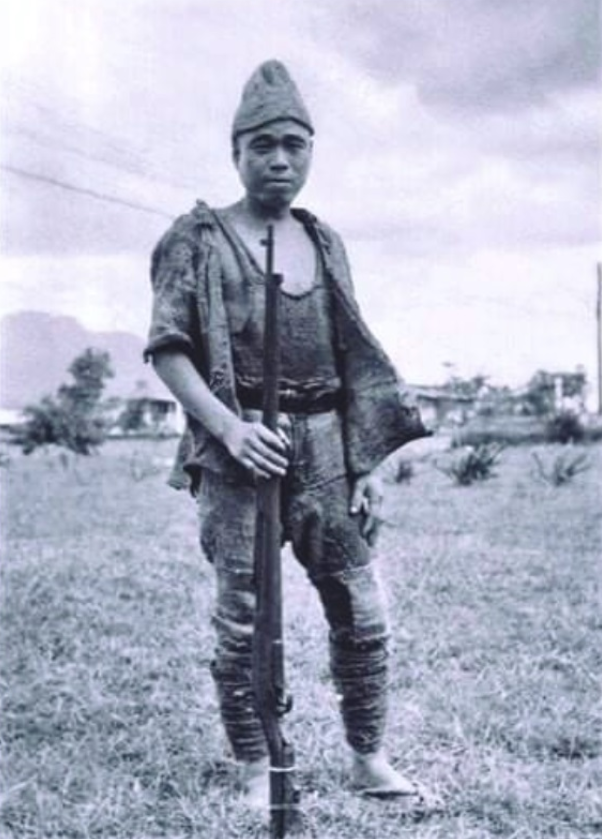
The Second World War officially ended on September 2nd, 1945, when representatives of the Japanese government signed their country’s articles of surrender aboard the USS Missouri in Tokyo Harbor. However, although the war ended that day, the fighting did not. Some members of the Japanese military, for a variety of reasons, refused to turn in their arms and surrender, and instead hightailed it to jungle and mountain hideouts. From there, they stubbornly continued to fight or evade capture for months, years, or even decades after World War II’s official end.
Communicating the Surrender to Isolated Japanese Military Outposts Was Often Difficult

Japan had put up a fanatical fight, but after the atomic bombing of Hiroshima and Nagasaki, and the promise that more Japanese cities would meet the same fate, it became clear that the situation was hopeless. At noon, on August 15th, 1945, a recording of Japanese emperor Hirohito was broadcast over the radio, in which he announced that Japan had accepted the Allies’ terms of surrender, and would give up the fight.
A few weeks later, officials of the Empire of Japan formally signed the surrender documents in a ceremony that finally brought the Second World War to an end. Japan’s surrender might have been announced in August of 1945 and formally concluded early the following month. However, ensuring that all Japanese units and military personnel got word of that surrender was a problem.
A Communications System in Ruins

At its height, the territory under Japanese control had spanned thousands of miles. Across that vastness, Japanese military personnel were scattered from India’s borders in the west, to the central Pacific in the east, and from Manchuria and the Aleutian Islands off Alaska in the north, to New Guinea and the edge of Australia in the south. Even in the most ideal of conditions, it was a herculean task to simply maintain communications across the vastness of the Japanese conquests.
By the time WWII drew to an end, it was not anywhere close to the best of time for Japan, nor were conditions for communicating with Japanese forces anywhere close to ideal. The US Navy had sent most Japanese shipping to the bottom of the sea, and in the process cut off Japanese garrisons from physical contact with the home islands. Simultaneously, Allied airmen had bombed much of Japan’s communications network to ruins.

Many Japanese Troops Were Unable to Believe That Their Government Had Surrendered

In the weeks after Japan’s surrender declaration, communications were patched up with most Japanese in the field. Gradually, word filtered down to even the most isolated posts that the war was over. It came as a shock to many. While it had been obvious for some time that things had not been going well, Japan’s military had drilled into its personnel that Japanese always fought to the death, and that surrender was so dishonorable that death was a preferable alternative.
Against that backdrop, Japan’s surrender astonished many of the empire’s warriors. Japanese military personnel who learned of the surrender had to first overcome the shock of defeat. For some, it was too much to process the surrender. Years of indoctrination that Japanese soldiers simply did not surrender overwhelmed their capacity to cope. Caught between the imperative of obeying orders from their chain of command and laying down their arms, and the imperatives of their honor as they had been taught to see it, they committed suicide.
Traumatized and Disbelieving Soldiers

Some were true believers in Japan’s claims that the war was fought to free fellow Asians from European colonialism. So they stayed behind to continue that fight when their comrades marched off to internment camps. They joined forces with nationalist anti-colonial movements such as the Viet Minh. Others had snapped, suffering what would be diagnosed today as post-traumatic stress disorder (PTSD). As such, they acted irrationally due to mental instability. And some were simply jerks, who could not swallow their pride and admit that all the wartime suffering and sacrifice had been naught, and face up to the fact that they had been beaten. The majority, however, got over it, and surrendered in accordance with their orders.
The Emergence of Japanese Holdouts

Instead, this latter group convinced themselves that the surrender was “fake news”. They had been strongly indoctrinated with bushido-based notions of fighting unto death and avoiding the ignominy and dishonor of surrender. In light of that, they figured that it was inconceivable that their leaders could have accepted the ignominy and dishonor of surrender. It thus followed that the orders to surrender could not have come from their government, but were an enemy ruse.
As a result, throughout the former Japanese holdings, those conflicted servicemen hid from and sometimes fought local police and government forces, and the Allied forces stationed to aid the newly-formed or reestablished governments. As will be seen in future articles – check back – some held out for years, or even decades. Indeed, the longest holdout lasted for nearly thirty years.

_________________
Some Sources & Further Reading
History Halls – The First Famous Japanese Holdout: Sakae Oba, ‘The Fox’ of Saipan
How Stuff Works – Why Were Some Japanese Soldiers Still Fighting Decades After World War II?
Trefalt, Beatrice – Japanese Army Stragglers and Memories of the War in Japan, 1950-75 (2013)
Wanpela – Japanese Holdouts: Registry

