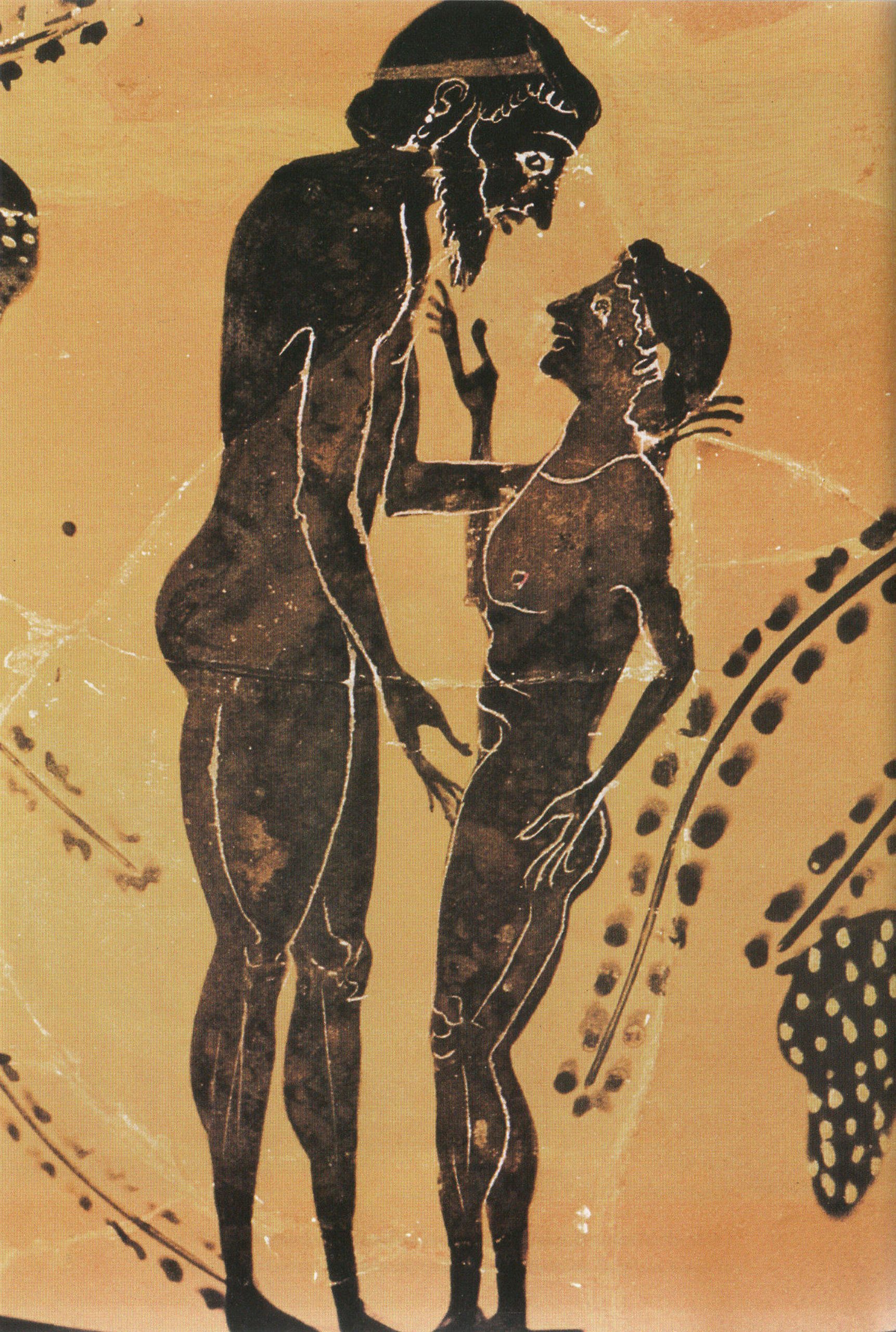
In the cultures of ancient Greece and Rome, some gay relationships between men were acceptable, or at least tolerated. Ancient Greeks and Roman did not tolerate all homosexuality, as we understand that term today. Carnal relations between men did not carry much of a stigma in of itself – at least not for the top, or the one who did the penetration. Exclusive bottoms – the ones penetrated – were reviled, though. Effeminate behavior by a man jeopardized his social status. Tough and manly homosexuals were respected. Those perceived as girlie, were not. As seen below, an ancient Greek tyrant’s failure to understand where the line lay between acceptable and unacceptable gay jokes got him killed.
Homosexuality in Greco-Roman Culture

Many ancient Greek and Roman rulers engaged in homosexual relations with other men, with no loss of prestige. Examples include Alexander the Great and his longtime lover Hephaestion, and Roman Emperor Hadrian. The latter was so passionate about a young gay lover, Antinous, that he had him made into a god after his unexpected accidental death. However, such prominent men were all tops, and refrained from effeminate behavior. Rulers who broke that taboo, such as the flamboyantly effeminate Roman Emperor Heliogabalus, came to a bad end. So huge was the taboo against effeminacy that to even joke about it could prove fatal.

One powerful man who found that out the hard way was Periander, a seventh century BC Greek tyrant of Ambracia. He paid dearly for a gay joke that he cracked at the expense of his lover. It began when Periander drank too much, and joked to his young lover: “aren’t you pregnant by me yet?” Whatever the rest of the audience thought of the joke, Periander’s lover did not appreciate it – and left no doubt about just how little he appreciated it.
Periander of Ambracia Paid Dearly for Making His Lover the Butt of a Gay Joke
As seen above, ancient Greek attitudes towards homosexual acts were complicated. Homosexual acts could be acceptable, but talking about them, as in kiss and tell, was not. Especially when it came to other free Greek men, as there was a heavy stigma of effeminacy attached to receptive partners, or bottoms who were penetrated. Ancient Greek culture was a macho one, in which masculinity and martial prowess were highly esteemed. In such a society, perceptions of effeminacy could greatly damage a man’s status.

Periander made matters worse by cracking his drunken joke in the presence of others at his court. That immediately elevated matters from what could have been handled as a private lovers’ quarrel, and into a public humiliation of the joke’s target. Periander thought his joke was hilarious, and according to ancient accounts, so did many of those present.
One person who did not think it was funny was the tyrant’s young lover, the butt of the joke. Personal honor was involved, as men who acted the role of women were despised in the macho culture of ancient Greece. Shamed that his lover had accused him of effeminacy, and enraged that he had done so in public, he grabbed a knife and stabbed Periander to death then and there.

_________________
Some Sources & Further Reading
Cortauldian – Masculinity in Ancient Greece
Dover, K. J. – Greek Homosexuality (1978)
History Halls – Moral Panics: When Coffee Was Controversial

