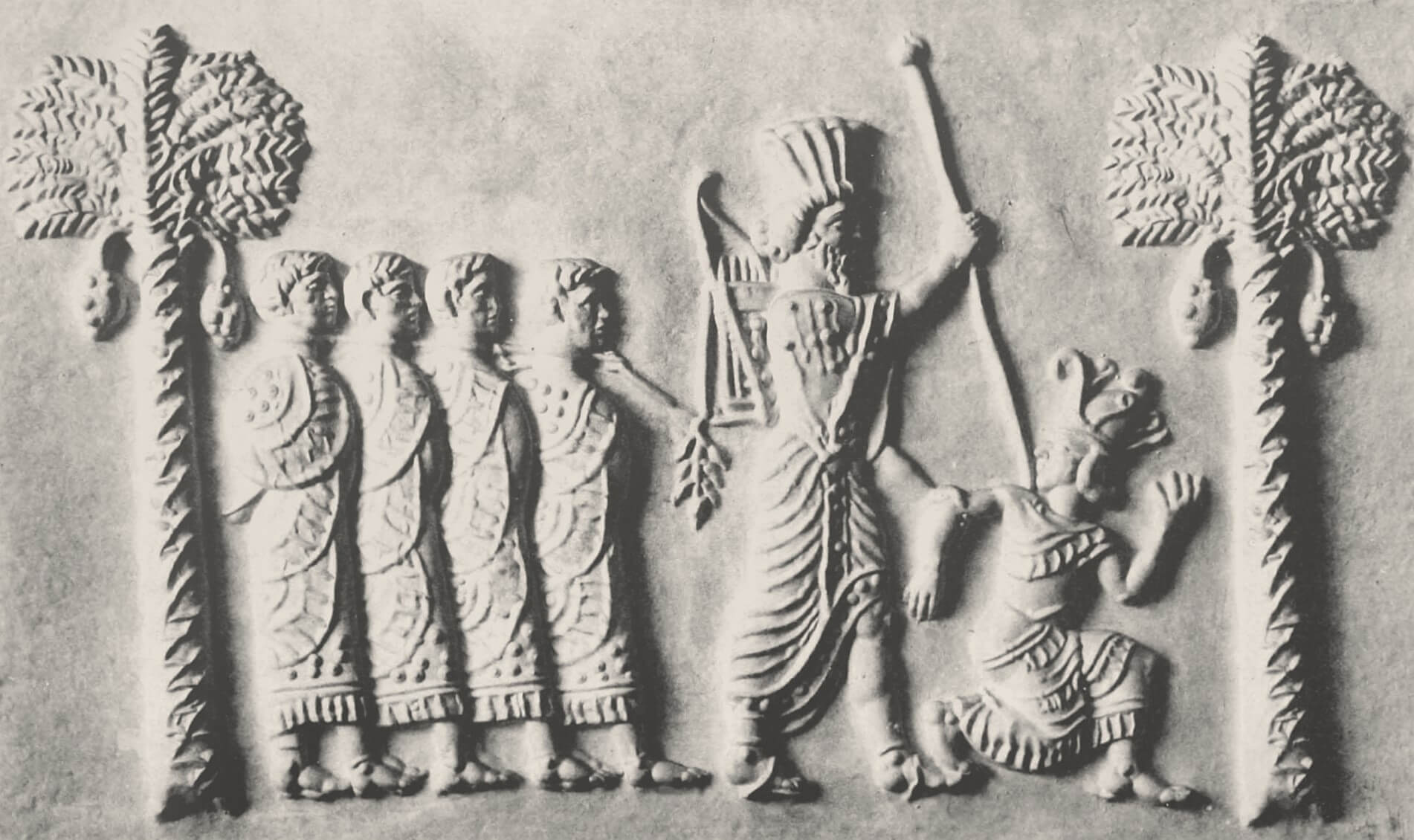
Phanes of Halicarnassus was one of the most shadowy yet intriguing figures of the late sixth century BC. A mercenary general, he is remembered primarily through the writings of Herodotus. His life details are scanty, but what Herodotus had to say about him was quite dramatic. His story was at the crossroads of Greek mercenary traditions, Persian imperial expansion, and ancient Egypt’s internal politics.
The Mercenary and the Pharaoh

Phanes was a Greek from Halicarnassus, a city in Caria on Anatolia’s southwestern coast. Like many Greeks of the region, he found opportunities for advancement as a mercenary in foreign lands. Especially in Egypt, where Greek soldiers had become increasingly valued under the Saite Dynasty. Pharaoh Ahmose II, reigned 570 to 526 BC, relied on Greek traders, craftsmen, and soldiers to help strengthen his kingdom. It was in that environment that Phanes rose to prominence as a high-ranking mercenary officer. He apparently served as a commander or adviser to the pharaoh’s forces.
Phanes’ intelligence, strategic insight, and familiarity with both Greek and Near Eastern customs made him a significant asset. However, relations between Phanes and Pharaoh Ahmose deteriorated for reasons that Herodotus leaves tantalizingly unclear. Whether it was personal grievance, political intrigue, or suspicion of disloyalty, Ahmose sought to arrest Phanes. When he sensed the danger, Phanes escaped Egypt and fled eastward. It was an act that would contribute profoundly to the course of Egyptian and Persian history. Phanes’ flight occurred just as King Cambyses II of Persia was preparing an expedition to conquer Egypt.
A War Started by an Angry Eye Doctor

The conflict was instigated by an Egyptian doctor in Cambyses’ court, angry at Pharaoh Ahmose II. The pharaoh had sent him to distant Persia when its king wrote asking for an eye doctor. Upset that he had been dragged away from his family to the end of beyond, the doctor plotted payback. He advised Cambyses to ask for Ahmose’s favorite daughter, knowing that it would put him in a bind. The pharaoh could accept and grow wretched at the loss of his daughter, or refuse, and offend Cambyses.
Ahmose did not want to send his beloved daughter to Persia, knowing that Cambyses intended her for a mere concubine. However, he feared Persia’s military. So he sent the daughter of a former Pharaoh, claiming she was Ahmose’s own. Soon as she reached Persia, however, the former princess told Cambyses of the ruse. Angered, and already itching for an excuse to invade Egypt, the Persian king declared war. Phanes, well informed of Egyptian defenses, fortifications, and political conditions, was a prize defector who arrived at just the right moment.
Phanes had overcome several obstacles, including a dramatic escape from Egyptian agents, to reach Cambyses and offer his services. Cambyses’ invasion required crossing the Sinai Peninsula, a harsh desert environment where supplies, water access, and secure passage were crucial. Phanes provided guidance on how to negotiate with, or intimidate, local Arab tribes to secure water and safe transit. He also briefed Cambyses on Egypt’s military weaknesses and the state of its Greek mercenaries. By then, Ahmose had died and was succeeded by his son, Psamtik III. The country was in an unsettled transition period, and the mercenaries’ loyalty to the new pharaoh was uncertain.
Legacy of Phanes of Halicarnassus

Phanes of Halicarnassus’ information helped shape Persian strategy in the lead-up to the decisive Battle of Pelusium in 525 BC. Before the battle, Pharaoh Psamtik had managed to capture Phanes’ sons. He then executed them in front of his army within sight of their father, as an object lesson to traitors. Herodotus adds that Psamtik drained their blood, mixed it with wine, drank it, and made his councilors imbibe as well. Whether literal or embellished for narrative effect, it underscores Phanes’ importance and the bitterness of his betrayal in Egyptian eyes. Phanes fought during the campaign, likely as a liaison between Greek contingents and the Persian leadership.
The Battle of Pelusium ended in a catastrophic Egyptian defeat that led to Egypt’s incorporation into the Persian Empire. Psamtik was eventually captured, and Phanes got his revenge by getting Cambyses to execute him uncovering a plot to stir up a revolt. Phanes then disappears from the historical record. We do not know whether he continued in Persian service, returned to the Greek world, or met an early end. His brief appearance in history remains vivid, though. He demonstrates how individuals motivated by ambition, grievance, or survival, could profoundly shape the world around them.

_________________
Some Sources & Further Reading
Briant, Pierre – From Cyrus to Alexander: A History of the Persian Empire (2002)
Herodotus – The Histories, Book 3
History Halls – The Mamluks: The Slave Soldiers Who Ruled Egypt for Centuries

