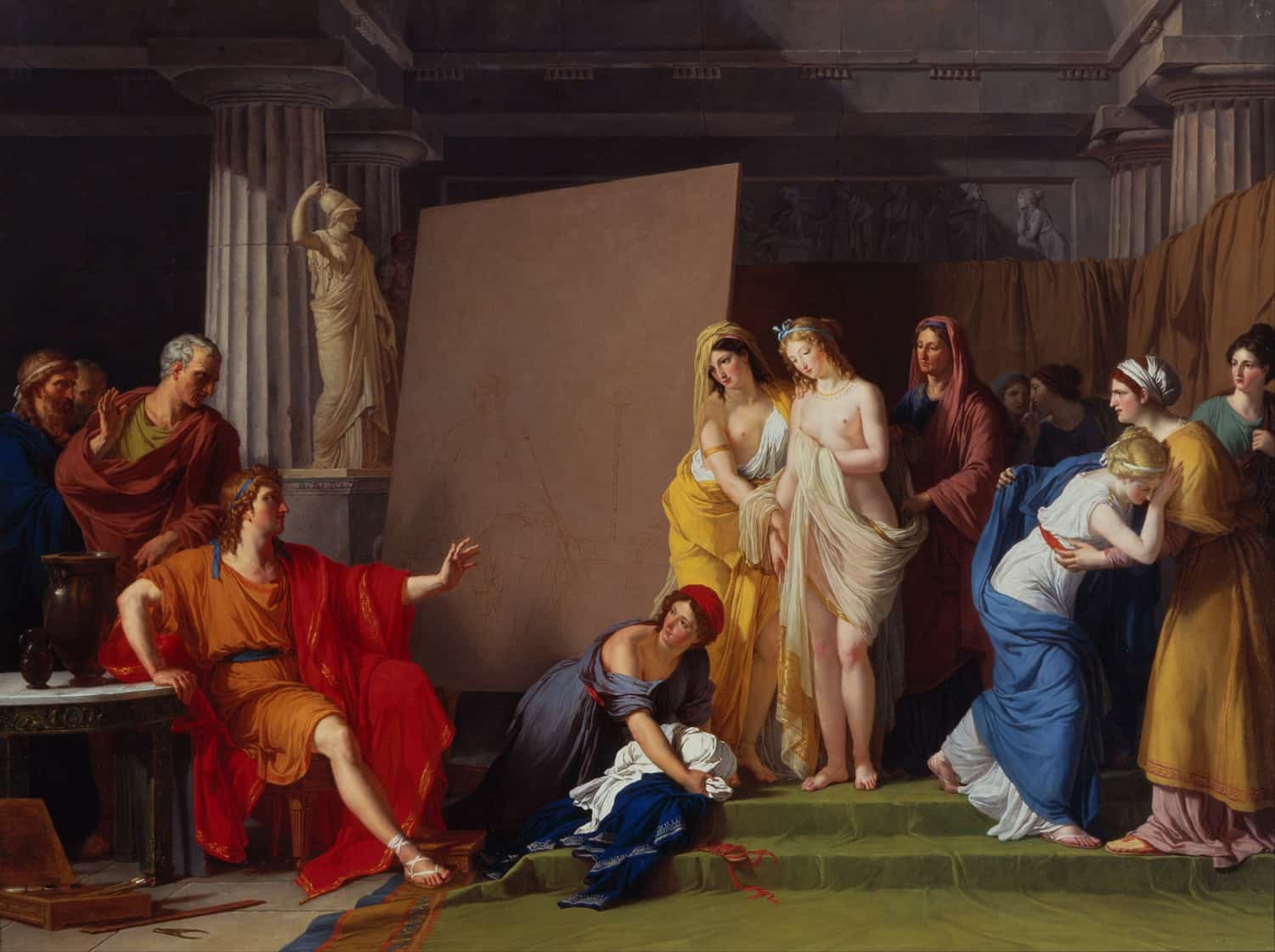
Artists have historically survived on the patronage of those who liked their work or sought to benefit from it in some way. Such patrons often commission paintings, and human vanity being what it is, aren’t shy about asking the artist to make them look good. Sometimes, though, the patron’s appearance is so unfortunate that making them look good is a tough ask. Something like that occurred with ancient Greek painter Zeuxis, was asked by a rich and elderly woman to base a painting of the goddess of beauty and love on her likeness. The contrast was so absurd that Zeuxis literally laughed himself to death at the idea.
One of the Ancient Greeks’ Greatest Painters

Fifth century BC ancient Greek artist Zeuxis hailed from Heraclea in Magna Graecia, near today’s Toronto, Italy. He was considered by fellow Greek contemporaries to be one of the greatest painters to have ever lived. He was especially praised for his popularization of a trend toward illusionism and pushing it to new levels. Zeuxis was innovative: he broke with tradition, and departed from the usual method of filling in shapes with color. He instead resorted to clever manipulation of light and shadows to enhance his paintings’ realism.
Zeuxis often preferred to paint panels rather than the contemporary norm of wall paintings. His compositions were typically small, often with just a single figure. None of his works survive today, but historical records describe his paintings as exceptionally realistic. Roman writer Pliny the Elder wrote in his Natural History that Zeuxis had entered into a competition with a rival painter named Parhassius, to see who could create the most realistic painting. When Zeuxis unveiled his entry, the grapes that he painted were so life-like, so the story goes, that birds flew down to peck at them. His rival did him one better, though.
Why Zeuxis Laughed Himself to Death

Even a master of realism like Zeuxis could be trumped. Parhassius invited Zeuxis to examine his work, and he tried to push aside the cloth covering to unveil the painting. That was when he discovered, to his chagrin, that the “cloth” was the painting itself. A good sport, Zeuxis conceded that his rival had won. As he put it: “I have deceived the birds, but Parhassius has deceived Zeuxis”. Centuries later, that rivalry over realism between Zeuxis and Parhassius was viewed by Renaissance painters as a challenge and a spur in their quest to surpass the ancients.
Zeuxis’ end came because of a commission from a wealthy patroness, an elderly widow. She hired him to do painting of Aphrodite, the Greek goddess of procreation, pleasure, love, and beauty. However, she wanted him to base the painting on her own likeness, and proceeded to pose as the model. On the one hand, Aphrodite was supposed to be the epitome of beauty. And here was a wrinkled old woman wanting to pose as a model for the goddess. The jarring contrast proved too much for Zeuxis. He burst into an uncontrollable fit of laughter, and couldn’t stop. He continued to laugh without letup until he dropped over, dead.

_________________
Some Sources & Further Reading
Encyclopedia Britannica – Zeuxis, Greek Artist
History Halls – Chrysippus: The Ancient Greek Philosopher Who Laughed Himself to Death
Inferno, Journal of Art History, Vol. 12, 2007-8 – The Spectacular Self
Latest Articles
- Edward England, the Humane Pirate Captain Deposed by His Men for Being Too Nice
- American Presidents: Abraham Lincoln, Hall of Fame Wrestler
- Henry Jennings: The Privateer-Turned-Pirate Who Set the Stage for the Caribbean’s Golden Age of Piracy
- Fighting Women: Tomoe Gozen, the Fearsome Female Samurai
- From the NFL to the Sands of Iwo Jima: Medal of Honor Recipient Jack Lummus

